How to Make Your Local Business AI-Verifiable: A Practical Local SEO Checklist
Below is a practical, sectioned checklist covering the areas that matter most, with an India-specific lens on the third-party platforms and directories that actually carry weight here.
For the last two decades, local SEO meant one thing: showing up in Google's map pack and the ten blue links below it. That's no longer where the discovery journey starts for a growing share of your customers.
45% of consumers use ChatGPT or another generative AI tool to find local business recommendations, up from just 6% a year earlier: a 7.5x jump in twelve months. Separately, AI-generated answers now show up on roughly 68% of local business queries, compared to 39% for the traditional map pack. In practical terms, when someone asks "best orthodontist near HSR Layout" or "reliable AC repair in Andheri," there's a good chance the first answer they see isn't a list of ten links they have to click through and compare. It's a direct recommendation, generated by an AI model that has already done the comparing for them.
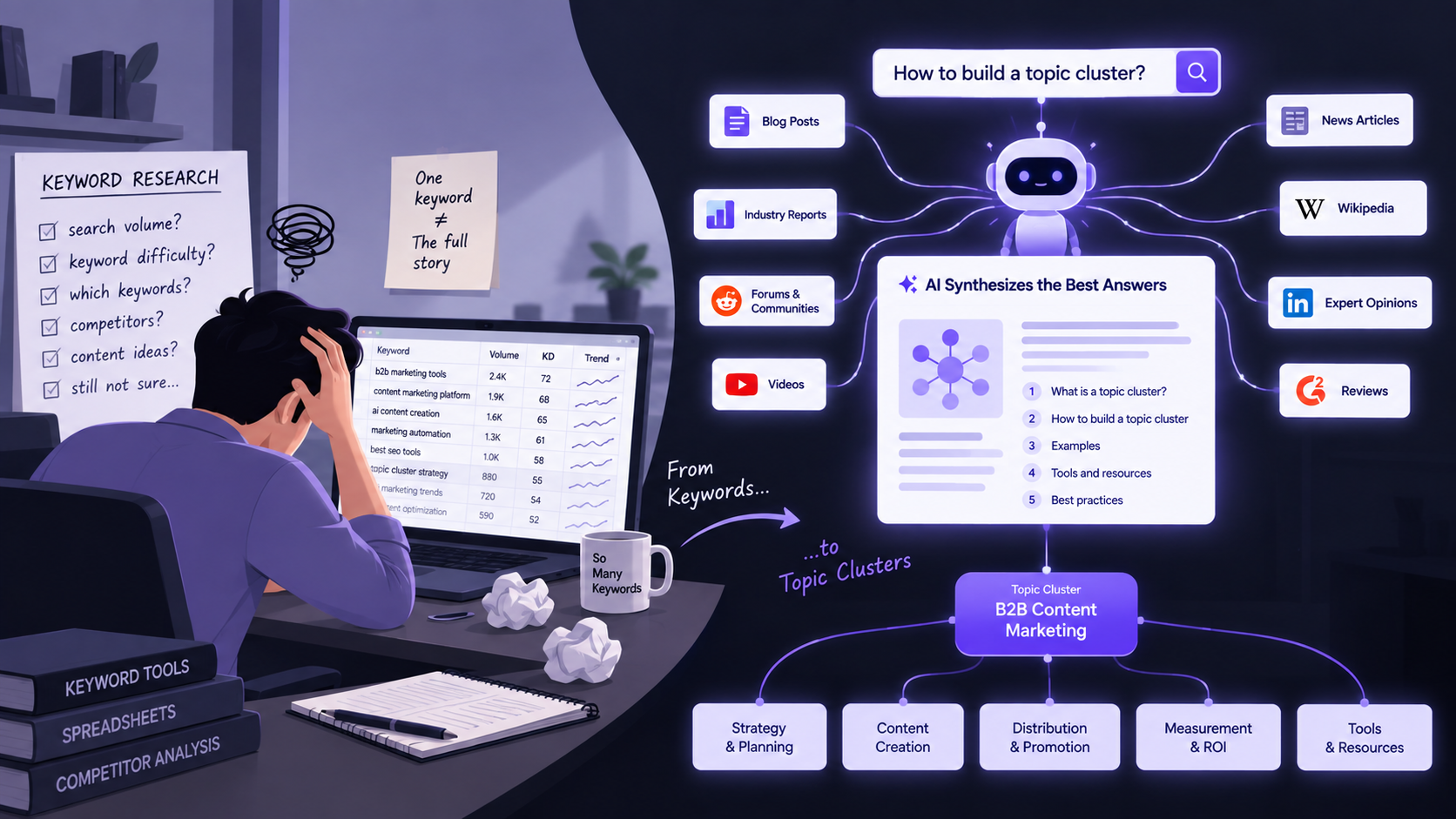
Your website and listings are no longer being read primarily by a person scanning for the blue link that looks trustworthy. They're being read by a model that is trying to extract facts (what do you do, where are you, are you good, can other sources confirm it) and stitch those facts into a confident answer. If your business information is inconsistent, thin, or impossible to verify against other sources, the model has no reason to recommend you, even if you would have been the obvious choice for a human searcher scrolling through reviews. Below is a practical, sectioned checklist covering the areas that matter most, with an India-specific lens on the third-party platforms and directories that actually carry weight here.
What do AI engines look for
Before the checklist, it helps to know what's happening under the hood.
Cross-source consistency. Models pull your business name, address, phone number, hours, and category from multiple places (your website, Google Business Profile, directories, review platforms) and treat agreement across sources as a trust signal. Contradictions are treated as a reason to hedge or skip you.
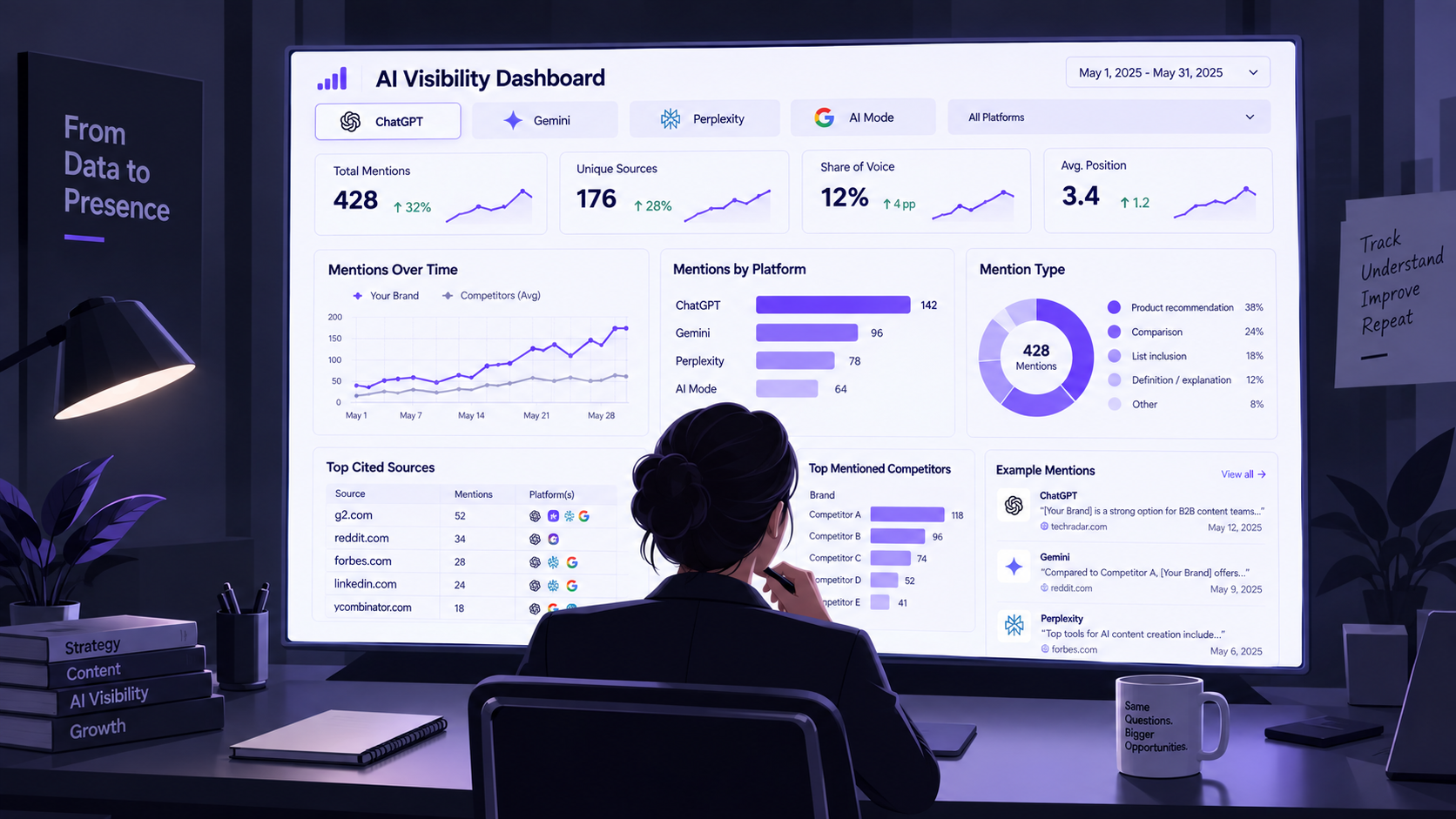
Review quality, volume, and responsiveness. Star rating matters, but so does how many reviews you have, how recent they are, and whether you reply to them. One widely cited study found a business with a high Google Maps rating and a 98% review response rate had a dramatically higher likelihood of being recommended by Gemini than a competitor with similar ratings but no responses.
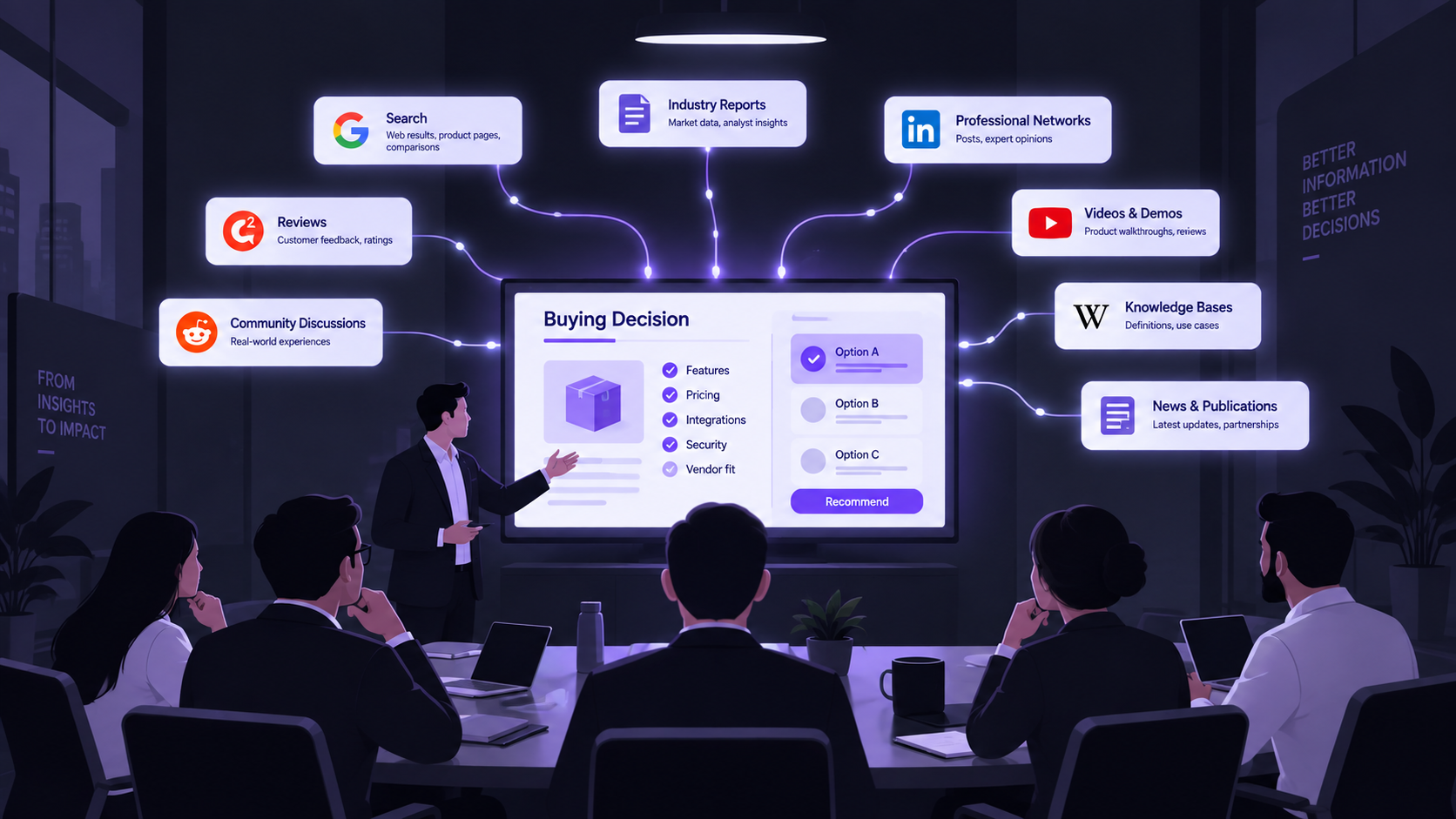
Third-party corroboration.Roughly 77% of the citations behind AI answers to branded or business queries come from sources other than the business's own website. Community platforms carry outsized weight: Reddit alone accounts for around 21% of AI Overview citations, and YouTube another 19%. Your own site matters, but it's one voice among many the model is listening to.
Structured, machine-readable data. Schema markup doesn't guarantee you'll be cited, but it removes ambiguity. A model that can parse your LocalBusiness schema doesn't have to guess your hours or service area from a paragraph of marketing copy.
Depth and specificity of content. Generic, templated pages ("Welcome to [City] most trusted [Service] provider") give a model nothing to extract. Specific, well-organized content that answers real questions gives it plenty.
Freshness. Profiles, posts, and pages that are visibly maintained (recent photos, recent posts, recently answered questions) signal an operating, trustworthy business rather than a stale listing.
A Practical Local SEO Checklist
1. Business information and consistency (NAP)
This is the foundation everything else sits on. NAP stands for Name, Address, Phone, and it needs to match, character for character, everywhere your business appears.
Pick one exact business name (no keyword-stuffed variants like "Sharma Dental Clinic - Best Dentist Andheri") and use it identically everywhere.
Standardize your address format once (suite/floor notation, spelling of the locality) and copy-paste it everywhere rather than retyping it.
Pick one phone number format (+91 vs. leading 0) and use it consistently across every listing.
Standardize your website URL (with or without "www") and use that exact version in every citation.
Use the same business category label everywhere. "Dental Clinic" everywhere is stronger than "Dental Clinic" on one site and "Dentist" or "Dental Surgeon" on another.
Audit your existing listings for old addresses, defunct phone numbers, or duplicate listings, and correct or merge them.
2. Google Business Profile (the anchor listing)
Every other source gets compared against this one, so it has to be complete and active.
Claim and verify your profile if you haven't already.
Fill in every field: hours (including holiday hours), phone, website, service area, year established, and all relevant attributes (wheelchair accessible, women-led, accepts UPI, and so on).
Write a full, natural-language business description using the character limit, covering what you do, who you serve, and where.
Upload real photos and video monthly: storefront, interior, team, and completed work, not stock imagery.
List individual products or services with descriptions and prices where you can.
Monitor and answer the Q&A section before a competitor or a random user answers it incorrectly.
3. Location data
If you operate from a fixed location or serve a defined area, that geography needs to be explicit and structured, not implied.
Add precise geo-coordinates and a correctly embedded Google Map on your website's contact/location page.
For multi-location businesses, give each branch its own dedicated page with unique content (not a templated clone with the city name swapped).
Define your service area explicitly (named localities or a radius) rather than leaving it to be inferred.
Mention your locality and neighborhood naturally in on-page content, not just city and state.
4. Service information
Vague service pages are the single biggest reason a model has nothing concrete to extract about a business.
Give each core service its own page or clearly delineated section, not one paragraph trying to cover everything you do.
Be specific about what's included, how long it takes, and any prerequisites, rather than marketing language alone.
Include pricing or a pricing range wherever your industry allows it. Even "starting from" figures give a model something concrete to cite.
5. Reviews
Reviews are doing double duty: they're a trust signal, and increasingly, they're a content source AI models mine for specifics.
Respond to every review, positive or negative, and do it quickly. Response rate has been shown to meaningfully affect the likelihood of being recommended.
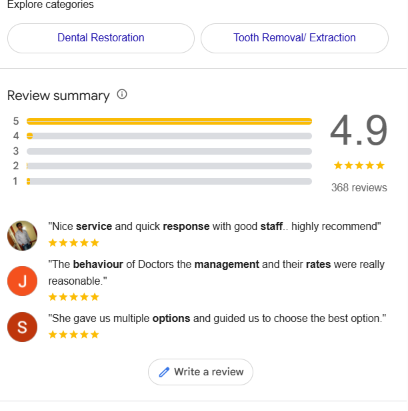
Encourage "themed" reviews: prompt customers, in your ask, to mention the specific service they used or the specific problem you solved ("root canal," "AC gas refill," "visa documentation help") rather than a generic "great service!" A wall of reviews that all reference the same handful of specific services gives an AI model a clear, repeated signal about what you're actually good at.
Spread reviews across platforms rather than concentrating them only on Google: Google Reviews, plus the relevant third-party platforms for your category (see below). A model that finds the same positive signal echoed on two or three independent platforms trusts it more than a single-source rating.
Address negative reviews professionally and visibly. A calm, resolved response to a bad review is itself a data point a model can weigh in your favor.
6. Third-party mentions and citations
General / all categories
Justdial (India's largest local directory, 130M+ monthly visitors)
Apple Business Connect (increasingly relevant given iOS adoption in metros)
Facebook Business Page and Instagram business profile
LinkedIn Company Page (especially for B2B)
Category-specific
Healthcare: Practo, Lybrate, and the ABDM Health Facility Registry for accredited providers
Food and hospitality: Zomato, Swiggy, and TripAdvisor; MakeMyTrip or Goibibo for lodging
Real estate: 99acres, MagicBricks, Housing.com
B2B and manufacturing: IndiaMART, TradeIndia
Education: Shiksha, UrbanPro
Automotive: CarDekho, CarTrade
Community and conversational platforms
Maintain a presence, or at least accurate information, on Quora and relevant subreddits. Community platforms like Reddit account for a disproportionate share of AI Overview citations globally; being mentioned accurately in an organic Quora answer or a local subreddit thread carries real weight.
Get mentioned in local press, city guides, or industry blogs where genuinely relevant. Earned, independent mentions are exactly the kind of third-party corroboration AI models are trained to weigh.
Implement LocalBusiness schema (or the correct subtype, such as Dentist, Restaurant, or ProfessionalService) with name, address, geo-coordinates, opening hours, phone number, and a link to your Google Business Profile.
Add Organization schema to your homepage with legal name, logo, and any relevant identifiers.
If you host first-party reviews on your own site, mark them up with Review and AggregateRating schema. Don't mark up third-party reviews you don't own, and don't self-rate.
Keep your markup in sync with what's visibly on the page, and validate it periodically with Google's Rich Results Test.
8. First-party content: giving AI something to crawl
Directories and reviews establish trust; your own content is where you demonstrate expertise in your own words.
Publish short, focused blog posts or micro-content answering the specific questions your customers actually ask (a genuine "People Also Ask"-style approach), rather than broad, generic articles.
Write in plain, direct language that answers the question in the first sentence or two, then elaborates. Models extract the direct answer far more easily than they extract meaning buried in marketing copy.
Refresh existing content periodically rather than letting it sit untouched for years. Recency is a signal in its own right.
Where relevant, add an author or expertise signal (who wrote this, what qualifies them) to reinforce trustworthiness for the model.
Staying optimized is the ongoing work
None of this is a one-time setup you complete and forget. AI models re-crawl, re-index, and re-evaluate constantly, and the moment your listings drift out of sync, or your reviews go stale, or a competitor starts answering their Q&A section faster than you answer yours, your standing in that AI-generated answer shifts too.
For local businesses, that makes ongoing accuracy and freshness across every one of these signals, your profile, your reviews, your citations, your structured data, and your content, not a nice-to-have but the actual mechanism by which you get chosen. Treat this checklist as a living one: revisit it quarterly, and treat every new review, every new post, and every new mention as one more data point helping an AI model decide, with confidence, that yours is the business worth recommending.
See exactly why your Product Detail Page isn't converting
Thank you! Your submission has been received!
Oops! Something went wrong while submitting the form.







.avif)