Make every product easier to understand and discover
Bring us a category, catalog sample or high-priority product set. We will show where product context is missing and how Yarnit can turn it into governed, channel-ready intelligence.



Yarnit continuously reads your catalog, detects what is missing, enriches product information and prepares it for storefronts, marketplaces, search engines and AI-led discovery. Every output stays grounded in your source data, taxonomy and brand rules.


Most catalogs were built to store and publish product records. They were not designed to answer how people search, compare and decide across storefronts, marketplaces and AI assistants. The result is a catalog that exists everywhere but explains too little.

Core fields may be present, yet important buying context remains absent: fit, occasion, compatibility, material properties, use cases and the differences between similar products.
Storefronts, marketplaces, search engines and AI discovery surfaces interpret product information differently. Teams repeatedly adapt the same catalog by hand.
Products, search behaviour, competitor language and customer questions keep changing. One-time enrichment cannot keep the catalog accurate, useful and ready for discovery.
Yarnit treats enrichment as a standing operating loop. It combines catalog data with market and demand signals, identifies gaps at SKU level and sends approved intelligence back to the systems and channels that need it.

The same intelligence can support catalog operations, product experience, marketplace execution and emerging AI discovery channels.
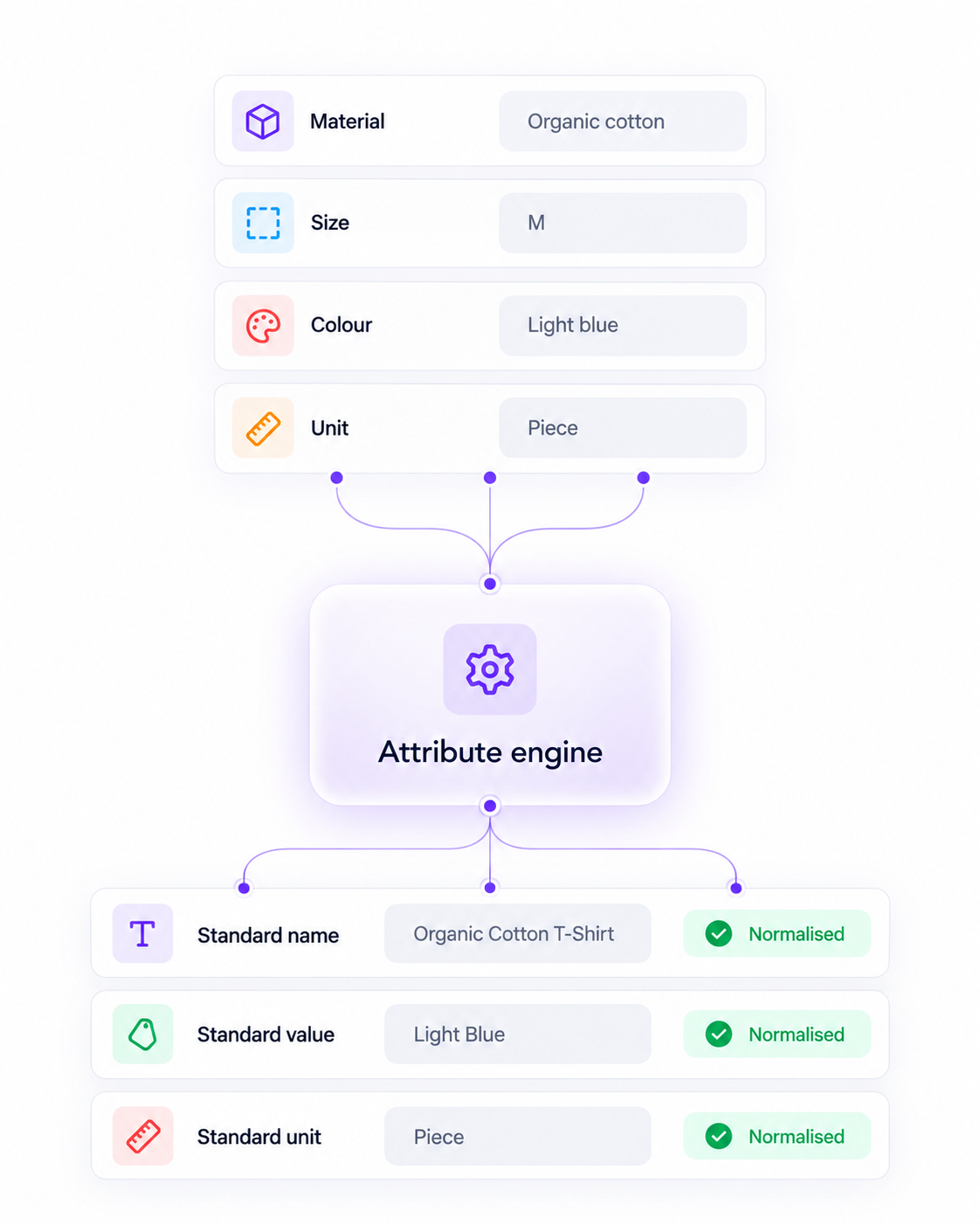
Extract, generate and standardise category-specific attributes across large catalogs. Resolve inconsistent names, units and values before they affect discovery or downstream analysis.
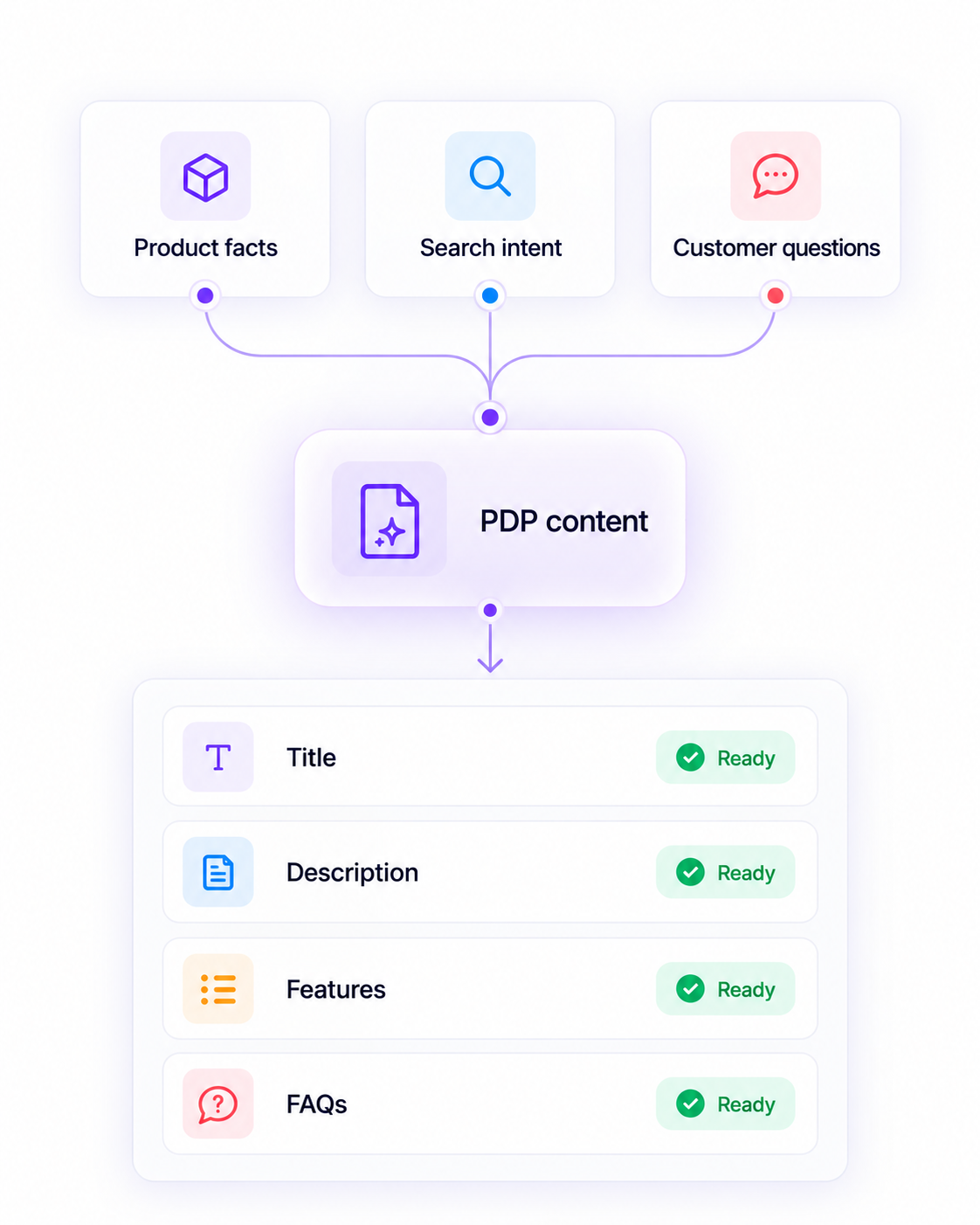
Create titles, descriptions, feature copy, comparison points and FAQs around the questions customers need answered. Adapt depth and structure by category.
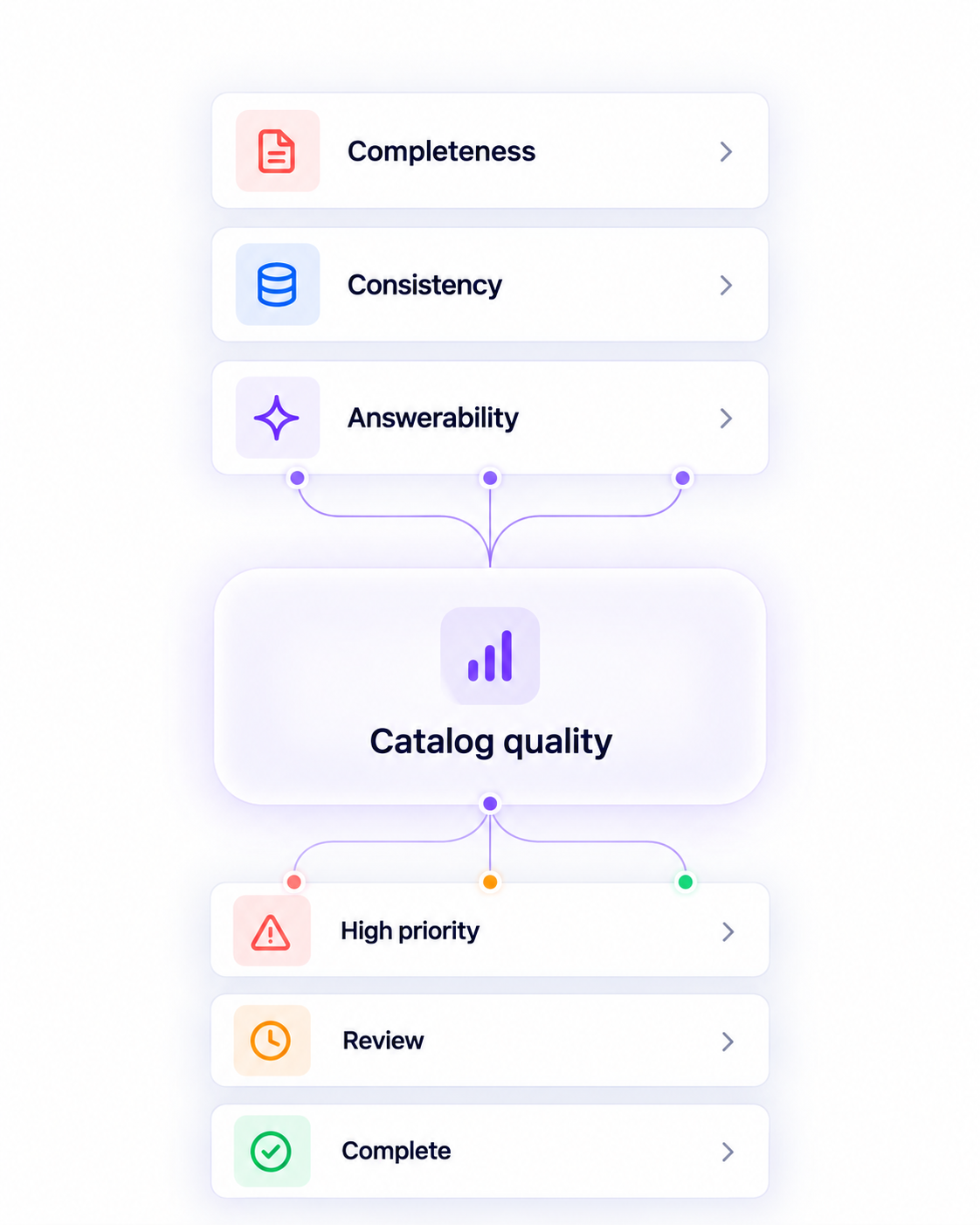
Score products for completeness, consistency and answerability. Surface missing information and prioritise SKUs by commercial importance or risk.
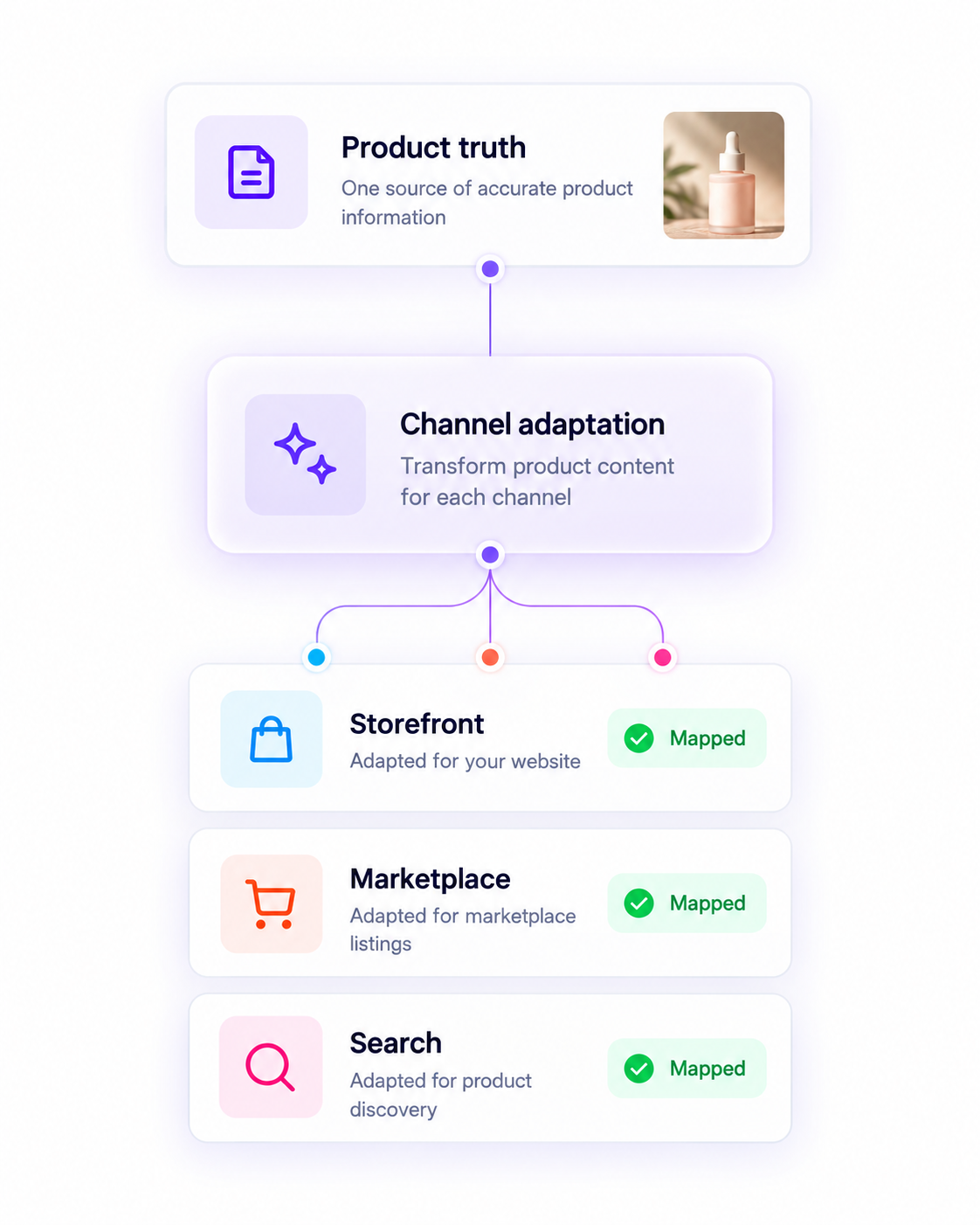
Adapt product information to the structures, content policies and shopper behaviour of each marketplace while preserving one governed product truth.
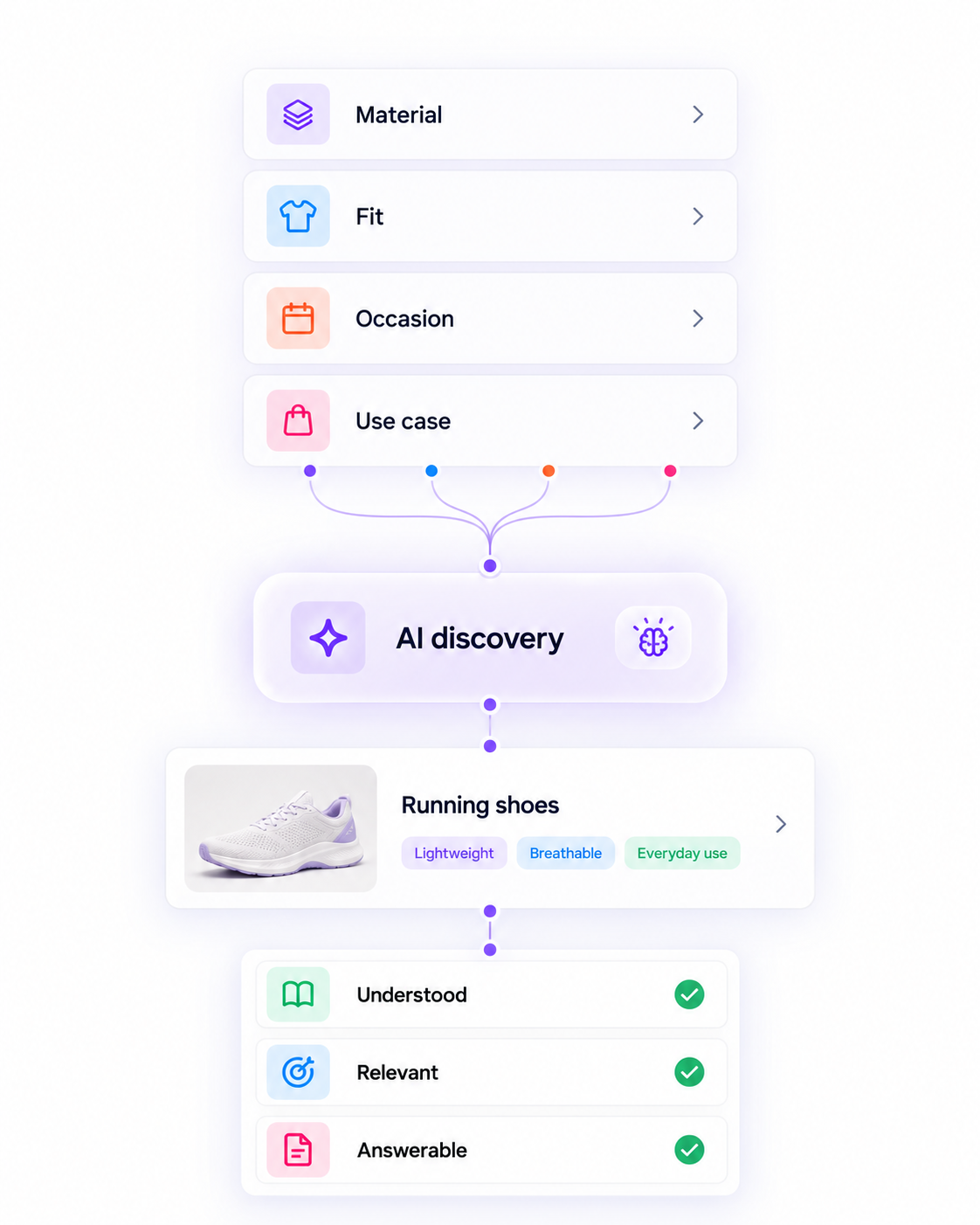
Make product information easier for search engines and AI assistants to interpret through clearer attributes, stronger product context and structured, answerable content.
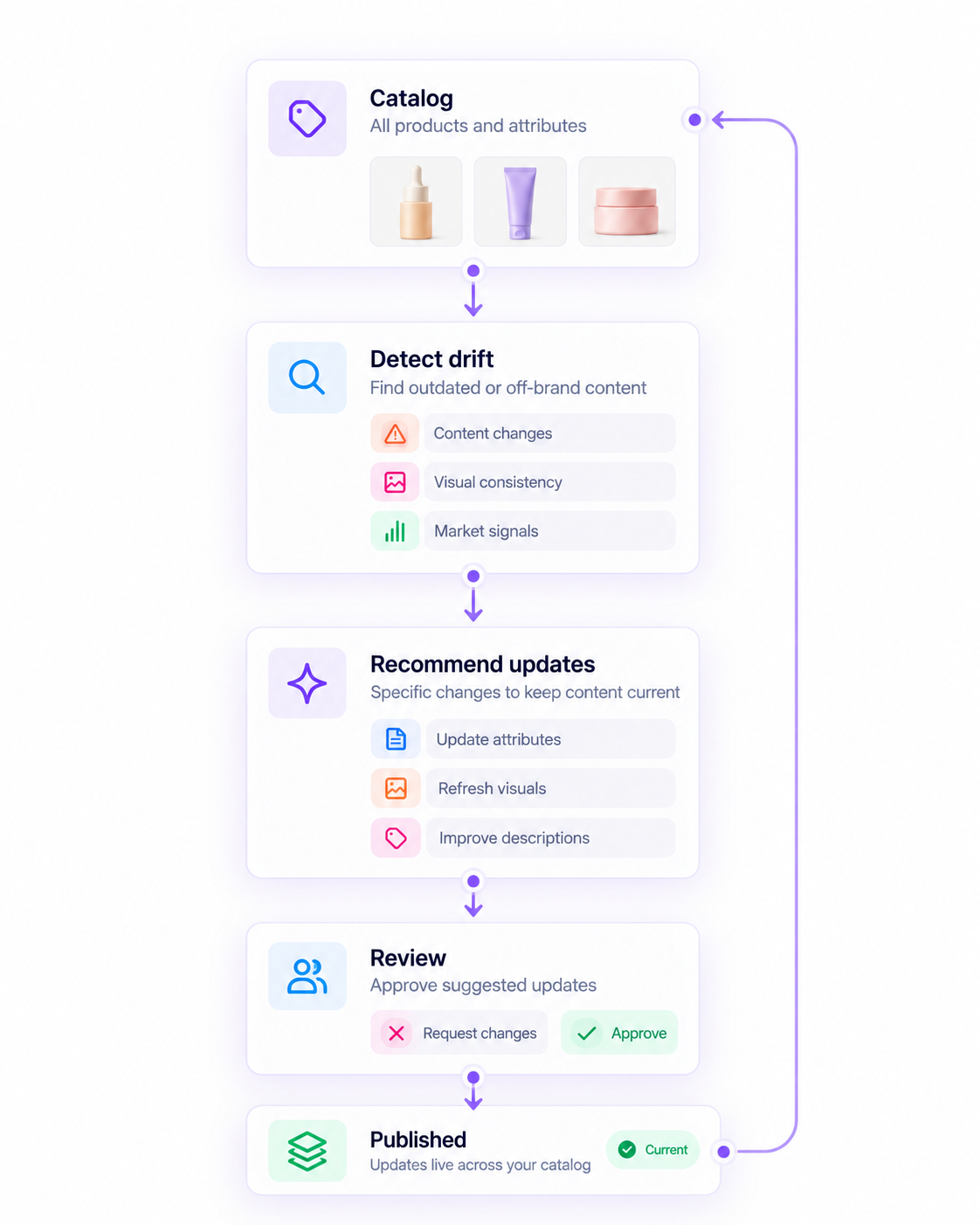
Monitor the catalog on a defined cadence. Detect drift, new customer questions and changing market language, then recommend updates for review and publishing

Catalog and product intelligence turns product records into structured, contextual information that customers, teams and digital systems can use. It goes beyond storing titles, descriptions and basic attributes. It explains relationships such as fit, use case, compatibility, occasion and category meaning, then applies that context across product pages, marketplaces, search, recommendations and analytics.
A product information management system governs and distributes product data. Catalog intelligence improves the quality, completeness and usefulness of that data. Yarnit can work with a PIM to identify gaps, generate and normalise attributes, optimise content and return approved changes. The PIM remains an authoritative system while Yarnit adds an intelligence and workflow layer around it.
AI catalog enrichment should remain grounded in approved sources and controlled by category rules. Yarnit uses available product data, imagery, documentation, brand knowledge and permitted external signals to propose enrichments. Teams can see the source context, compare changes and set approval policies. Information that cannot be supported can be flagged for review instead of being published as fact.
Search engines and AI assistants need clear product attributes and contextual information to match products to detailed needs. A product described only by a short title and generic category gives these systems little to reason over. Richer information about material, fit, compatibility, occasion and use case improves the likelihood that the product can be understood and considered for relevant queries.
Yes. Yarnit can start from a governed product truth and adapt the presentation for different channel structures and content requirements. The core facts remain consistent, while titles, descriptions, attribute mappings and supporting content can vary by marketplace, storefront or discovery surface. This reduces repetitive work without creating disconnected versions of the product record.
No replacement is required. Yarnit is designed to connect with the systems that already manage product data and digital commerce. It reads approved inputs, runs intelligence and enrichment workflows, supports human review and writes approved outputs to the relevant destination. The exact integration pattern depends on the existing architecture and the level of automation the business permits.
Useful measures include attribute completeness, catalog quality scores, time required to onboard products, search relevance, zero-result searches, product page engagement and conversion. Retailers can also track how many customer questions the catalog can answer and how much manual remediation the team avoids. The right baseline and success measures depend on the category and channel.
Catalog enrichment should continue after the first cleanup. New products, changing customer language, marketplace requirements and emerging discovery channels can make product information less effective over time. Yarnit can reassess the catalog on a business-defined cadence, identify material changes and send only the relevant updates for review.
Bring us a category, catalog sample or high-priority product set. We will show where product context is missing and how Yarnit can turn it into governed, channel-ready intelligence.
Giving shape to intelligence


