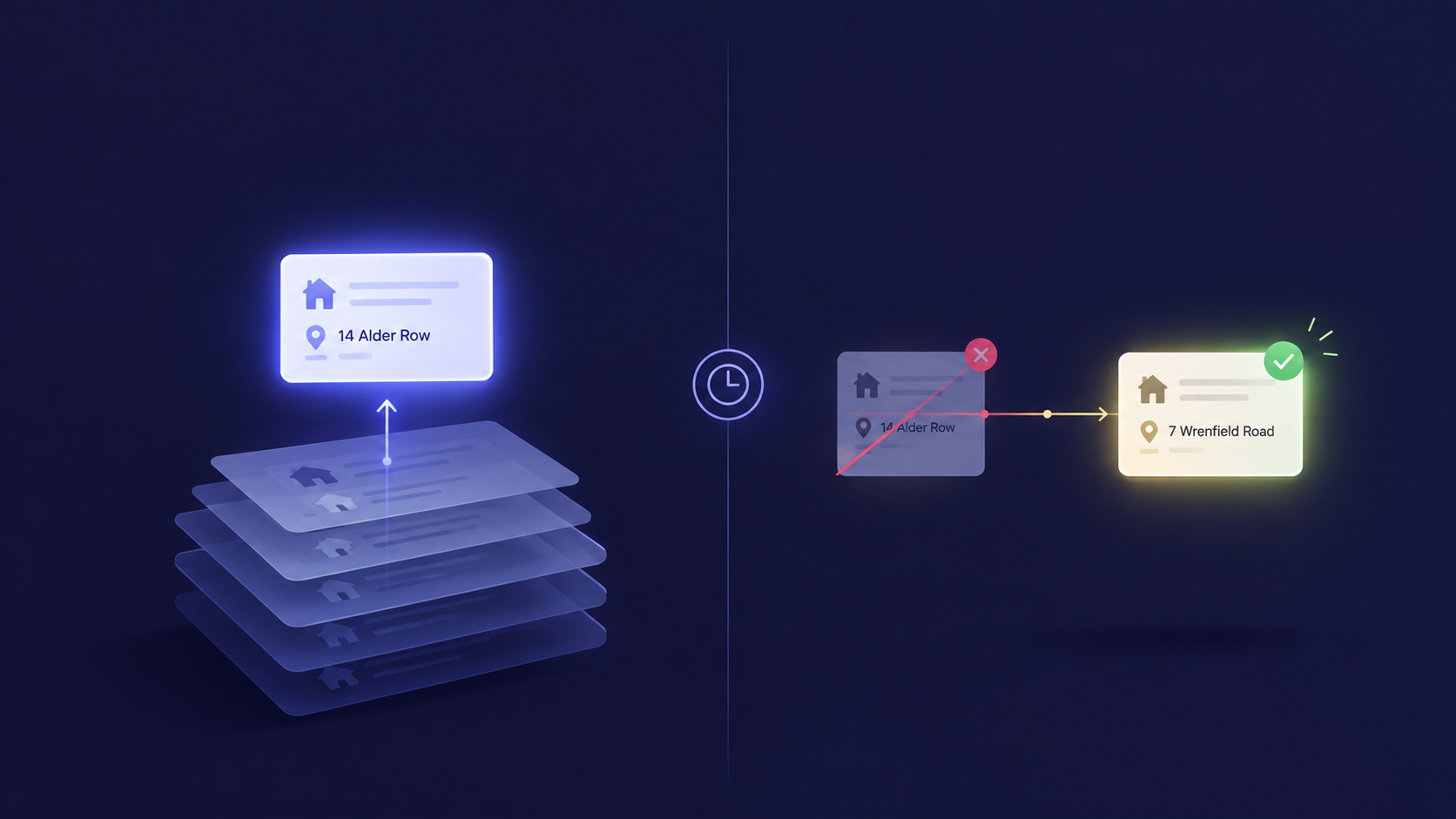
Shoppers have started asking AI assistants what to buy, and the assistants answer with brand names. Three in four US and UK shoppers say they have used tools such as ChatGPT or Gemini in a purchase decision. AI-referred traffic to US retail sites grew 393% year on year in early 2026. More and more often, a model writes the shortlist a shopper acts on before anyone clicks a link.
That leaves every consumer brand with a practical question: when a shopper asks about your category, does the answer include you?
Between August and October 2026, Yarnit put 550 shopper questions about 56 consumer brands to ChatGPT and Gemini. For each of the 1,100 answers, we recorded whether it named the brand and whether it linked to the brand’s website. The full results are in the Yarnit Retail AI Visibility Study, Fall 2026. Here are the headlines.
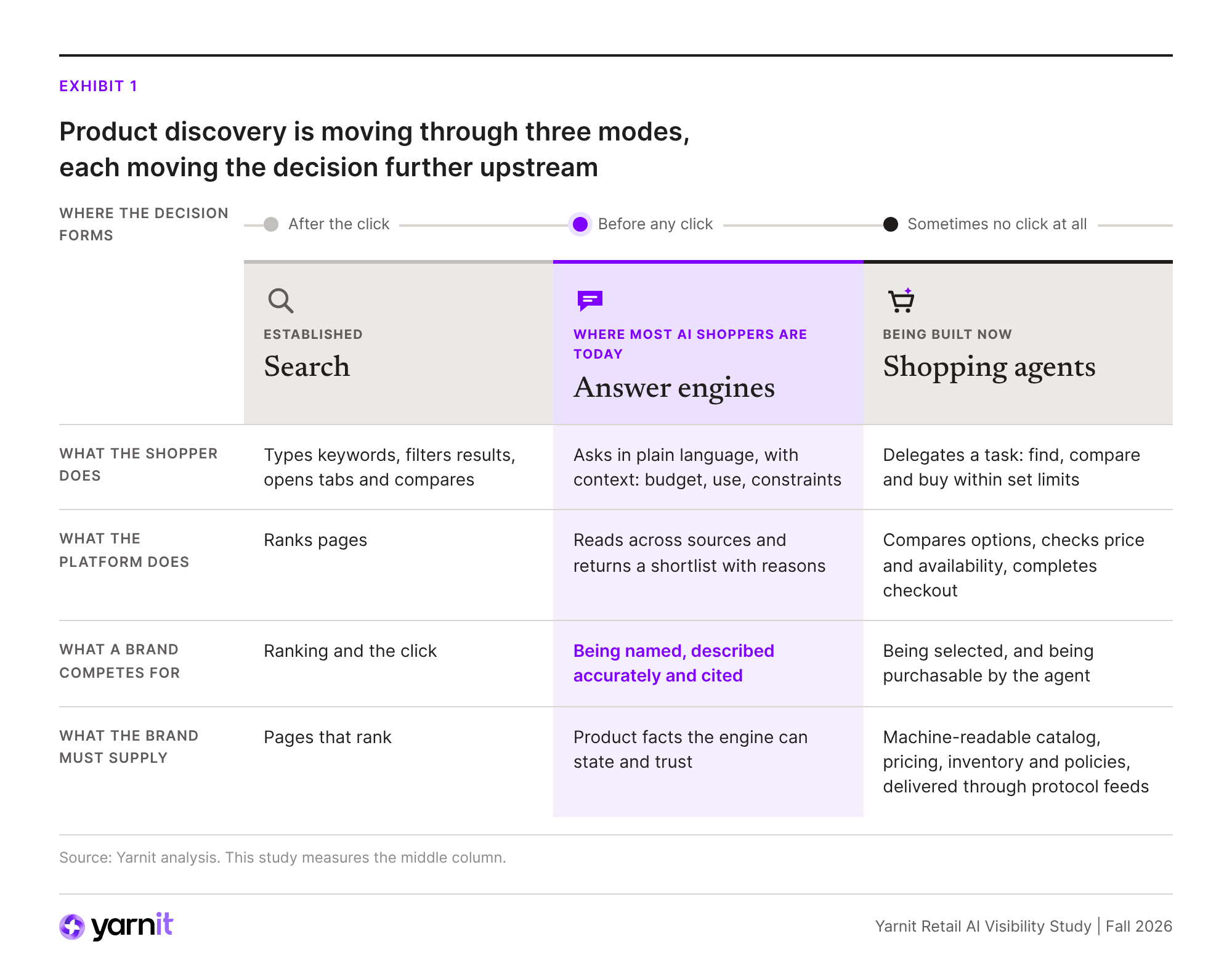
Three modes of product discovery (search, answer engines and shopping agents), showing the purchase decision moving further from the brand’s site
Most AI shopping answers leave the brand out
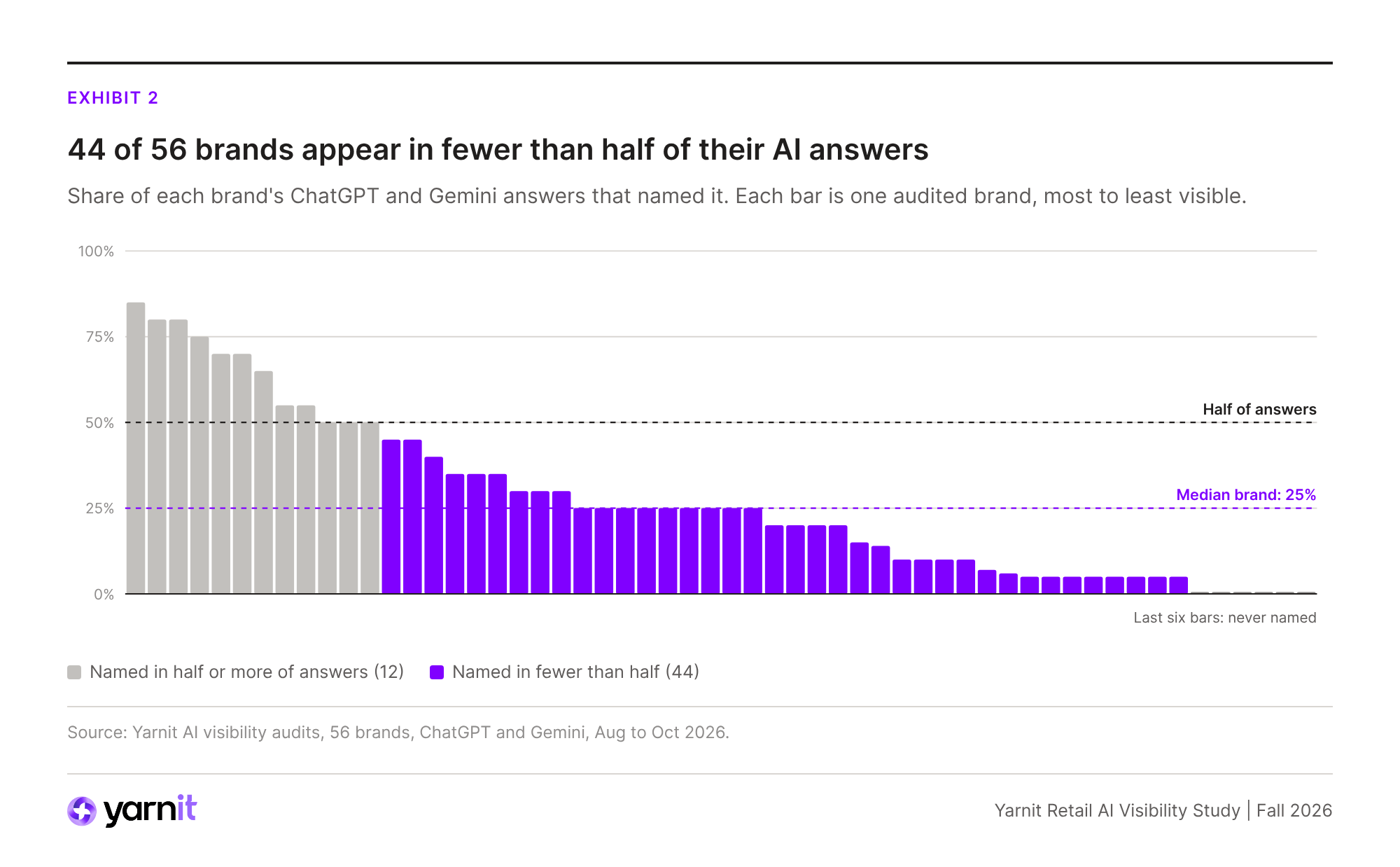
Across all 1,100 answers, the engines named the brand being researched 28% of the time and linked to its website 11% of the time. On 62% of questions, neither ChatGPT nor Gemini mentioned it at all.
The gap between brands is wide. Seven brands appeared in 65% or more of their answers. Six never appeared once, and several of the brands near the bottom are well-established names in their categories. Being known to shoppers and being known to an AI engine turned out to be separate achievements.
Bar chart of AI answer presence for 56 consumer brands; 44 appear in fewer than half of their answers and the median brand appears in 25%
AI engines favour brands they can describe in a few words
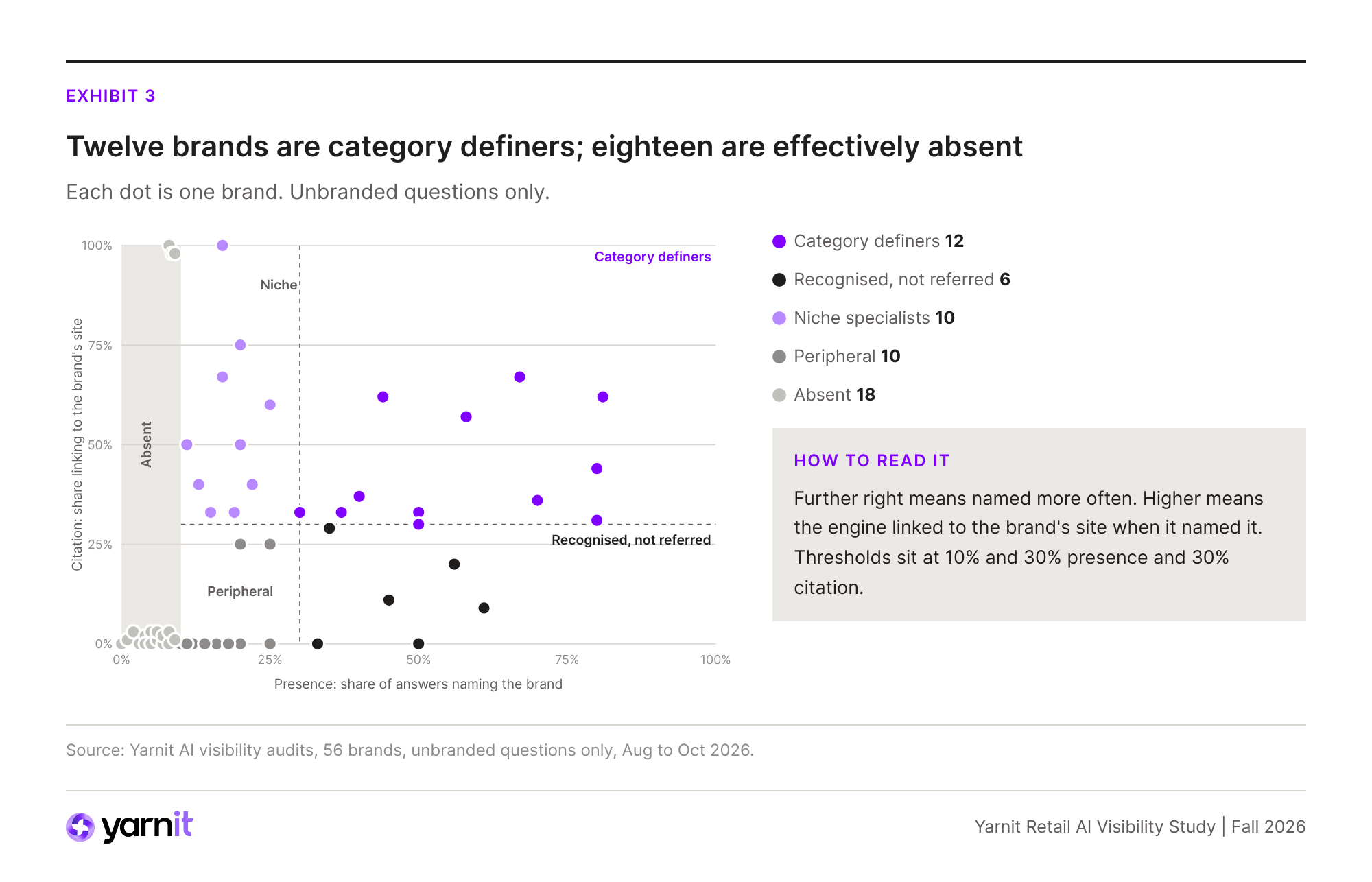
We plotted every brand by how often the engines named it and how often they linked to its site. Five archetypes emerged:
Category definers (12 brands): named in at least 30% of answers, with the brand’s own site cited in at least 30% of those mentions. Most are synonymous with one product type, such as washable rugs or insulated drinkware.
Recognised but not referred (6 brands): named often, rarely linked.
Niche specialists (10 brands): named less often, but usually linked when they are.
Peripheral (10 brands): named less often and rarely linked.
Effectively absent (18 brands): named in fewer than one answer in ten.
Recognition did not predict which group a brand landed in. What the definers share is that an engine can say what they are in a phrase. Not a single beauty brand made the definer group.
Scatter plot of 56 brands by AI presence and citation rate, grouped into five AI visibility archetypes
Brands were named in 37% of answers to direct recommendation questions. On questions about what to look for, such as what makes a sweater last or which metals suit sensitive skin, that fell to 17%. On questions about concerns, it fell to 8%.
The early questions matter because the criteria a shopper picks up there decide which products make the shortlist later. Concern questions are where trust in a category forms, and the engines cited the brand’s own site in just 2 of the 108 answers to them.
Bar chart showing brands named in 37% of AI recommendation answers but only 8 to 17% of answers at earlier buying stages
Most categories already have a default brand
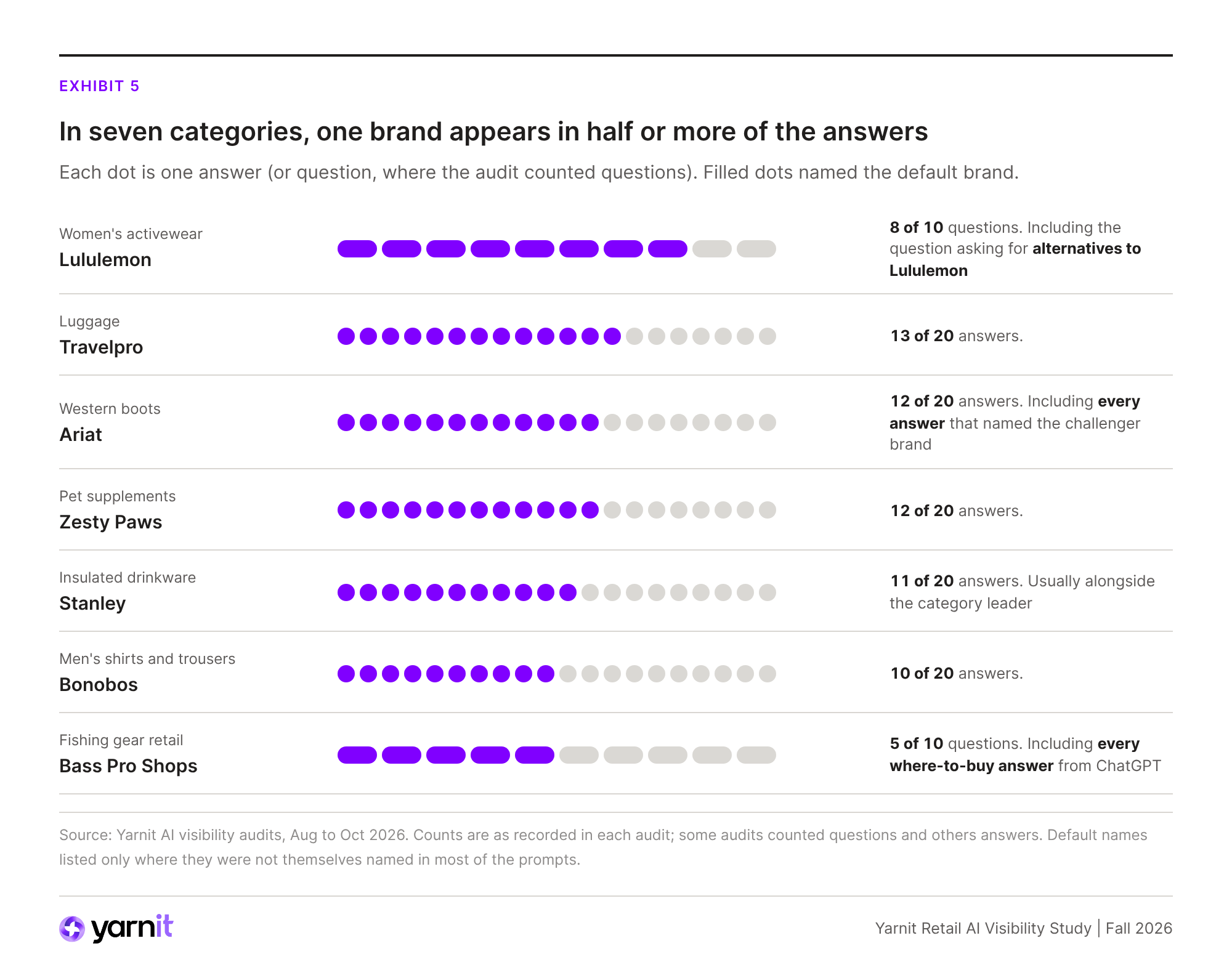
In seven categories, one brand appeared in half or more of the answers. Asked for alternatives to Lululemon, the engines still named Lululemon. Some challengers only ever appeared next to the default, so their visibility depends on another brand’s position.
Dot chart of seven categories where one default brand, including Lululemon, Travelpro, Ariat and Stanley, appears in half or more of AI answers
ChatGPT and Gemini behave like two different channels
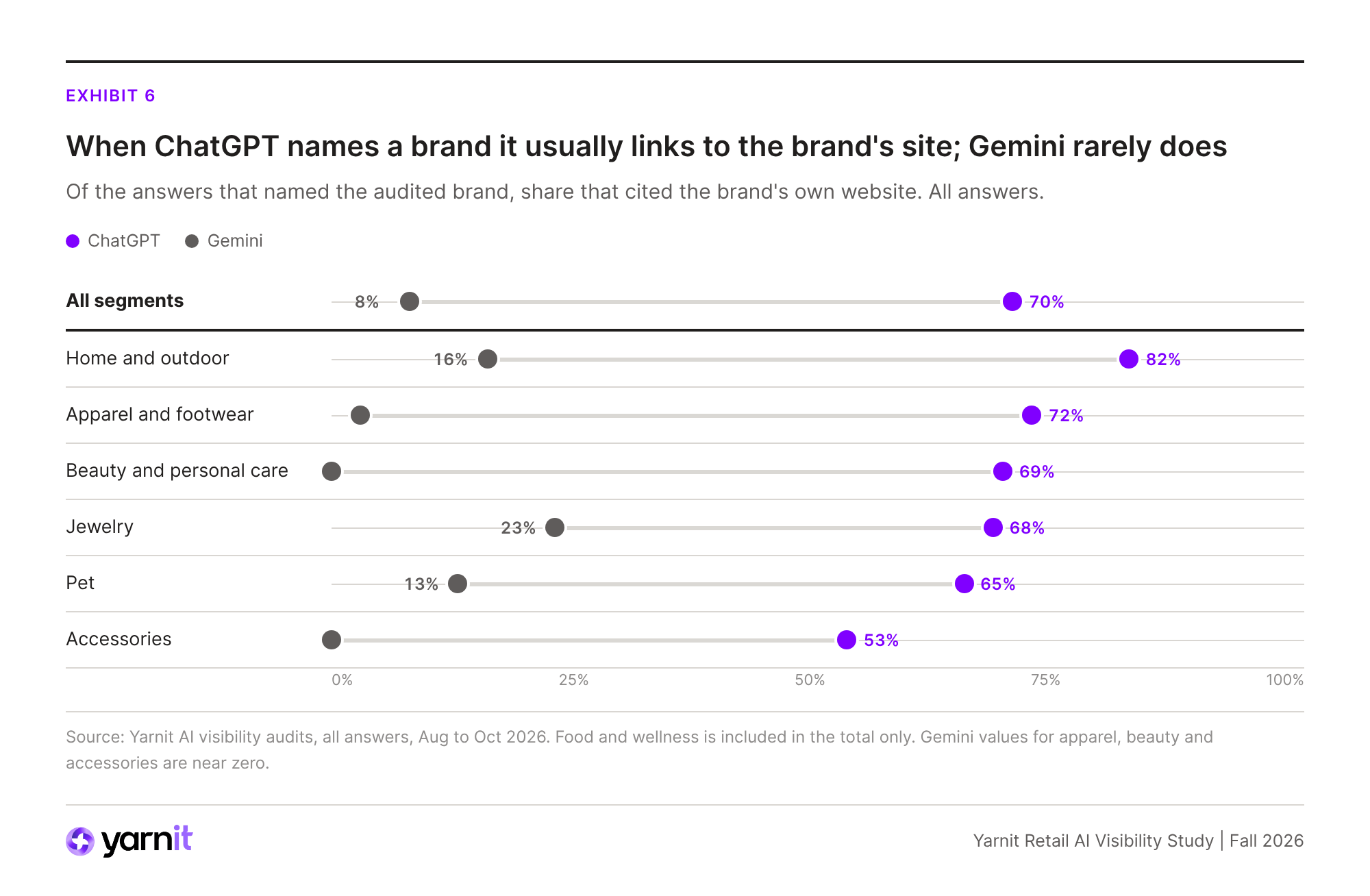
The two engines named the brands studied about equally often: 150 times for ChatGPT, 157 for Gemini. After that they diverged. ChatGPT linked to the brand’s website in 70% of its mentions; Gemini did so in 8%. On more than half of the questions where a brand appeared, only one of the two engines named it.
So a brand’s AI visibility depends heavily on which assistant a shopper happens to open, and it has to be measured separately for each engine.
Dot plot comparing how often ChatGPT and Gemini link to brand websites when they mention a brand, by retail segment
Which retail categories are most visible in AI answers
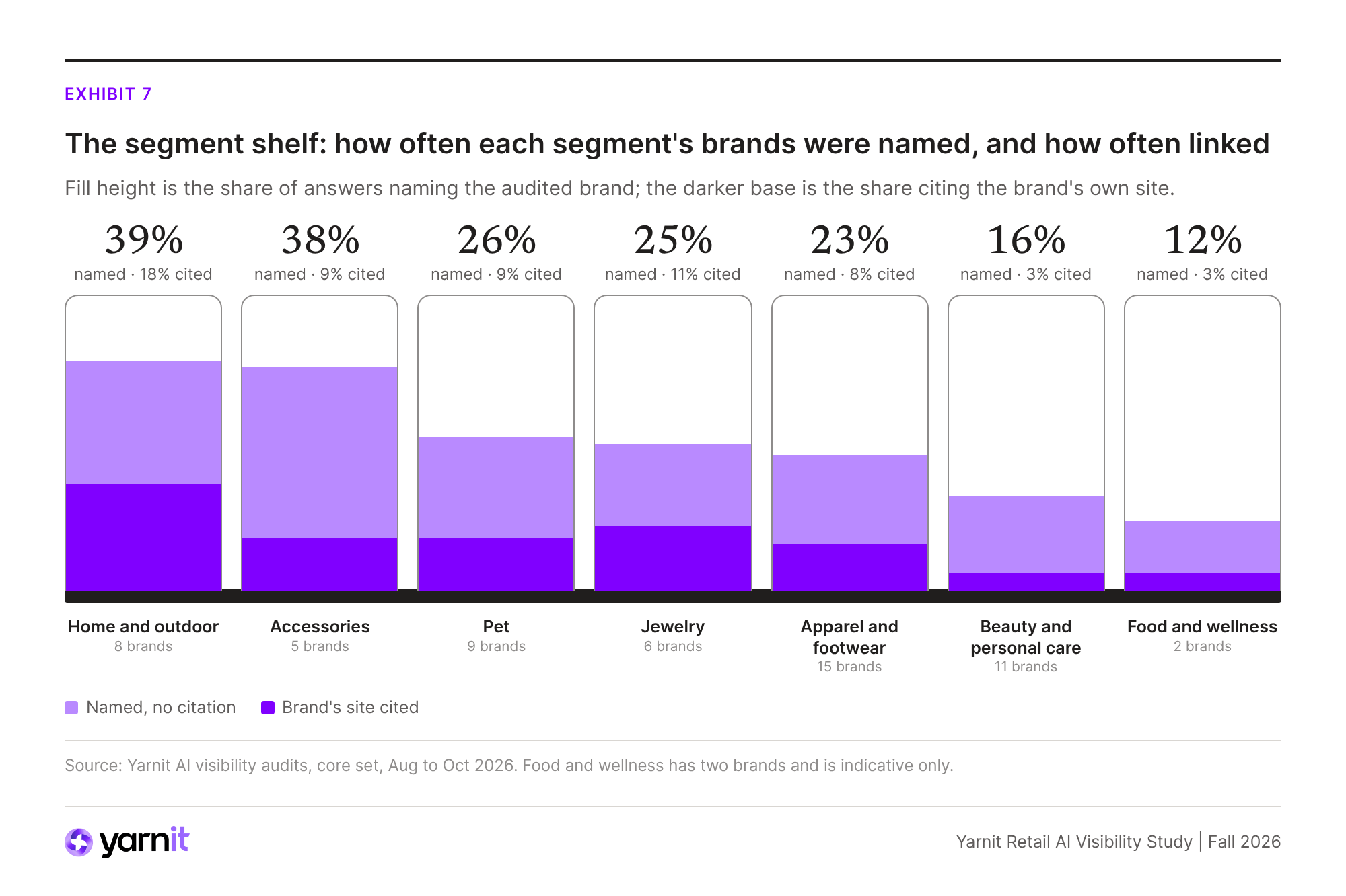
Home and outdoor brands were the most visible: named in 39% of answers and cited in 18%. Accessories came close at 38%, though the engines rarely linked to those brands. Among the larger segments, beauty and personal care was the least visible. Beauty brands were named in 16% of answers and cited in 3%.
Chart of AI visibility by retail segment, with home and outdoor at 39% and beauty and personal care at 16%
What AI visibility means for consumer brands
Every finding points the same way. AI engines name the brands they can describe, which makes AI visibility a product-information problem first and a marketing problem second. The brands that show up have made each product’s identity, suitability and difference explicit. They keep those facts consistent everywhere the product appears: on their own site, in their feeds and on every retailer listing.
The full report covers:
five actions for product, merchandising and ecommerce teams
why adding a specific need to a question can bring in brands that broad questions leave out
how question wording alone can more than double a brand’s visibility score
the shopper questions brands were most often missing from in each category
Shoppers are already making their choices inside AI answers, and in most categories the brands have yet to catch up.
Download the Yarnit Retail AI Visibility Study, Fall 2026 for the complete findings.