



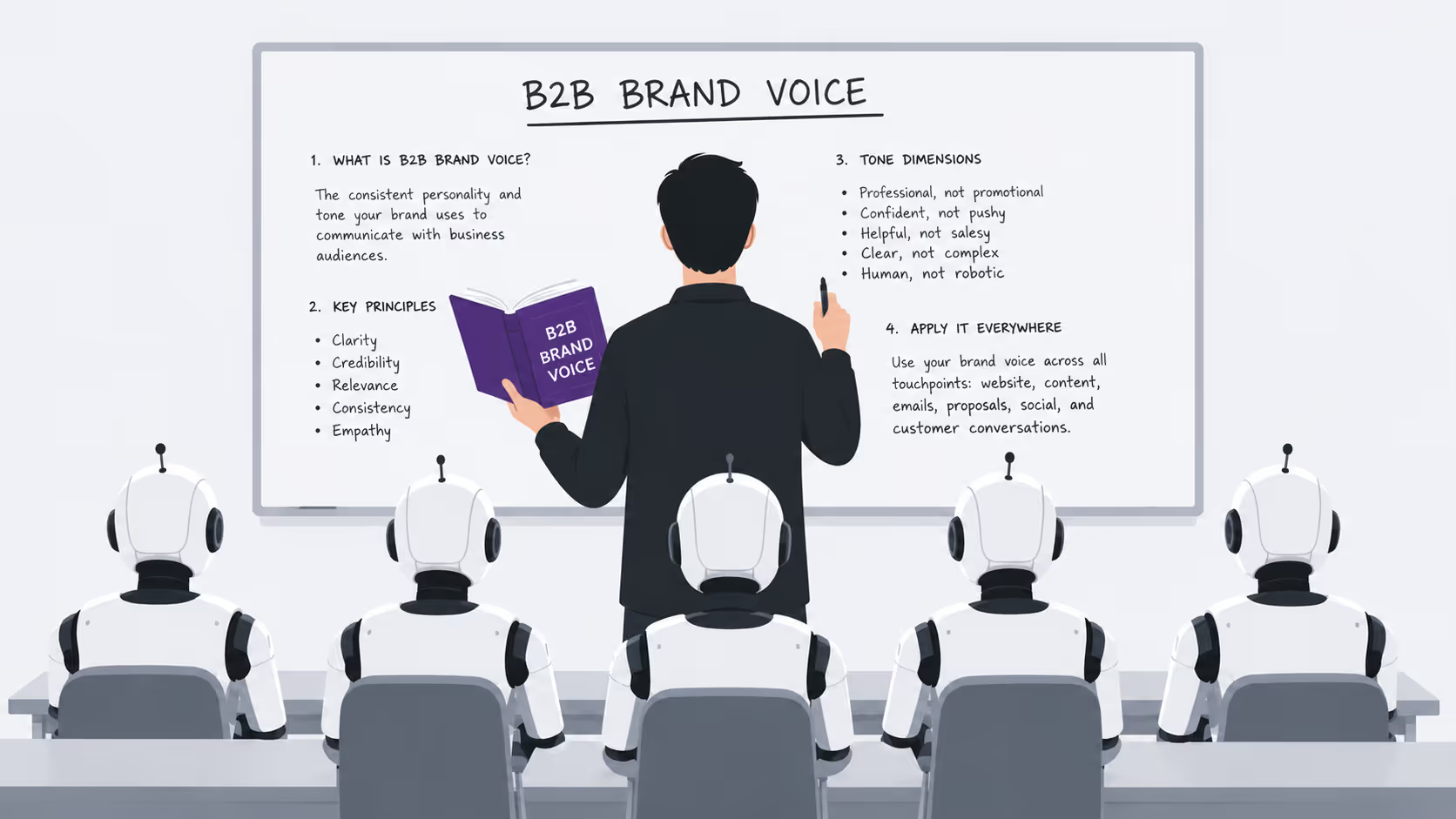
If you've scrolled through B2B content lately, you've probably noticed that everyone sounds... exactly the same. That polished-but-soulless tone. Those predictable transitions. The obligatory "innovative solutions" and "seamless experiences" sprinkled throughout like corporate confetti.
We’re getting close to the endgame: the AI-generated content is finally coming home to roost. As generative AI tools became the new normal for B2B marketers, something strange happened: brands with once-distinctive voices started to blend into an indistinguishable grey slurry of "professional" content.
Even companies with elaborate brand voice guides gathering digital dust aren't immune. Those carefully crafted documents? They're treated more like decorative PDFs than operational tools, especially when AI enters the picture.
Your brand voice guide probably says something like "innovative, trustworthy, and dynamic," which sounds great in a boardroom but means absolutely nothing to an AI model (or, let's be honest, to your content team). AI interprets these vague directives as permission to regurgitate the same safe, forgettable recipe everyone else is using.
This playbook will show you exactly how to make your B2B brand voice authentically yours at scale, starting with figuring out what you actually sound like in the first place.
Auditing Your B2B Brand Voice: Do You Even Sound Human?
You don't need a marketing PhD to spot AI-generated drivel. By now, most B2B marketers have developed what I call an "AI language radar". That gut feeling when something reads just a little too... polished. Too safe. Too predictable. If you've been in this game long enough, you can smell robotic copy from a mile away.
So let's start with two brutally simple questions:
- Does your content sound like an actual human wrote it, or does it have that telltale AI sheen?
- If it does sound human, is it distinctly yours, or could it belong to any of your competitors?
If you hesitated on either question, it's audit time. Here's your step-by-step workflow to get clarity on your brand voice:
Step 1: Gather Your Content Samples
Pull representative pieces from everywhere—website copy, blog posts, LinkedIn updates, email campaigns, whitepapers, case studies. You need a cross-section of your content ecosystem to see the full picture.
Step 2: Cross-Channel Comparison
Read through your samples with fresh eyes. Does your LinkedIn sound like your website? Does your email tone match your blog voice? Consistency matters. If your brand sounds like three different people depending on the platform, you've got a voice fragmentation problem.
Step 3: The Voice Existence Test
This is the hard part: does your content actually have a voice, or is it just professionally worded information? Look for distinctive phrasing, unexpected analogies, humor, strong opinions, anything that makes it memorable. Generic doesn't cut it anymore.
Step 4: Competitor Benchmarking
Put your content side-by-side with your top three competitors. Be ruthlessly honest: are you standing out or blending in? If you removed your logo, could readers tell whose content they're reading? Tools like Grammarly's tone detector or Hemingway can provide objective readability and tone insights here.
Step 5: Message-Voice Alignment Check
Compare what your brand says (mission statements, value props) with how it says it (word choice, sentence structure, personality). Authentic brand voice means your messaging and delivery match seamlessly: no jarring disconnects between the "what" and the "how."
Step 6: Human Perception Test
Ask team members, clients, or trusted partners if your content feels distinct and engaging. This qualitative gut-check is crucial because AI-generated content often feels "off" even when it's grammatically flawless.
According to recent industry data, companies that systematically audit and refine their brand voice see an average 23% boost in content engagement rates. That means this upfront work actually pays off.
Creating an AI-Ready Brand Voice Guide That Actually Works
AI isn't going anywhere. Refusing to use it for B2B content workflows is like insisting on fax machines because you don't trust email. AI is a content powerhouse, but only if you teach it your brand's unique voice.
Most brand voice guides are functionally useless for AI. Saying "be friendly and innovative" means nothing to a language model. You need to translate abstract brand adjectives into operational, AI-friendly instructions. Here's how:
Replace Fuzzy Traits with Concrete Rules
Instead of "conversational and approachable," try "Use contractions liberally. Start sentences with 'And' or 'But' occasionally. Ask rhetorical questions." Instead of "innovative," specify "Challenge conventional wisdom with clear counterpoints. Use unexpected analogies." Give AI explicit writing instructions it can actually follow.
Build Your Voice Bank
Curate a collection of your best human-written content, like blog excerpts, standout social posts, compelling emails and label exactly why they work. This becomes your AI training library. When crafting prompts, reference these examples so the AI has real-world models instead of abstract ideals.
Anchor to a Bold Point of View
Here's where most brands chicken out: AI models are trained to hedge, avoid conflict, and sound neutral. Your job is to pick a distinctive, sometimes debatable perspective and stick to it relentlessly. Whether it's "challenging the industry’s sacred norms" or "celebrating the weird side of tech," make your POV unignorable. This is what separates memorable brand voice from corporate wallpaper.
Test and Iterate Your Prompts
Regularly evaluate whether AI outputs match your operationalized voice traits. Tweak prompts, adjust voice bank examples, and refine instructions until the AI consistently reflects your brand personality. This is an ongoing optimization.
Remember: AI is a tool, not a magic wand. Without clear direction, it'll mimic the average. With an AI-ready brand voice guide, it becomes your brand amplifier.
Workflow Tweaks to Keep Your Brand Voice Front and Center
Even with a killer voice guide, if your processes don't reinforce it, you'll still end up with that "botched bot" effect. The solution? Process-driven human intervention at strategic points.
Map Your Content Journey
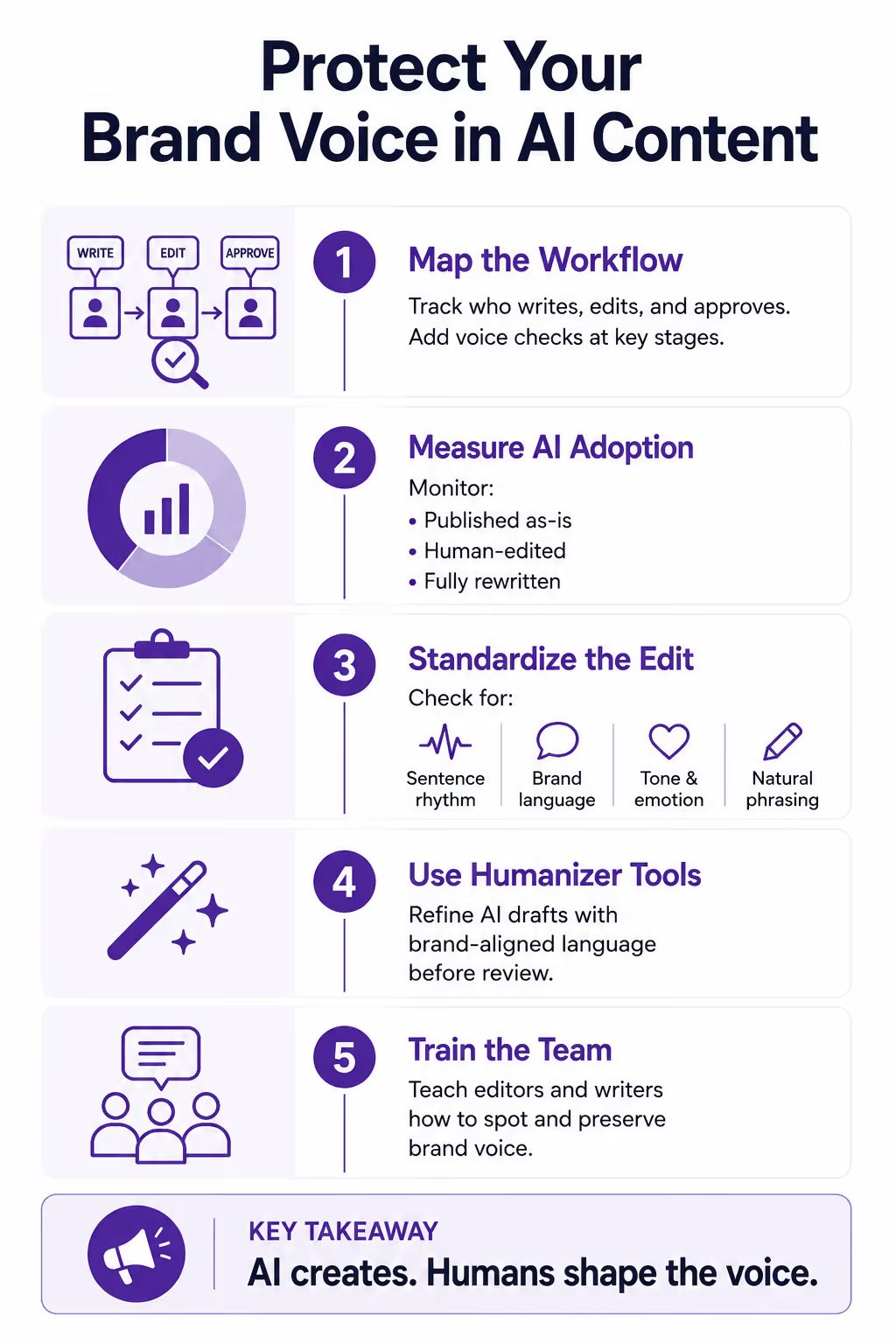
Document every stage from AI draft to published piece. Who generates? Who edits? Who approves? Where can brand voice checks occur? Visibility into your workflow reveals where voice gets lost and where you can fix it.
Measure AI Content Adoption
Track what percentage of AI-generated content goes straight to production versus what gets human editing.Over 70% of marketers have encountered an AI-related incident, underscoring that human touch remains critical for maintaining authentic brand voice.
Processize the Human Edit
Create editorial checklists specifically for voice checks: sentence rhythm, idiomatic expressions, emotional resonance, appropriate humor. Make sure editors own brand voice responsibility as part of their standard workflow, not an afterthought.
Use Humanizer Tools
This is where technology meets practicality. Tools like Yarnit's Humanizer smooth robotic edges, infuse brand-aligned language, and help scale the humanization process without massive manpower. They bridge the gap between AI efficiency and human authenticity, acting as your first line of defense against generic content.
Train Your Content Team
Regular workshops on recognizing and embedding brand voice nuances keep everyone aligned. Voice consistency requires organizational buy-in, not just one person policing content.
By weaving brand voice checks into your workflow and employing smart humanizing tech, you transform from "meh" to memorable with every piece of content.
Own Your Voice in the AI Era
B2B content doesn't have to sound like it emerged from the mind of a well-meaning robot. With deliberate auditing, operationalized brand guidelines, and process improvements—plus a healthy dose of human spirit—your brand voice can break free from bland AI sameness and genuinely resonate.
The steps are clear: audit your current content ruthlessly, translate vague brand adjectives into concrete AI instructions, build a voice bank of exemplary content, anchor to a bold point of view, and embed voice checks into your workflow. It's not magic—it's deliberate process design.
Ready to smooth those robotic edges and scale your unique voice effortlessly? Give Yarnit's Humanizer a try—the perfect partner for any B2B marketer serious about sounding like themselves, at scale. Because in an age of AI-generated everything, authenticity isn't just nice to have—it's your competitive advantage.


