




You know what's worse than bad B2B content? Content that's so professionally polished, so perfectly optimized, so impeccably on-brand that it could've been written by literally anyone. Your competitor down the street. That startup that just raised Series A. The enterprise vendor with the bloated marketing budget. Take your pick: they all sound exactly the same.
The culprits are the very tools we've rushed to adopt to stay competitive. AI writing assistants have democratized content creation, but they've also created an unexpected side effect: a sea of sameness where every brand "leverages innovative solutions to streamline workflows and unlock unprecedented value." That sentence could've come from any of a thousand B2B websites.
79% of B2B buyers now use AI search tools themselves, making them increasingly adept at spotting AI-generated content. But they don't test it less because they trust it more—they test it less because they've learned to simply scroll past it. When content feels generic and AI-generated, audiences don't engage deeply enough to even scrutinize it. They just move on. In B2B, where trust signals can make or break a six-figure deal, this is quietly devastating your bottom-line without you even knowing it.
We're going to look at what happens when everyone's content starts sounding identical: how AI tools create cookie-cutter messaging, which brands are actually breaking through with distinctive voices, the slow-burn damage of generic content, and what you can actually do to reclaim your brand's unique voice.
The AI Content Convergence Problem
Most B2B marketing teams are using remarkably similar tools. Same AI writing assistants. Same SEO optimization platforms. Same prompts pulled from the same "best practices" articles. Content is converging faster than you can say "synergistic ecosystem."
The problem compounds because B2B content was already jargon-heavy before AI entered the picture. Now we've got AI tools trained on mountains of that same jargon, producing outputs that sound professionally confident and helpful—but utterly indistinguishable from competitors. According to research on AI writing tools, this convergence isn't accidental. It's baked into how these systems work.
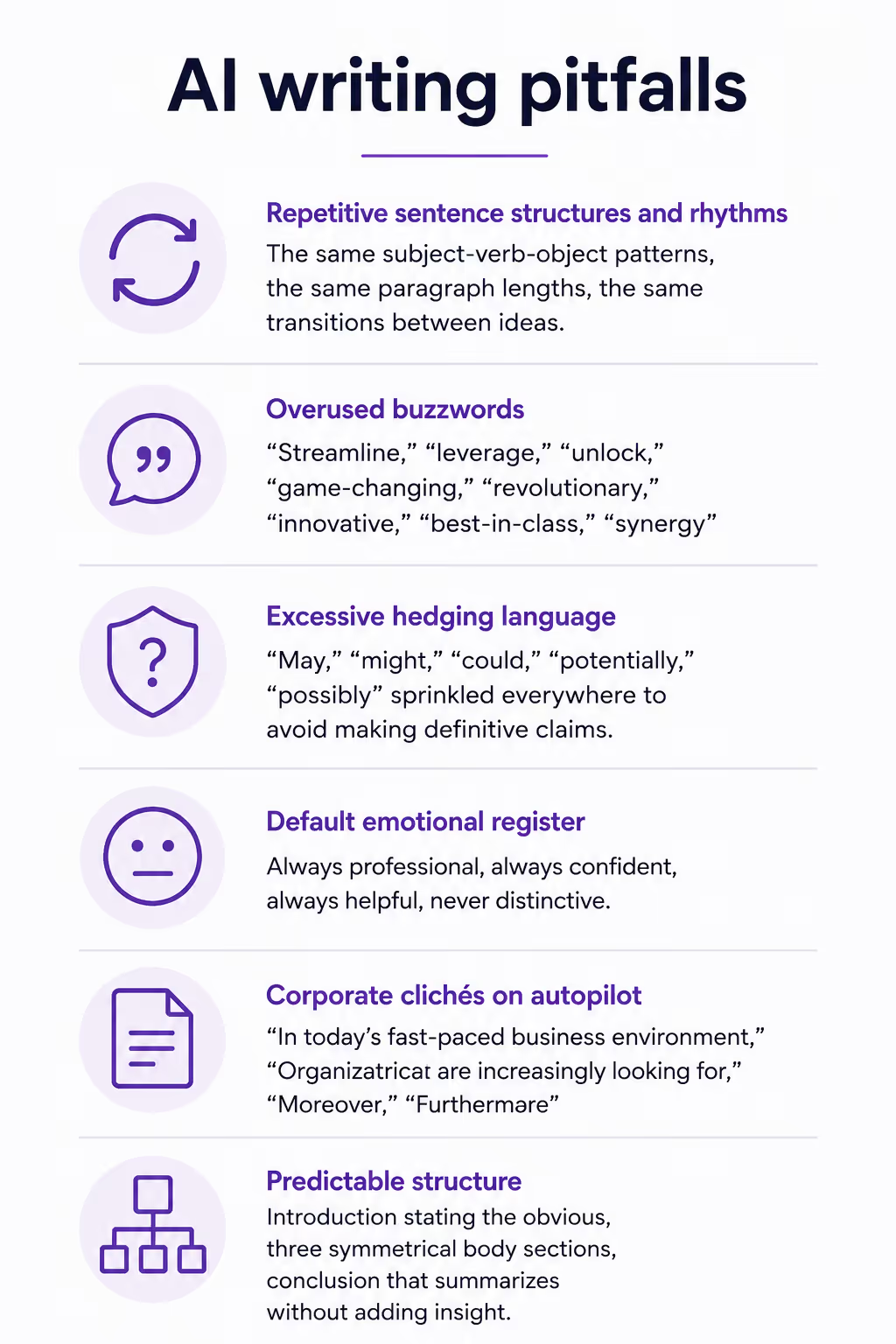
AI-generated B2B content typically shows these telltale signs:
- Repetitive sentence structures and rhythms: The same subject-verb-object patterns, the same paragraph lengths, the same transitions between ideas
- Overused buzzwords: "Streamline," "leverage," "unlock," "game-changing," "revolutionary," "innovative," "best-in-class," "synergy"
- Excessive hedging language: "May," "might," "could," "potentially," "possibly" sprinkled everywhere to avoid making definitive claims
- Default emotional register: Always professional, always confident, always helpful, never distinctive
- Corporate clichés on autopilot: "In today's fast-paced business environment," "Organizations are increasingly looking for," "Moreover," "Furthermore"
- Predictable structure: Introduction stating the obvious, three symmetrical body sections, conclusion that summarizes without adding insight
Everyone's trying to stand out by using the same tools that make them blend in. It's like showing up to a networking event where everyone's wearing the exact same outfit and wondering why no one remembers you.
The Power of Distinct Brand Voice in B2B
While most brands are busy sounding identical, a handful of B2B companies are pulling ahead simply by sounding like themselves. These brands established strong, distinctive voices before the AI content boom, and now they're reaping the rewards as the gap between "memorable" and "generic" widens.
Take Semrush, which brings personality to SEO tools by balancing data-driven insights with approachable, conversational language. They don't talk down to beginners but don't bore experts either, a tricky balance they've mastered.

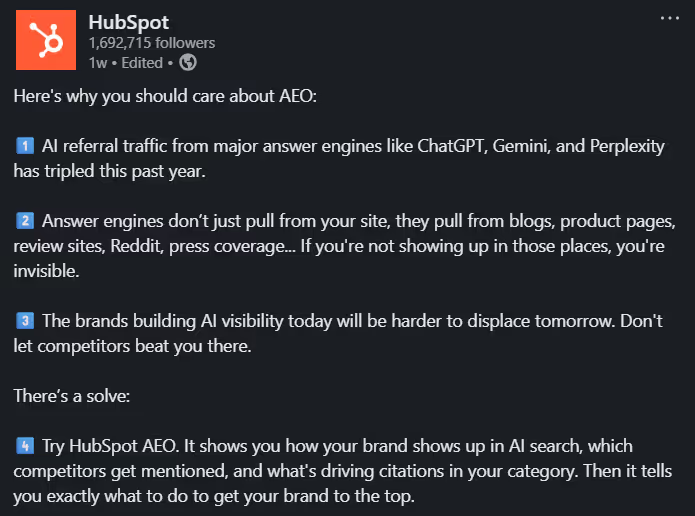
HubSpot pioneered the friendly, educational B2B voice. They consistently sound like that smart colleague who's genuinely excited to help you succeed—not the consultant trying to impress you with jargon.
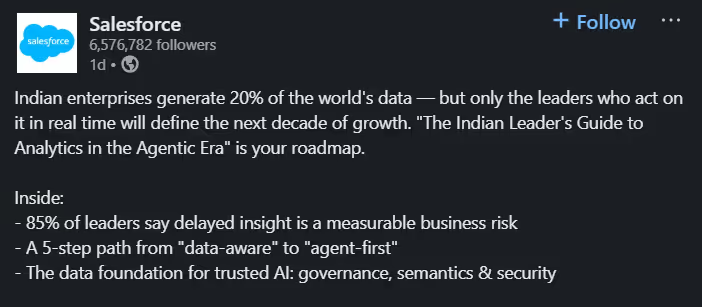
Salesforce combines aspiration with practicality. Their "Customer 360" messaging framework creates a consistent narrative across all content while leaving room for personality and customer stories.
Mailchimp (yes, B2B can be fun) proved that email marketing platforms don't have to sound boring. Their quirky, illustrated brand voice stands out precisely because it refuses to sound like everyone else in the space.
These brands share something crucial: they invested in developing distinctive voices before AI made it easy to sound "professional." Now that professional has become the baseline and everyone sounds professionally boring, their distinctiveness has become their competitive advantage.
The authenticity gap is real. As smart executives recognize AI content as a brand risk, those with established voices are one step ahead.
The True Cost of Generic AI Content in B2B
Generic AI content is particularly insidious because the damage doesn't show up in any single piece. It accumulates. Slowly. Quietly. Until one day you realize prospects can't quite remember who you are or why you're different from three other vendors they're considering.
Trust erosion you can't see until it's too late
Every piece of generic content makes a tiny withdrawal from your brand trust account. One article that sounds AI-generated? No big deal. Fifty? A hundred? Now you've got a problem. According to research on humanizing business communication, audiences increasingly test AI-generated content less, not because they trust it more, but because they've learned to simply scroll past it.
In B2B, where buying cycles can span months and involve multiple stakeholders, every touchpoint matters. When your content feels indistinguishable from your competitors', you're not building the kind of trust that survives a procurement process.
Lost deals to cheaper (but more authentic) competitors
This scenario plays out constantly: Two vendors with similar capabilities. Similar pricing. Similar feature sets. But one of them has content that actually sounds like real humans who understand real business problems. The other sounds like it was assembled by a committee of robots trying to pass a Turing test.
Which one wins? It's not the one that "leverages cutting-edge solutions to streamline operational efficiency."
The forgettability factor
Generic content doesn't just fail to build your brand, it actively makes you forgettable. When everything sounds the same, nothing sticks. Your prospects might read your whitepaper, visit your blog, even attend your webinar. But when decision time comes, they struggle to remember what made you different. Because, well, you didn't sound different.
If you're relying on generic AI content without brand voice oversight, you're essentially investing in your own invisibility. You're spending budget to blend into the background.
Yarnit's Humanizer Feature: Bringing Brand Voice Back to Life
So what's the solution? You can't exactly abandon AI tools and go back to writing everything from scratch. (Your content calendar would laugh at you.) But you can't keep churning out generic content either.
AI humanizer tools designed for marketers solve this problem, technology that injects brand personality back into AI-generated content while smoothing out those telltale AI rough edges.
Yarnit's Humanizer feature does exactly this. It takes your AI-drafted content and transforms it from "sounds like everyone" to "sounds like you." What makes it different comes down to five core capabilities:
- Brand voice preservation: Not just grammar fixes, but actual personality injection based on your brand guidelines.
- Natural rhythm and flow: Varied sentence lengths, authentic transitions, human-like pacing.
- Jargon detox: Identifies and replaces overused buzzwords with more distinctive language.
- Authenticity scoring: Shows you exactly how "human" your content sounds before you publish.
- Context awareness: Understands B2B conventions while helping you stand out within them.
A good humanizer isn't just about making content sound less AI-generated. It's about reclaiming your brand's distinctive voice at scale. You get the efficiency of AI with the authenticity of human-crafted content.
Worth noting: this very blog post was run through Yarnit's Humanizer. Notice how it doesn't sound like every other article about AI content? That's not an accident. The difference between generic AI output and humanized content isn't subtle, it's the difference between being remembered and being scrolled past.
Because in B2B, where trust is currency and authenticity is rare, sounding like everyone else isn't just a missed opportunity. It's a hidden cost you can't afford to keep paying.
Ready to reclaim your brand voice? Stop blending in with the AI-generated crowd. Explore how Yarnit's Humanizer can help your content sound authentically you, while keeping the efficiency you need.


