AI Insights
Agent Memory Has Outgrown Retrieval
Most AI memory systems can find relevant past information but can't tell if it's still true, so agents act on stale data that was technically "retrieved correctly."
September 17, 2026

This post breaks down exactly how to pivot your content strategy toward BOFU, what types of content to create, and how to repurpose everything efficiently. Time to get specific.



Search engines used to categorize intent into four neat buckets: informational, navigational, transactional, and commercial. That framework is breaking down. We're left with maybe two or three intent types that actually matter, and transactional queries are becoming less relevant as platforms serve up answers before anyone clicks through.
For B2B marketers, this reality points to one clear move: prioritize Bottom of Funnel (BOFU) content.
High-intent traffic from AI engines outperforms regular search traffic and converts at 3-5x the rate. BOFU pages targeting high-intent keywords consistently improve rankings and conversions within 3-6 months when you have the technical basics covered. Meanwhile, top-of-funnel content is losing ground as search platforms increasingly surface AI-generated summaries that answer questions without requiring a click.
This post breaks down exactly how to pivot your content strategy toward BOFU, what types of content to create, and how to repurpose everything efficiently. Time to get specific.
Research shows that zero-click searches caused by generative summaries are climbing, with click-through rates declining across informational queries. BOFU queries skip the summary treatment. When someone's searching for "best project management software for remote teams" or "Asana vs Monday pricing comparison," they're not looking for a quick answer. They want depth, specifics, and the information they need to make a decision.
These searches still drive clicks, and more importantly, they drive conversions.
B2B SaaS companies focusing on high-intent keyword targeting see measurable pipeline growth because their content directly addresses buyer needs at the decision stage. Top-of-funnel traffic? It's being condensed into three bullet points that users read without ever visiting your site.
Prioritizing BOFU means capturing users when they're ready to buy, not when they're casually browsing. Your content should answer the specific questions that search platforms can't easily condense.
Modern search platforms favor content that answers specific queries. Think comparison articles, detailed pricing breakdowns, competitor alternatives, and data-driven analysis. These formats resist summarization because they require context and nuance.
Here’s what’s key for B2B marketers: BOFU content tends to avoid being condensed into overviews precisely because it serves users actively comparing options or seeking detailed implementation guidance. This makes it more click-worthy and valuable in today's search ecosystem.
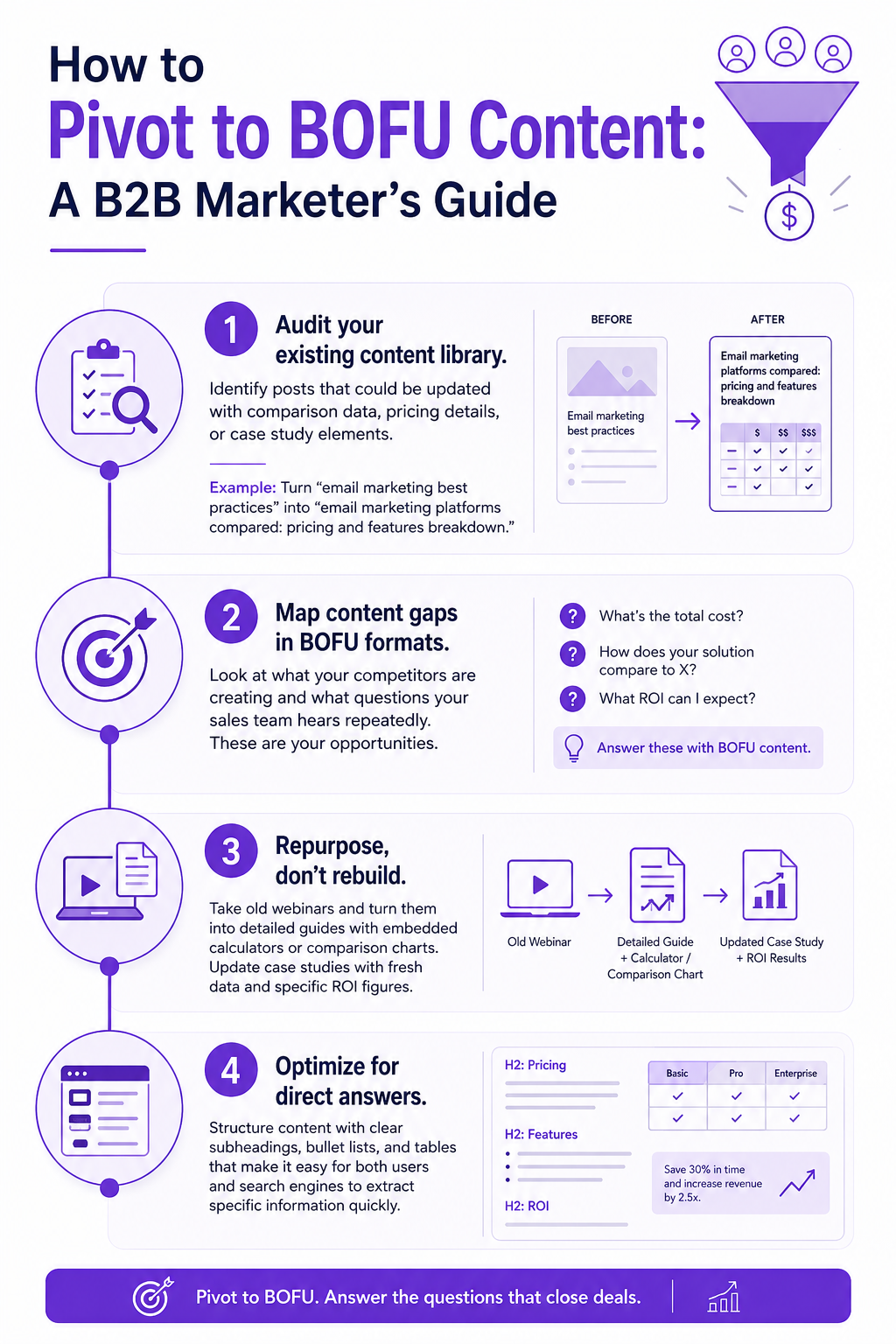
You don't need to abandon informational content entirely. Reallocate resources toward formats that still drive meaningful traffic and conversions.
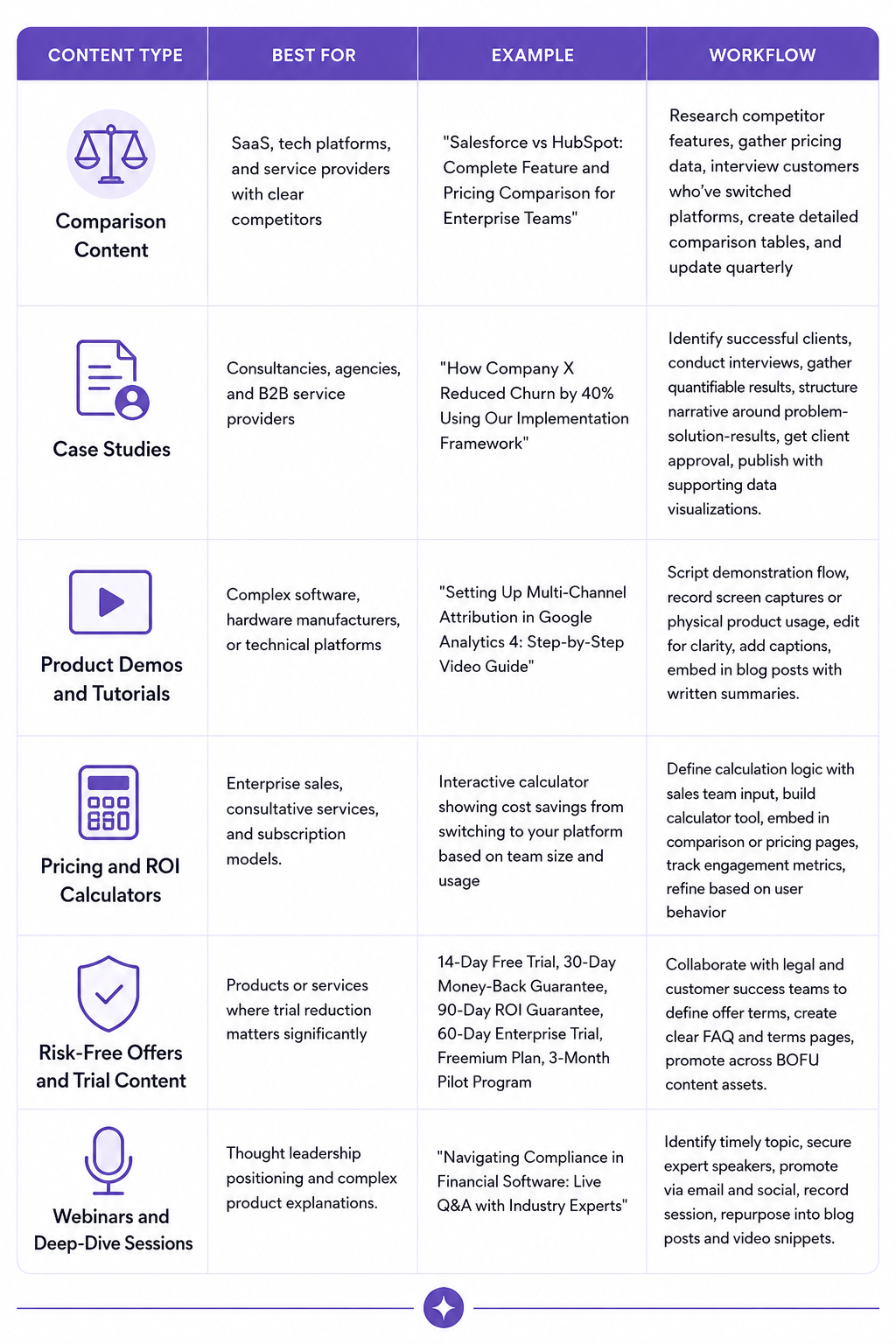
Not all BOFU content fits every business model. Here's a breakdown of content types with practical examples and guidance on which B2B categories benefit most:
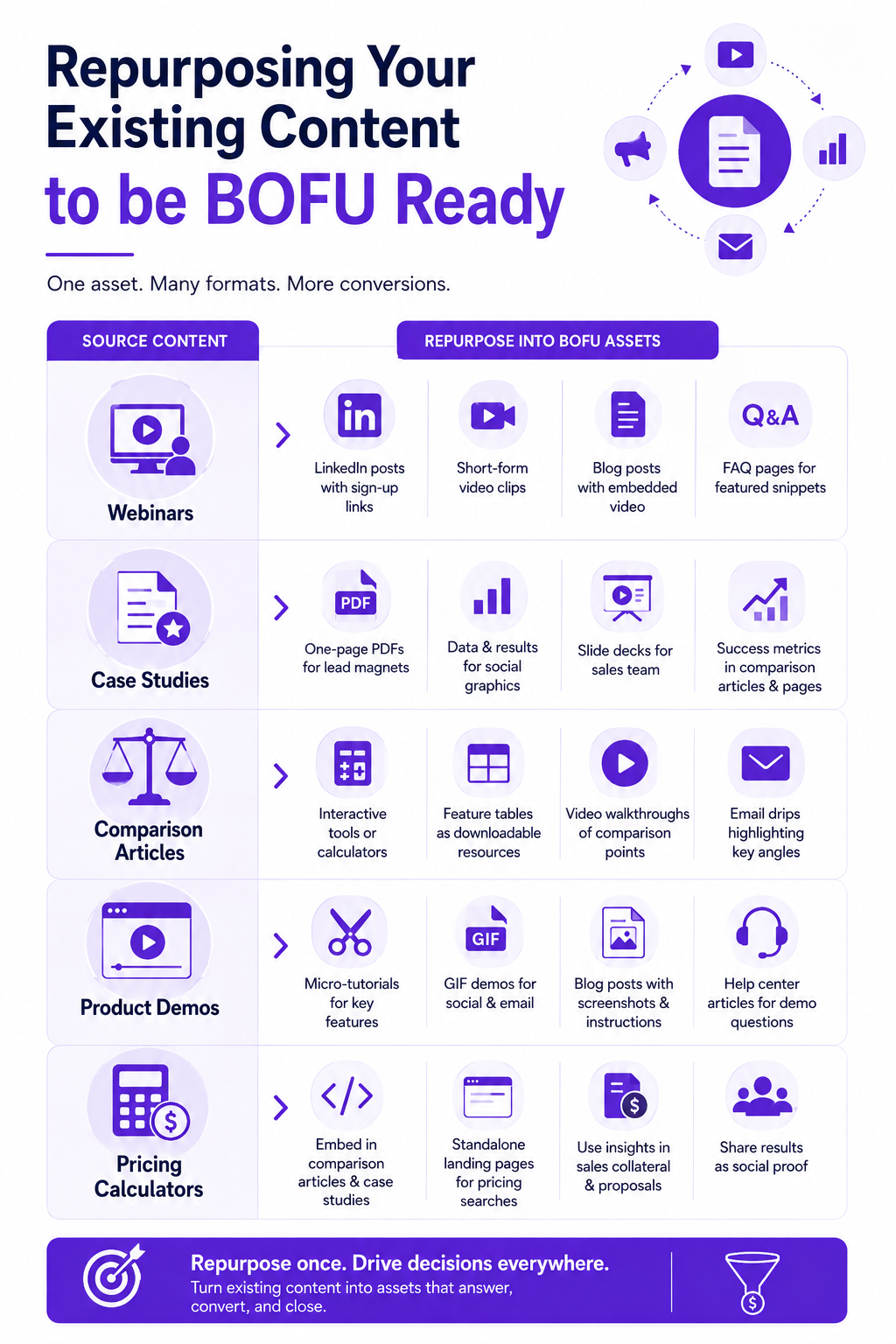
Creating BOFU content is resource-intensive. A single in-depth comparison article requires 15-20 hours of research, writing, and design. Repurposing multiplies your investment while reinforcing a consistent brand narrative across platforms.
Repurposing matters because search platforms increasingly reward content that appears in multiple formats and contexts. A webinar becomes a blog post, which becomes a LinkedIn carousel, which becomes a lead magnet. Each iteration reinforces your authority and expands your reach.
Every piece of BOFU content should serve multiple purposes across your marketing ecosystem. One webinar can feed your content calendar for months if you're strategic about breaking it apart and redistributing it.
Your top-of-funnel content is feeding AI summaries. Your BOFU content is feeding your pipeline. Start by auditing your current content, identifying quick wins for repurposing, and building a pipeline of comparison articles and case studies that directly address buyer questions.
Search behavior will continue evolving. Platforms will get better at summarizing basic information. What gives you an edge is creating content too valuable to condense, content that serves users when they're ready to make decisions.
Stay ahead of these shifts and get actionable marketing insights delivered to your inbox. Subscribe to the 24Yarns newsletter and never miss the trends shaping your content strategy.
.avif)

From collection to clarity — we’ll help you make sense of it all.

Giving shape to intelligence