


Contextual AI
Experience the Future of Contextual Intelligence with Yarnit AI
Yarnit’s Contextual Intelligence Engine grounds AI in your enterprise knowledge — your documents, data, brand, processes, and product understanding — ensuring accurate, compliant, and high-quality outputs across marketing, commerce, operations, and R&D.
Trusted by World-Class Marketing Teams


Key Features
Powered by Agentic RAG, hybrid retrieval, knowledge graphs, and multi-agent reasoning, Yarnit delivers outputs rooted in enterprise truth — not generic model guesses.
Accurate & Up-to-Date Knowledge
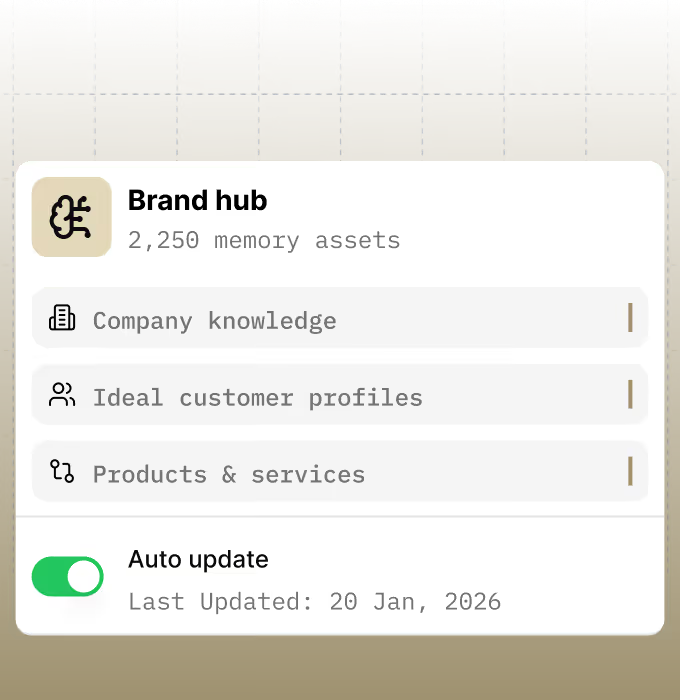
Domain, Brand & Process Understanding
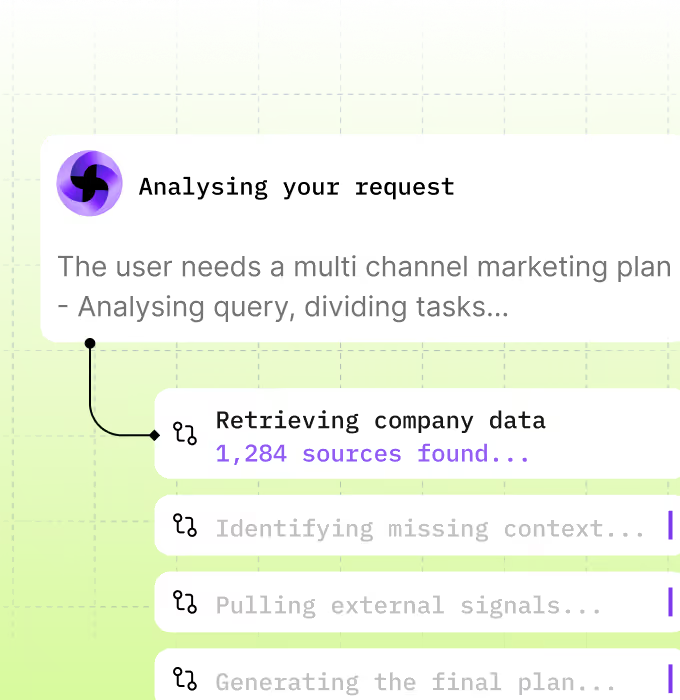
High-Quality, Context-Grounded Generation
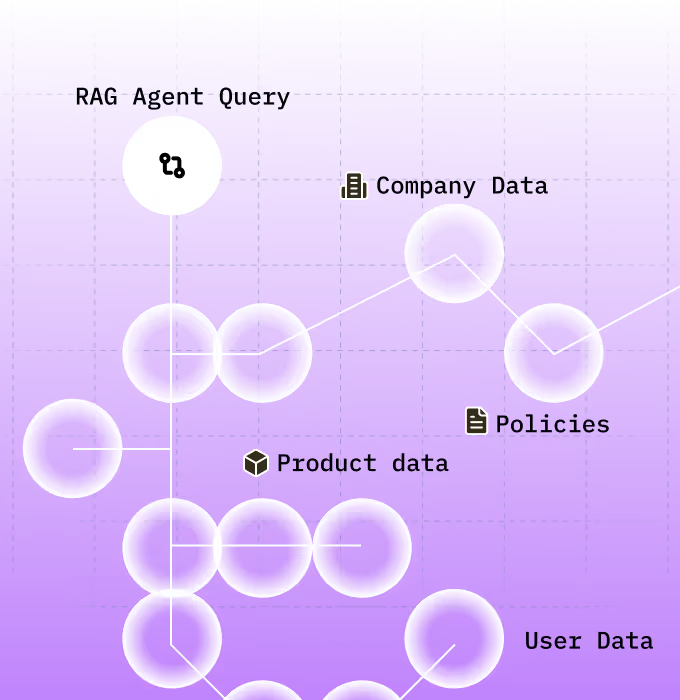
Brand Consistency at Any Catalog Size
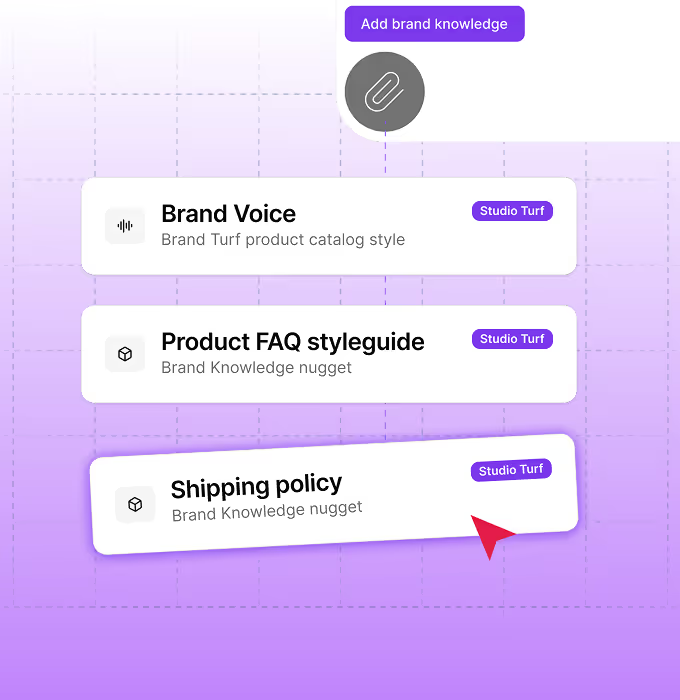
Consistent Compliance & Governance

Our Approach
Not Just Generative. Contextual by Design.
AI that understands your business before it speaks — grounded in data, governed by rules, and built to think, verify, and act.

Agentic RAG (Retrieval-Augmented Generation)
Yarnit uses multi-agent retrieval:
Planner agents decide what needs to be retrieved
RAG agents fetch data from documents, databases, and graphs
Validator agents check factual accuracy
This process produces grounded, explainable outputs.

Intelligent Multi-Agent Framework
Vertical agents (marketing, catalog, engineering) and horizontal agents (RAG, SQL, writing, analysis) collaborate under YaOS orchestration — enabling end-to-end workflows that think, retrieve, generate, and execute actions.

Knowledge Graph Integration
Yarnit builds semantic links across your enterprise — product taxonomy, specs, policy rules, customer signals, domain structure, and process dependencies — enabling richer reasoning, better disambiguation, and smarter output generation.

Continuous Learning & Adaptation
Agents learn from new launches, documents, updated data, performance insights, and user feedback — keeping AI aligned with your evolving business.

Prebuilt Data + Action Tool Ecosystem
Yarnit ships with prebuilt connectors for:
Databases (SQL/NoSQL/vector)
File stores & knowledge bases
PIM/CMS/CRM/ERP systems
Messaging, publishing & automation tools
Agents read enterprise data and take real action — updating systems, generating content, and triggering workflows

Advanced Prompt Engineering
Yarnit builds semantic links across your enterprise — product taxonomy, specs, policy rules, customer signals, domain structure, and process dependencies — enabling richer reasoning, better disambiguation, and smarter output generation.
FAQ's
Got questions?
We’re glad you asked
Find quick answers to common questions about our product and services
Will Yarnit maintain my brand voice and style?
Yes. You can set brand guidelines once, and Yarnit applies your tone, vocabulary, and visual style across all product listings.
What types of product categories does Yarnit support?
Pretty much everything. Apparel, footwear, beauty, health & wellness, home décor, electronics, watches, luxury items, gifts, pet supplies, kitchen appliances, fitness gear — if it’s sold online, Yarnit can help optimize it.
What does Yarnit do for my product listings?
Yarnit analyzes your title, description, images, specs, and metadata like a seasoned catalog manager. It identifies gaps, checks if you’re meeting SEO/AEO and platform requirements, and then generates polished copy, visuals, and recommendations to help your listings perform better.
How does Yarnit decide what changes to recommend?
It evaluates your product page across multiple dimensions: attributes, structure, keyword depth, clarity, imagery quality, metadata, compliance requirements, and category expectations. Then it provides targeted fixes — similar to how a catalog manager or SEO/AEO specialist would audit a PDP.
Do I need professional photos to get high-quality visuals?
Nope. Yarnit’s creative engine can generate studio-grade images, lifestyle scenes, or category-appropriate product shots. If you already have photos, it can enhance them or guide you on what’s missing for better conversion.
Does Yarnit only work for new product launches?
Not at all. It’s equally useful for: – Refreshing old, underperforming listings – Filling missing attributes – Updating outdated images – Improving listing quality for seasonal sales
Can Yarnit really improve my organic discoverability?
Yes, Yarnit reviews your content against platform SEO/AEO rules, attribute completeness, keyword coverage, readability, and conversion elements. It fixes missing details, improves clarity, aligns with category best practices, and strengthens your metadata. All of this helps your listings gain more organic visibility.
Can Yarnit help if I have hundreds or thousands of SKUs?
Absolutely. Yarnit is built for scale. You can optimize listings in bulk, keep product copy and creative consistent, and maintain unified branding across large catalogs in minutes instead of weeks.
Ready to Transform Your Marketing?

Your AI Marketing Team


