


%20(1).avif)
Remember playing Super Mario and discovering that warp pipe that lets you skip three worlds? One minute you're in World 1, the next you're landing in World 4 no hassle, no extra levels, just straight to where you want to be.
That's what's happening in online shopping right now. AI has become the shortcut between "I need this" and "I just bought it." And Google just made that shortcut a whole lot faster with the Universal Commerce Protocol, or UCP.
Here's why this matters: According to Reuters, AI influenced just over $14 billion in online sales on Black Friday alone.
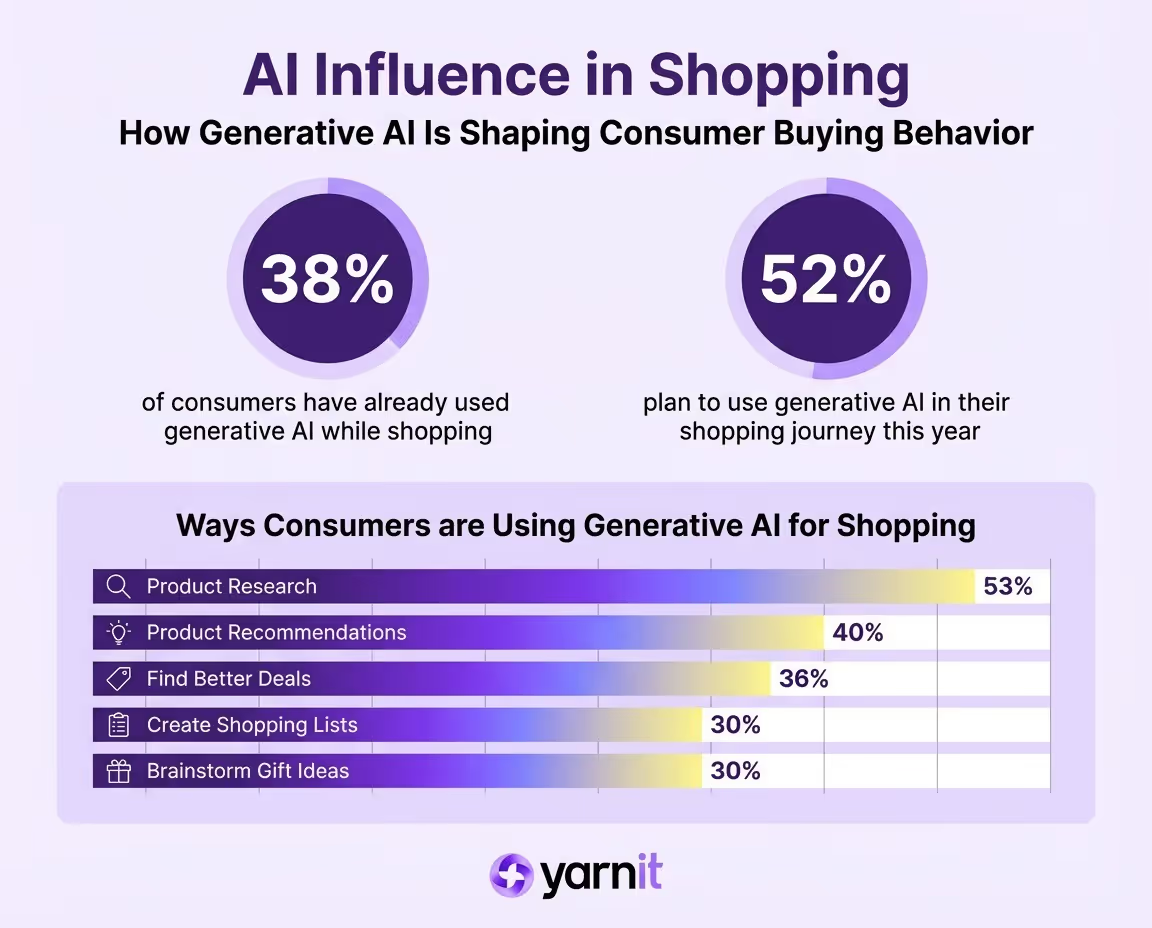
Adobe found that 38% of consumers have already used generative AI during their shopping journey, and 52% plan to use it this year. They're using it for product research (53%), getting recommendations (40%), finding deals (36%), creating shopping lists (30%), and brainstorming gift ideas (30%).
Shopping is changing right now, and brands that don't understand agentic commerce and how UCP works are going to get left behind.
What is UCP?
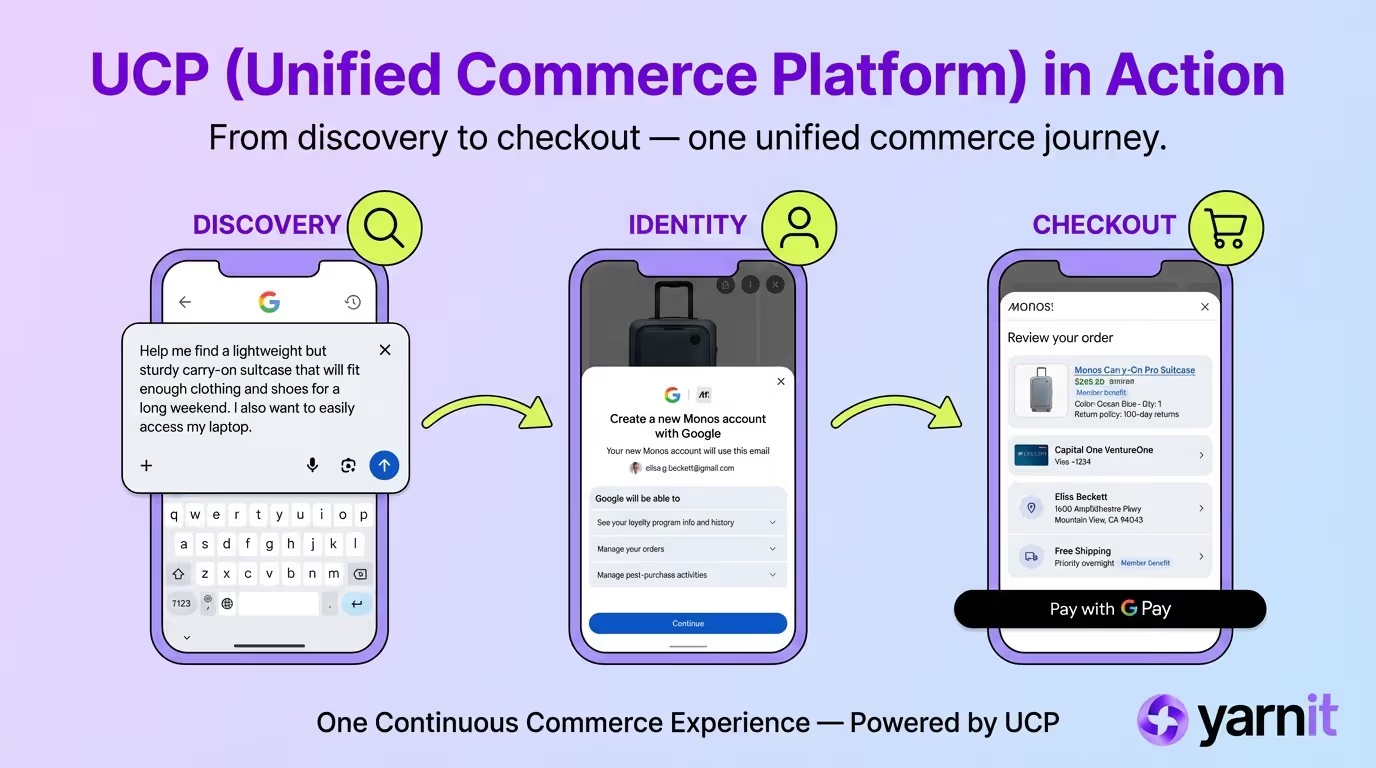
Let's get to the basics. UCP stands for Universal Commerce Protocol, and it's Google's standard for how AI agents connect with commerce setups. It handles the full flow: from discovering products to adding them to your cart, checking out, and even checking order status later. Retailers don't have to create custom setups for each AI tool; instead, they plug in once with UCP, and their store shows up across Google's AI spots like Search or Gemini. Down the line, it'll work with any agent that adopts the protocol.
For example, say you tell an AI, "Help me find a lightweight but steady carry-on bag." Without UCP, you might get suggestions with links to follow. But with it, the agent pulls options directly, lets you pick, and if you're set up, you can cart it and pay without breaking the chat. UCP makes all those steps discovery, cart, payment consistent and linked, turning scattered interactions into one smooth path.
Why Does Google's UCP Actually Matter?
Friction kills sales. Every extra click, every page load, every time someone leaves an AI chat to visit a website that's another chance they abandon the purchase.
UCP eliminates most of that friction. AI doesn't just inform it. That's the shift from passive assistance to active commerce, and that's what agentic commerce means.
For shoppers, this means faster purchases. For retailers, it means capturing buyers at the moment of interest. For the entire ecommerce ecosystem payment platforms, logistics, customer service it means adapting to a world where AI completes transactions, not just influences them.
What's Different About the UCP Experience?
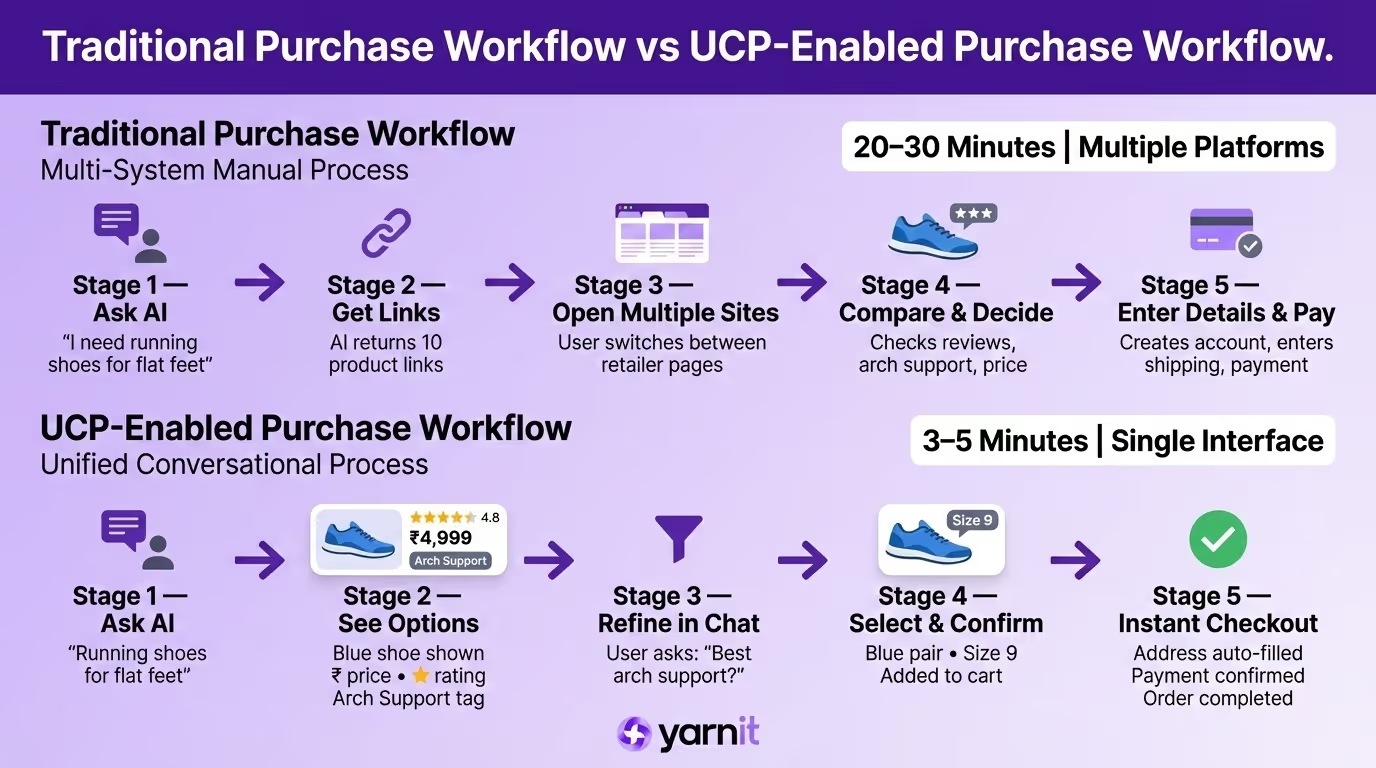
Right now, when you shop with AI assistance, you're still dealing with a fragmented experience. The AI can recommend products, but then you have to leave that conversation, visit retailer websites, create accounts, fill out forms, and manually complete purchases. It's like having a helpful friend who can tell you where to find something but can't actually help you buy it.
UCP changes this by creating a standard "language" that AI agents and e-commerce platforms can both speak fluently. Instead of each retailer building custom integrations with every AI platform, they can implement UCP once and work with any AI agent that supports it.
Who Benefits from UCP?
For Businesses:
Your products become discoverable wherever AI agents operate. You're competing for AI recommendations, not just clicks. And because UCP handles transactions end-to-end, you convert interest into sales faster.
For Customers:
Shopping gets faster and simpler. AI agents remember preferences, suggest alternatives in real time, and keep everything in one place. Less hunting, more buying.
For Payment Platforms:
Payment providers must integrate smoothly with AI-driven shopping. If your checkout adds extra steps or breaks the flow, customers choose competitors that don't.
Real Brands Already Winning with Agentic Commerce
While UCP is still rolling out, the brands that understood where commerce was heading didn't wait. They built for the agentic experience early and the gap between them and everyone else is already widening.
Papa John's: Conversational Ordering That Works
Papa John's rolled out an enhanced food ordering agent supporting natural language ordering across mobile, kiosks, and in-car systems. It intelligently upsells based on previous orders, syncs with real-time menu updates, and provides 24/7 AI-assisted support. Conversational commerce isn't futuristic, it's live.
Estée Lauder and Jo Malone London: Personalized Beauty
Estée Lauder and Jo Malone London developed an AI Scent Advisor replicating their in-store consultation experience digitally. Customers describe scents using natural language "fresh and citrusy" and the AI maps those to Jo Malone's olfactory data, delivering personalized recommendations that guide from curiosity to purchase.
Both examples demonstrate the same core principle: AI agents that understand context and can have natural conversations help customers make decisions faster and with more confidence. That directly translates to higher conversion rates, larger order values, and fewer post-purchase issues like returns or buyer's remorse.
Questions Your Brand Should Ask Right Now
1. Are your product pages optimized for AI agent interactions?
AI agents need structured, clean data. If your product descriptions are messy or metadata is incomplete, you won't show up in AI recommendations.
2. Is your post-purchase experience ready for seamless follow-up?
Customers expect real-time order tracking, easy returns, and proactive communication within the AI interface. Can your systems handle that?
3. Is your payment integration UCP-ready?
If checkout requires leaving the AI environment, you're introducing friction at the worst moment. Make sure your payment systems work smoothly within AI interfaces.
4. Is your product data well-structured?
AI agents rely on consistent product attributes, clear pricing, accurate inventory, and defined checkout flows. If your backend is disorganized, your AI presence will be too.
Getting these right isn't just technical preparation. It's what determines whether your brand shows up when an AI agent is ready to complete a purchase or whether a competitor does instead.
The Agentic Commerce Era Is Here: Are You Ready?
AI influenced over $14 billion in sales on Black Friday alone, and more than half of consumers plan to use AI in their shopping this year. Google's Universal Commerce Protocol is making that shift seamless and scalable.
The question isn't whether agentic commerce is coming, it's whether your brand is ready. Start with clean product data, optimized pages, integrated payments, and transparent post-purchase experiences.
While tech teams focus on integrations, content and discoverability need equal attention. Solutions like Yarnit help streamline product content creation, optimize for keywords and structure product pages so AI agents can find, understand, and recommend your products accurately.
The shortcut between what customers want and what they buy is getting shorter every day. Make sure your brand is part of it.


