


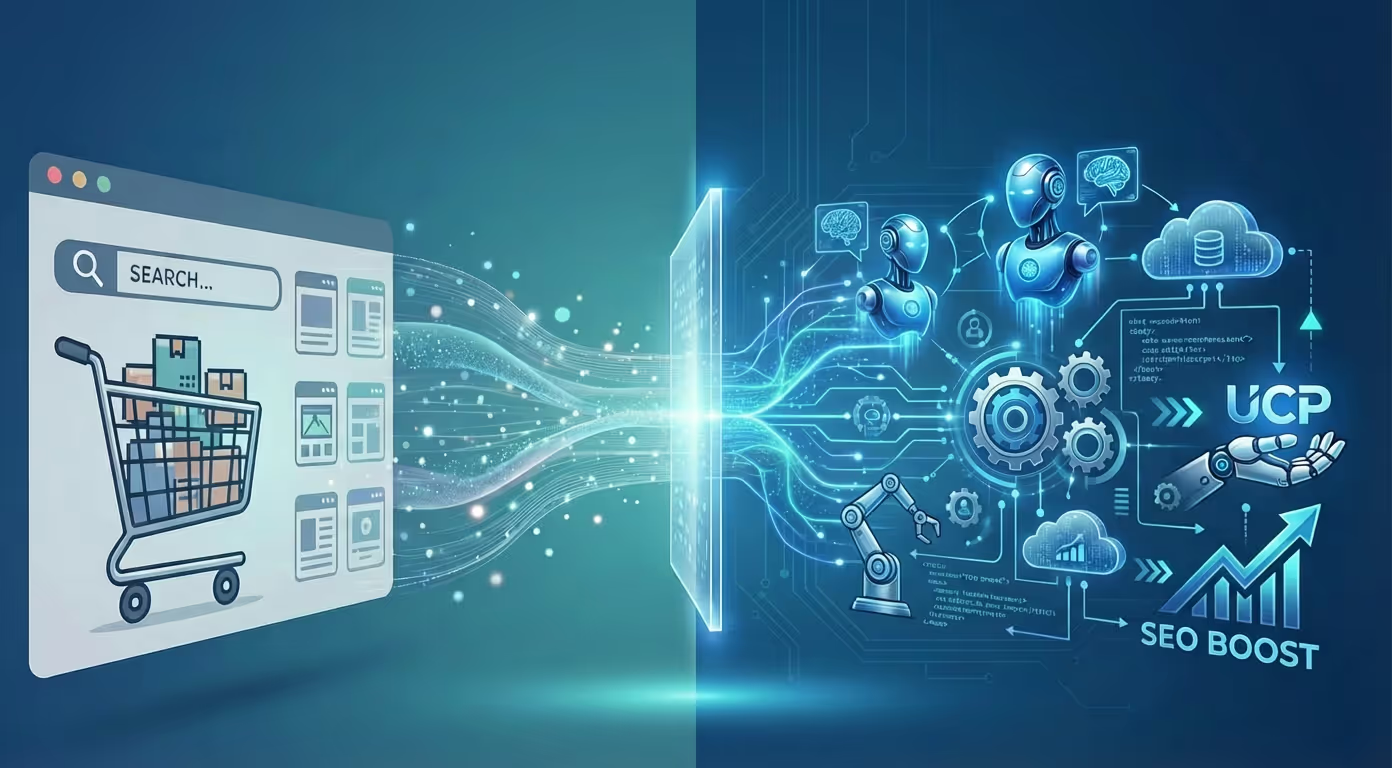
Before we could recover from the news of AI tech giants releasing shopping assistants for a personalised shopping experience, Google launched Universal Commerce Protocol. ChatGPT shopping, Perplexity AI Shop Like a Pro and other AI assistants did an amazing job reducing the discoverability friction, but with UCP, the entire shopping experience will now be executed by AI. So, if you were starting to adapt with the new content strategy to get AI visibility for your store, then gear up to expand your SEO capabilities in the UCP era. If previously you were chasing discoverability capability, content assets, traffic from AI platforms, now you might be looking at getting your store ready for transaction qualification, technically accurate product feed, and how often AI agents are choosing your store.
But that’s not all. It’s Google. If it launches something, it’s grand and jaw-dropper for a reason. To up the seamless purchasing journey, the experience also involves features that lets you talk to a brand’s AI assistant and flashes discount offers when it senses a high-intent buyer. The buyer can also expect to come across product bundles, free shipping, and other value-based incentives. This has opened new opportunities for SEO marketers to re-channelise their marketing efforts and also consider chasing a different set of metrics. Let’s explore some features launched with UCP and understand how UCP will change SEO in E-Commerce.
Universal Commerce Protocol Features
Apart from the cores features of UCP, below are a few more that Google is planning to launch:
Direct Offer: currently in the pilot phase, Direct Offers is a new ad format designed to turn high-intent browsers into buyers. This ad format displays targeted discounts, free shipping delivery, product bundles and many more such offers within the AI search results. So, instead of just responding to keyword matches, Google AI Mode or Gemini will display personalised ads when it senses a buyer is close to making a purchase.
When compared to the traditional keyword-dependent ads on Google SERP, Direct Offers marks a shift in how ads appear in AI-first shopping experiences. So, instead of bombarding a shopper with sponsored links on the very initial phase of buying, Direct Offers waits to present an offer at the right moment.
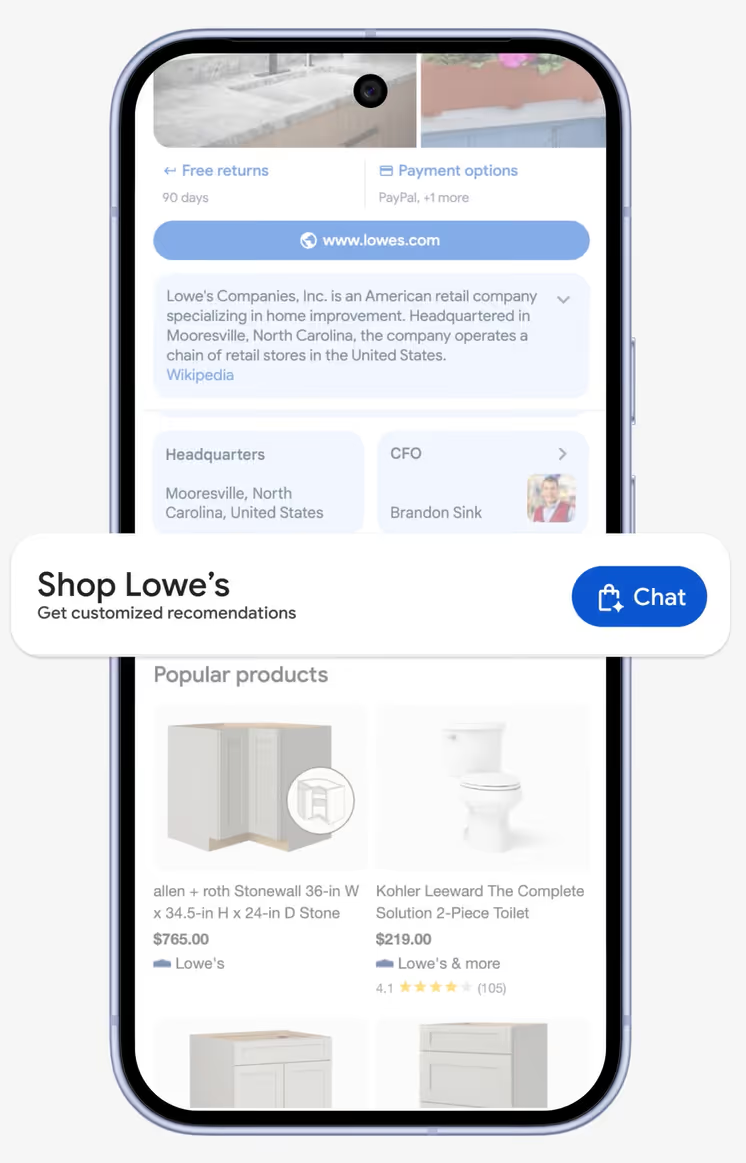
Business Agent: with Google’s business agent, shoppers can now directly chat with a retailer’s virtual assistant. Retailers like Lowe’s, Reebok are live with this feature with data training, deeper customisation, and agent-led checkout coming soon.
This is a great checkpoint to train the virtual assistants with data that addresses buyer queries on point.
How UCP Changes SEO for E-Commerce
Now that you know a little bit more about UCP’s features, let’s see how it’s going to change your SEO efforts.
Structured data to be discoverable by AI agents
Before UCP, you were trying to create seo-rich content to drive traffic to your website and also working towards the ongoing AEO and GEO discussions to get cited by AI platforms. But with UCP, Ecommerce SEO will now enable AI agents to find your brand and complete transactions in that interface. Which means, instead of chasing sessions, impressions and clicks, you will be keeping a close eye on what soon will be known as, ACO (Agentic Commerce Optimisation).
Let’s say a potential customer inquires “I want a pair of slip-on running shoes under 9000/- to be delivered by Sunday”. For this, the AI agent is not only looking at the keyword ‘slip-on running shoes’, it is also looking at the unique constraints of availability, pricing, etc. To get this buyer to buy your product, your feed should have all granular details that informs this level of personalization because AI agents make decisions based on structured data. If your ‘in stock’ attribute is missing, then the AI agent will pass on to favour other brands. So, gone are the days of sassy blog titles, persuasive copies and blogs. Now, you are not only writing for your customer, but you are also writing for the AI agent, who is sadly unsusceptible to your fluff content. With UCP, agentic commerce optimization will check if AI agents are able to discover and read a brand’s product and availability and are able to complete the transaction. So, now instead of chasing website traffic, you will keep a check on transactional readiness.
Traditional Ecommerce SEO asks: “Can Google find and rank my product page?”
UCP ecommerce SEO will also ask: “Will an AI agent be able to complete a purchase?”
Increased interdepartmental collab with SEO
As AI agents look for deterministic responses, they will prefer ‘In stock: 10’ and may ignore ‘almost sold out’. With agents being able to access real-time inventory status, inventory management becomes a ranking factor under Ecommerce SEO. Similar to the cross-collab with the inventory management team, expect SEO teams to connect with engineering, product, and legal & compliance to provide updated info on return policies, customer support, product feature changes etc.
With UCP, SEO-related functions can evolve to overlook brand representation across various departments, which can prevent the ignorance from the AI Ecommerce workflow.
Direct Offers as an SEO Bypass
As discussed above, Direct Offers displays targeted ads to high-intent buyers in the AI conversations. But what does this mean for Ecommerce SEO? Unlike the traditional ads that depend on keyword bidding, you will now create ad content strategy around a buyer’s high-intent behaviour. You will need to understand the persona of a buyer about to make a purchase because what kind of messaging or discount would you want to offer when Gemini senses a buyer’s hesitance during product comparison?
And unlike the dedicated sponsored section on Google SERP filled with sponsored links, Direct Offers is a contextual integration that feels like a helpful recommendation instead of an ad. Because this might be a final saving grace to complete a purchase, your ad copy skills will do the dancing.
The Final E-Commerce SEO Checklist
- Populate every essential and hidden attribute in your product feed such as material, durability, etc. Ensure your products are readable and technically accurate match for a conversational query.
- Regularly audit and validate product descriptions according to UCP guidelines
- Keep a close eye on how AI platforms display products on your category
- Re-consider a different set of metrics such as agent selection rate, how much time it's taking for an AI agent to retrieve product data, etc.
Conclusion
With the launch of UCP, E-Commerce SEO capabilities will expand to meet the demands of the new shopping experience. This starts by defining your store’s capabilities, starting from product discoveries to the final checkout so that AI agents can parse your website. Traditional SEO and branding efforts will essentially remain the same; however, additional content efforts will go into catering the AI E-commerce workflow.
This is where Yarnit for E-Commerce comes into action. Yarnit does your website’s auditing and gives you an analysis, reporting the missing meta details, images, etc. It also instantly optimises product descriptions with high-resolution images, updated product descriptions enriched with keywords, in minutes! For seasonal demands and product releases, Yarnit also helps with bulk PDP generation across your entire catalog. If you are looking to automate your entire E-commerce content workflow, try out Yarnit today and meet the evolving demands of the shopping experience right away!


