



.avif)
I’ve been writing content to appease Google for the last 10 years, and now I’m calling time of death on SEO.
Ever since the 2020 lockdown destroyed what was left of our attention spans, video content has slowly been taking over written content as the de facto way of consuming information on the Internet. If you’re still chasing that #1 spot on Google search results, wake up. Even without AI Overview taking up prime real estate, you’ll have to scroll through knowledge cards, featured snippets, sponsored results, and videos to reach a blog. Video is 50 times more likely to be the top result of Google's first page results, has 41% higher CTR, and drives 157% more organic traffic, making it the 2020 marketer’s Shaka Laka Boom Boom pencil, so to speak.
But now, marketers have a new toy to play with, and a new way to capture the attention of their audiences. AEO and GEO.
Now before you click off this article for repeating a buzzword you’ve been hearing from your boss for the 50th time this week, ask yourself this. Do you really know how to crack this newfangled format, how you can reach your target audience in a brand new way, and how to adapt to the evolution of content consumption? Because even if your answer to any of these questions is even a 1% no, I have all the answers for you (that was an AEO pun).
Let’s start off with a simple definition of AEO and GEO, and I promise, it’ll be something you can quote tweet without X Premium:
- AEO = Answer Engine Optimization, or optimizing your content to answer the questions people ask AI engines like ChatGPT, Google, and Perplexity
- GEO = Generative Engine Optimization, or optimizing your content so that chatbots can pull it into their responses
Now for the nitty gritty. Why AI search isn’t all bad, how search is now a demand gen engine, how AEO and GEO actually works, and how you can crack it.
All this and more in this edition of a post-mortem report on SEO.
Why AI Search Isn't as Bad as it Seems
Now if this were a video, this is where I’d insert a quick cut collage of news headlines decrying AI search, but since it’s a blog, you’ll have to settle for this hasty collage.
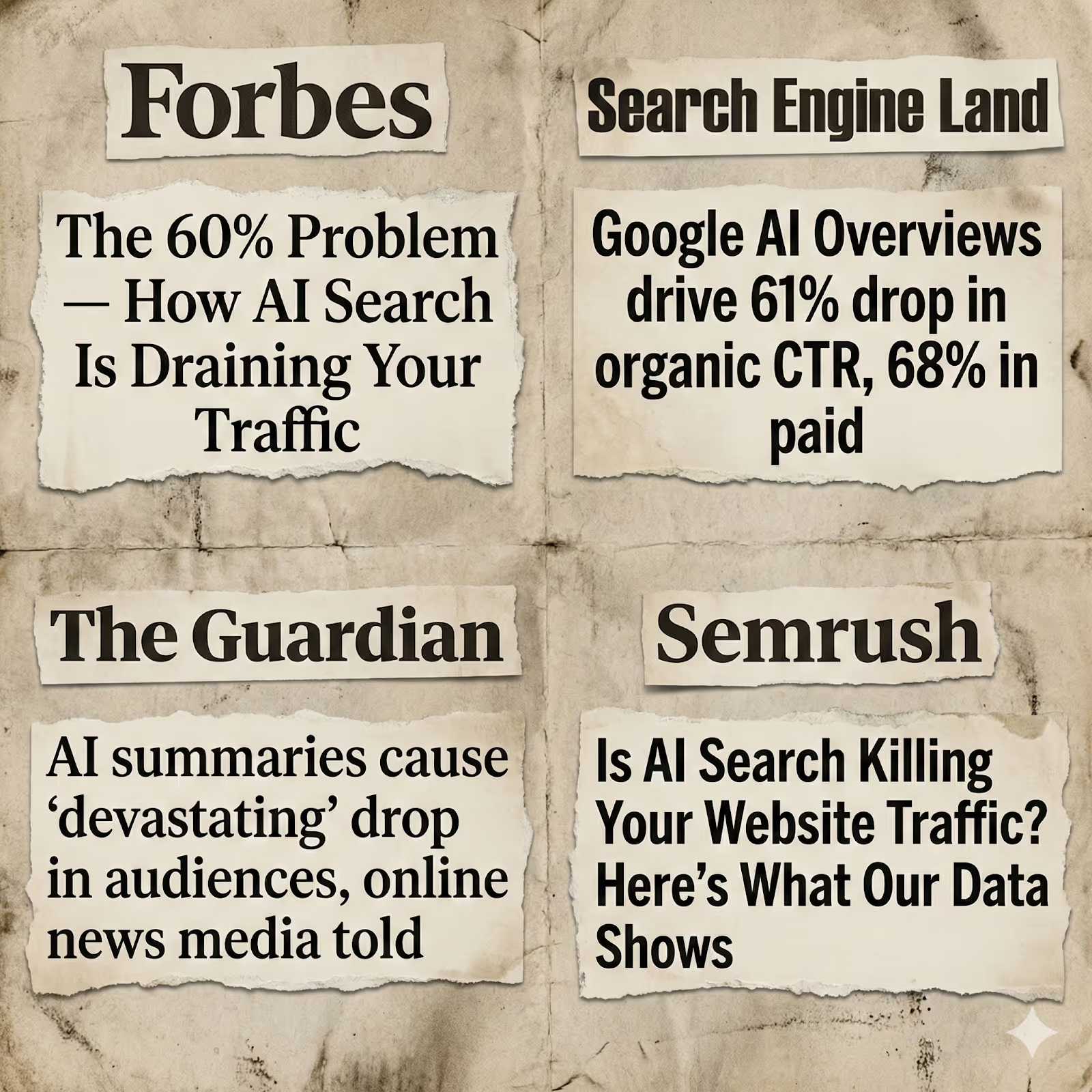
All your favourite marketing publications say the same thing: search traffic is really falling off a cliff. However, at the risk of sounding like a motivational cat poster, nothing will change if you don’t change your outlook.
Your old metrics tell you something bad is happening, you’re dropping traffic on all fronts. But the real story lies elsewhere.
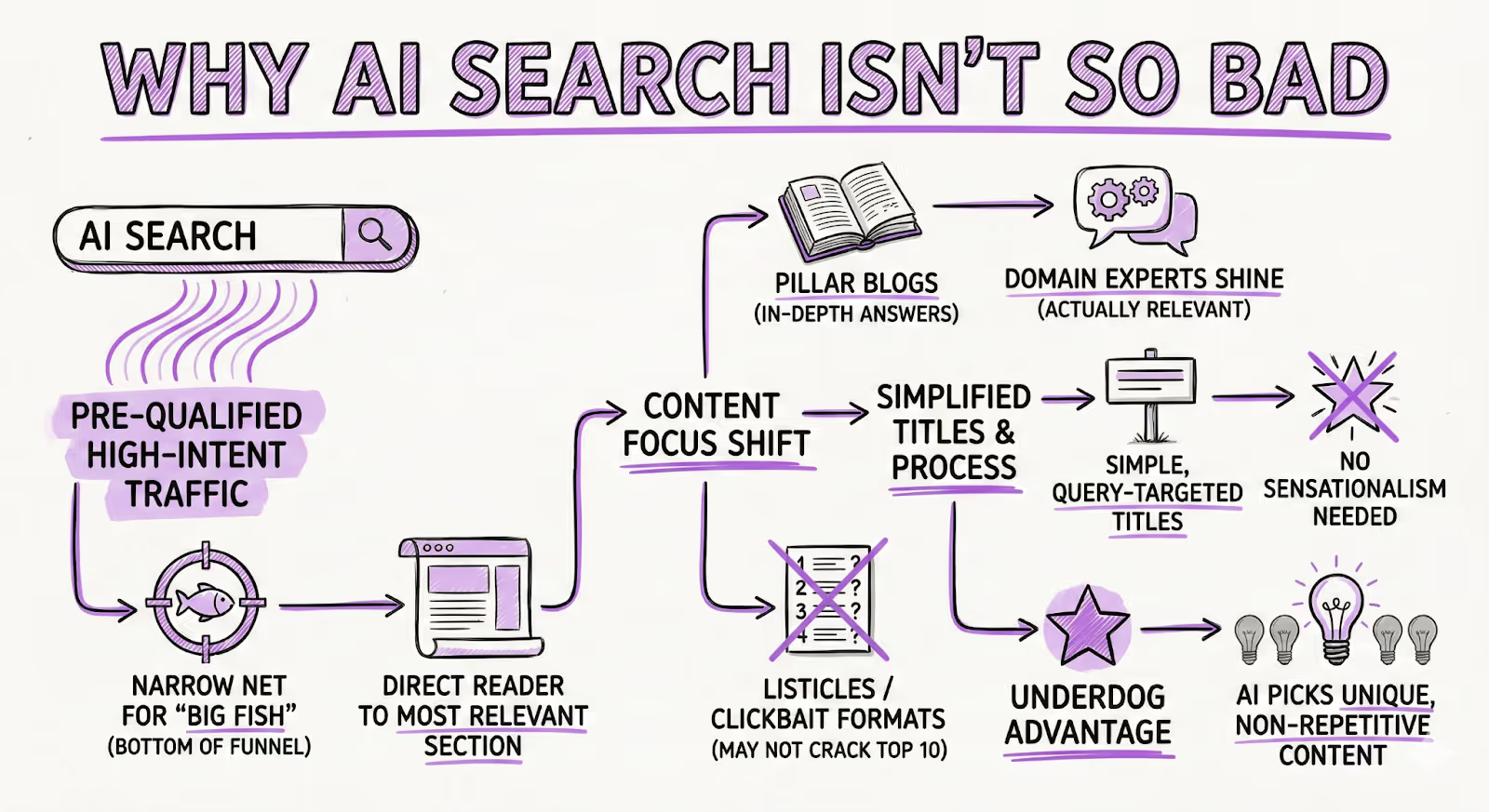
AI search is bringing pre-qualified high-intent traffic to your content, and what’s more, it puts the reader directly on the most relevant section of the content. That’s why everyone on the “cutting edge” is talking about AEO: it should be the biggest priority for new age marketers who want to start with their leads closer to the bottom of the funnel.
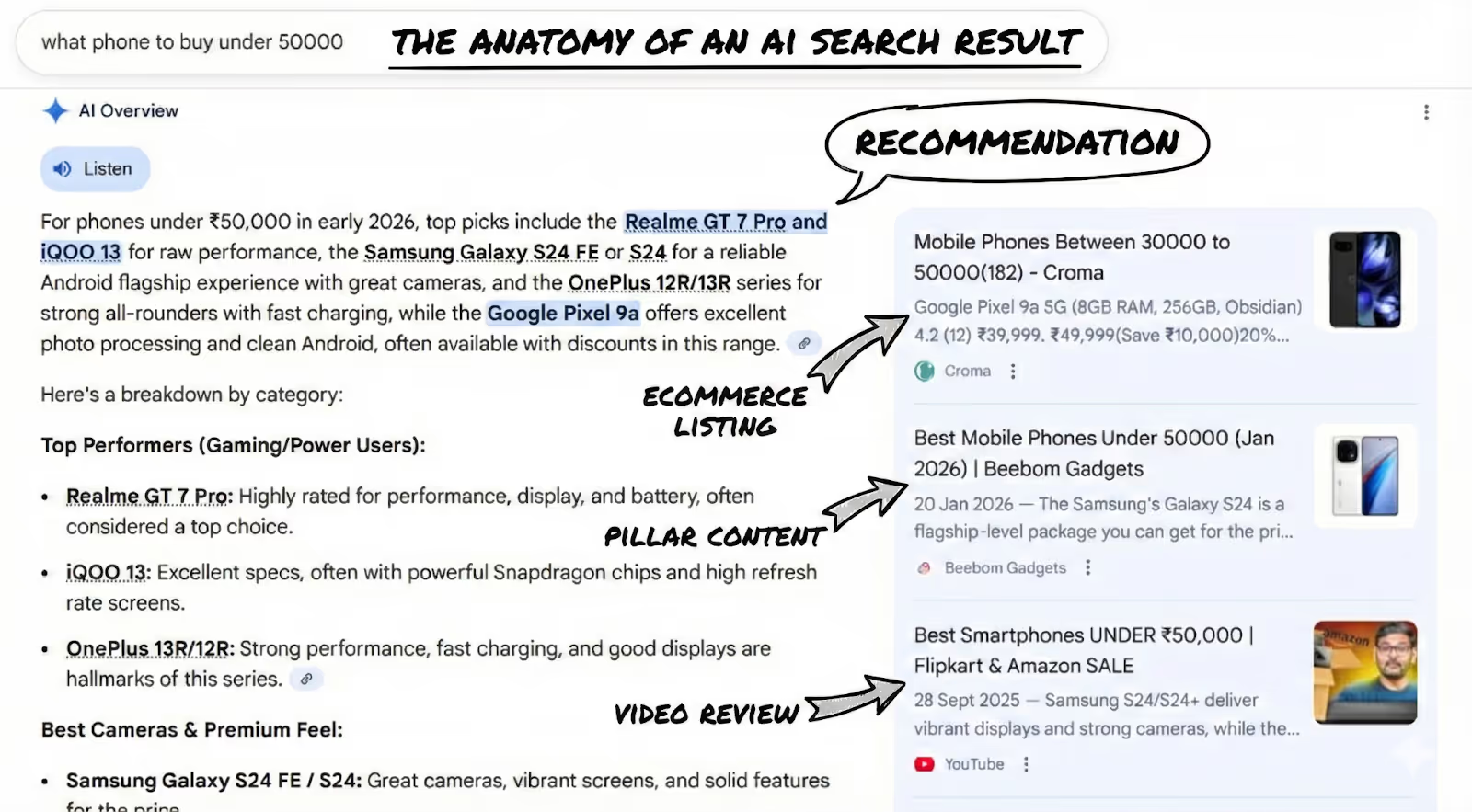
Think about it like this, rather than casting a huge net with relevant keywords qualified by volume and intent, you’re casting a narrower net that can help you catch those big fish with relevant queries.
Here’s where AI search lets marketers shine through.
AI search allows domain experts to create content that is actually relevant, instead of creating listicles that may or may not crack the top 10 just because of their format. By creating a pillar blog that has super in-depth answers to queries that can be found in similar methods to keyword research, you can get a lot more success in search results without having to hunt for that top position and then hoping your prospect is going to click on your link because it has a clickbaity title.
Your process isn't changing much, it's the focus that needs to change.
And finally, your titles can be exactly what the blog is about. There's no need to sensationalize or make it click-worthy anymore, you can just keep it simple and targeted to the query rather than thinking of how you can fit the keywords to the title. AI Overview also has a tendency to pick articles that aren't just the same old thing you've read over and over again, which means that if you're an underdog, you have an extra special advantage.
If you do your AEO and GEO right, you don't have to slog through your SEO best practices, making sure you're at 100% readiness just for a small chance to get on page 1. Because search is now transforming into a completely different beast.
How Search has actually evolved - from just discovery to a demand gen engine
For the last 20 years, search has just been about discovery. You know what you want, and you search for it, and you get a result. This is what all your prospective customers are doing too, and below all the sponsored posts and top ranking websites which have been doing SEO for 10 years before your company even got started, your blog gets buried.
But now, you have a chance to skip ahead of all of them and directly be featured in a place where 80% of people on the Internet are getting their information, without spending a single dime (for now). Forget performance marketing budgets or carefully targeting TOFU, MOFU and BOFU content according to keyword intent, you have the capability to harness a demand-gen engine with a user base of 1.8 billion people.
Until now, search traffic was partly for demand gen and partly for lead gen. With AI, search traffic transitions to a demand gen powerhouse with the added benefit of lead gen.
To understand the real power of this, think about how you use AI search engines. I, for one, have gotten perhaps a little too used to using AI for research. Let's take a small example from my own personal life.
A couple of months ago, I was looking to buy a 3D printer, and I literally started from 0. I had no idea about the landscape, or the brands, or even the product specifications. If you've ever done research for a highly technical product with little to no knowledge of what to look for, you know exactly what I'm talking about.
Now, in a pre-AI age, I'd have set aside a couple of hours to learn what to look for when I'm buying a 3D printer, like what capabilities it has, what print volume actually means, and a thousand other specifications. But with AI, all I need to ask is a simple question:
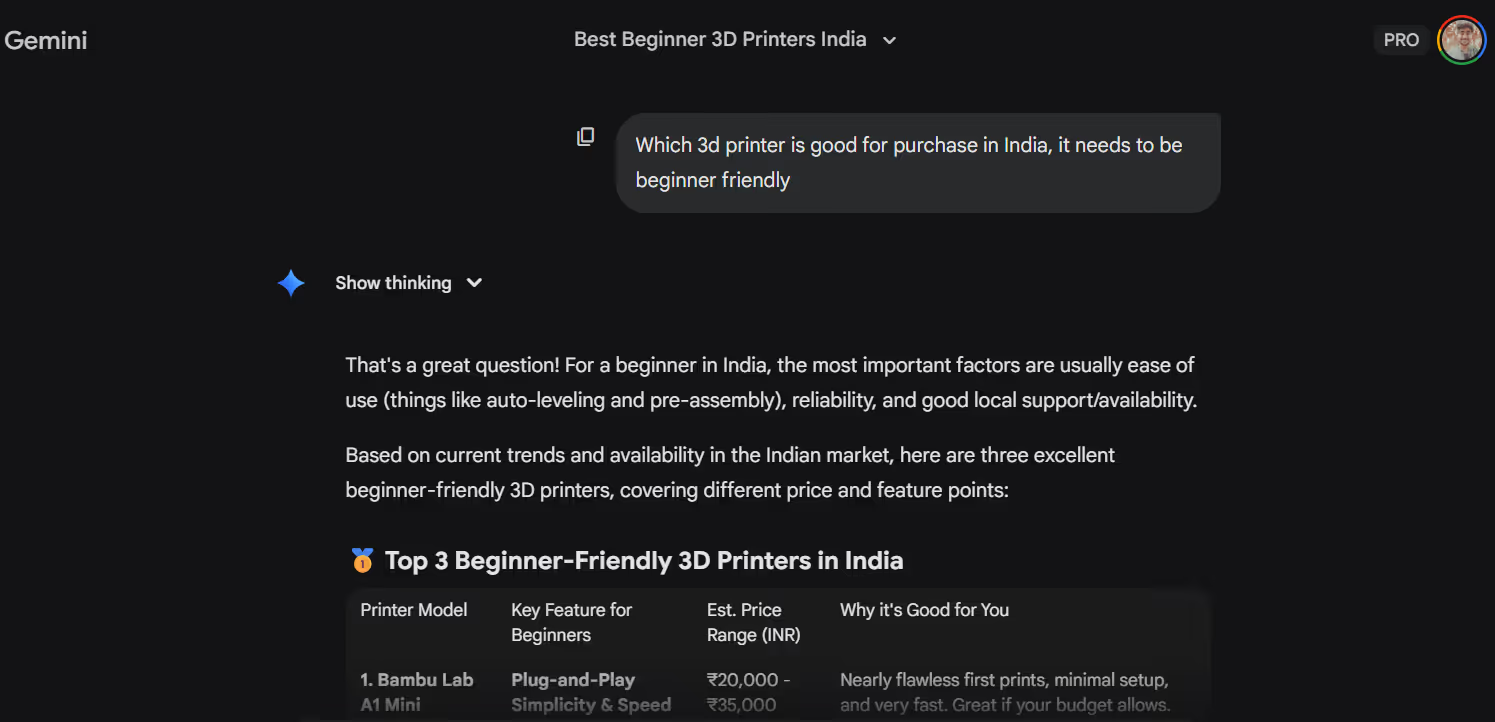
This just skipped all the research and gave me a clean list of things that I could do more research on if I wanted to...or just ask the AI more questions until all my doubts were clear.
Now, if you were in my position, what would you do?
AI Search and chatbots are the new recommendation process, the new research process, and the new buying process. Your prospects are engaging with AI more than you think, and by appearing at the right time, when they're almost buying something, you have a high chance to convert them without even getting them on your website.
But how does it all work?
How AI Search Actually Works, and What AEO/GEO Means for You
To understand the mentality of an AI Overview prospect, let’s go back to the previous example. I’m about to make a big purchase, so obviously I’m going to have a lot more queries, especially considering AI’s reputation to just give you any answer it wants. So I dug deeper, with questions like:
- Can you pull some negative Reddit comments about the Bambu Lab A1 Mini (AI’s top recommendation)
- What about other printers like the Elegoo Mars?
- Is Kobra 2 Neo any good, according to the similar markers you’ve used previously?
- What’s the best printer to buy if I don’t want to do any set up or tweaking? I’m a complete beginner.
If you’re following along with the analogy, you’ll notice an interesting pattern. These queries are what your brand needs to be an answer to. That’s the “A” part of “AEO”. Plus, these queries also reflect different parts of the funnel, from the top to the bottom. Informational, where the prospect is searching for more information regarding your segment
- Commercial, where the user is looking for options to decide their purchase,
- And finally, Transactional, where they’re looking for an end-all answer to lock in their purchase decision.
Instead of creating 3 separate blogs for each of these queries, AI pre-qualifies these questions, so you can create one single resource which presents your brand/product as the go-to choice.
But, just creating a single piece of content isn’t enough. Here’s a visual of how AI search works, so you can understand where it’s pulling all the information from:
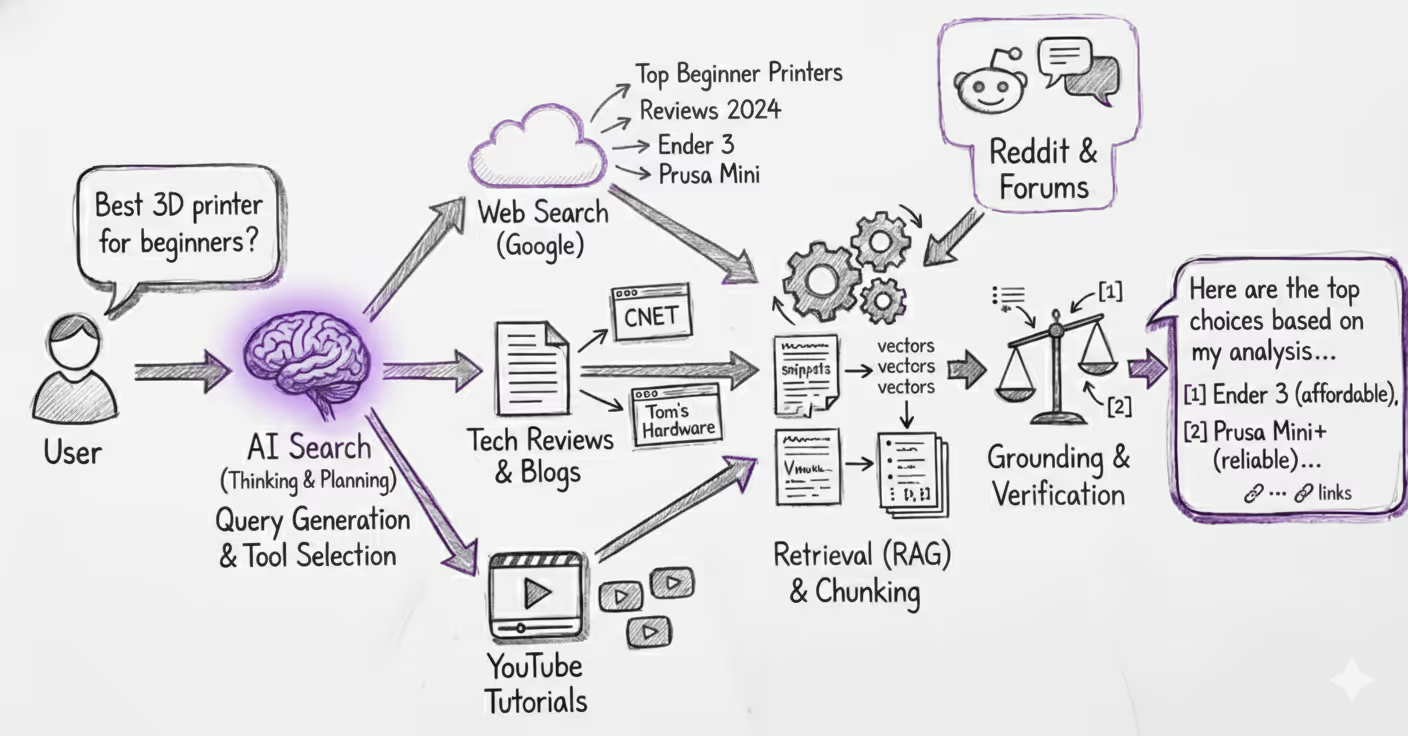
As you can see, tech reviews and blogs, the gamut of SEO specialists, is just one part of the puzzle. AI search also pulls from web search (SERP), YouTube tutorials (because AI is now multi-modal) and Reddit and other forums. The last piece of the puzzle is especially important, because it shows that your brand is actually being spoken about, and it also contains those question-answer pairs that AI loves, because most forum posts are actually structured as questions.
All of this data goes into the “memory” of the AI search engine, which is a vector database. While the technical details of vector databases and RAGs are beyond the scope of this article, there are a few important things to note here:
- AI only pulls in web data if there is no existing information in its training data, more commonly known as a “knowledge gap”.
- This data is pulled in with a “mini-search” that includes multiple similar queries, that other users actually ask, similar to the “People Also Ask” section on Google Search
- Only certain chunks of data are pulled from your blog, so make sure you use bullet points or discrete paragraphs that won’t look out of place on an AI overview
- This data is compared from multiple sources to reach “consensus”, by using a method called entity mapping, which defines the relationship between various pieces of information
Now, what this means for your brand is simple; be all over the web. Your brand must be mentioned in relevant conversations wherever a question is asked, so that generative engines know that you have presence, strengthening the entity map, consensus, and overall legitimacy of your positioning.
One key thing to remember though, AI Search is a robot in fancy clothes after all. So your pretty website with those fancy fonts just looks like HTML data to it. So if you want AI to pick your content up, you need to present it in a way that the bot can understand it. This means schema markup, and a bunch of other technical SEO tweaks to allow the search bots to reach your content and ingest it meaningfully.
So how do you appear in these AI search results? The answer is simple, sort of.
Cracking AEO and GEO: A Cheatsheet
To crack AEO and GEO, the mindset shift is simple. Be the answer, and be visible to AI engines. The shift in your strategy is also pretty simple, moving your content from being based on qualified keywords to actual search queries, which you can pull from Semrush or PAA APIs.
What’s not simple is the number of things you need to do.
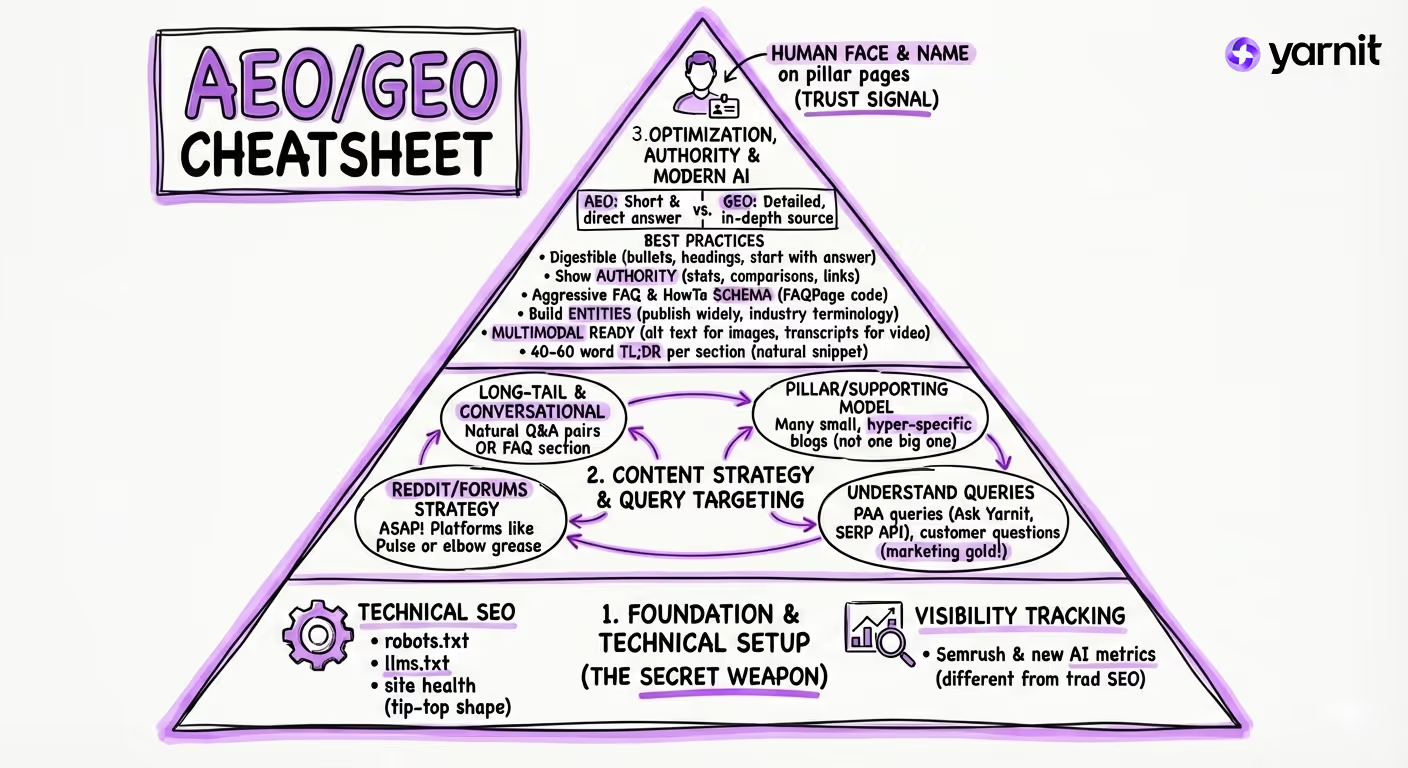
This pyramid may look daunting at first glance, but don’t fret. I’ve broken it down into 3 simple segments:
Foundation and Technical Setup
These are things you need to do today. Without this foundation, the pyramid crumbles
- Start integrating long-tail and conversational queries into your content. Either include a question-answer pair naturally in your content, or have a FAQ section appended to your blog.
- Set up visibility tracking on tools like Semrush to understand key metrics (which are different for AI)
- Make sure your technical SEO (robots.txt, llms.txt, site health) are in tip-top shape (this is your secret weapon)
Content Strategy and Query Targeting
This is what you need to bring into your strategy to make sure your content gets picked up and recommended.
- Get a Reddit/forums strategy in place ASAP. Platforms like Pulse for Reddit or good ol’ elbow grease work best
- Use tools like Ask Yarnit’s keyword insights or platforms like SERP API to understand people’s queries through PAA queries
- Try to track what queries people would ask to land them on your page, or questions your customers ask you while onboarding. This is marketing gold
- Move to a pillar/supporting content strategy. Instead of creating one big blog, create many small blogs targeted to hyper-specific customer queries
- Understand the difference between AEO and GEO. AEO translates to being the short and direct answer. GEO translates to being the detailed source for more in-depth information and questions.
Best Practices
This is your content checklist. Before anything goes out, make sure it follows all these practices to a T:
- Make digestible content, by using short paragraphs, bullet points, numbered steps, clear headings, and starting every blog with the answer in the first sentence.
- Show your authority by adding competitor comparisons, linking to well-known sites and reports, and mentioning statistics
- While standard SEO uses basic schema, AEO requires aggressive use of FAQ and HowTo structured data, so wrap your FAQs in FAQPage schema code.
- AI doesn’t just look for keywords; it looks for entities (basically a metric for how connected you are in your field). So publish in multiple places, and mention industry terminology in your content.
- Modern AI is multimodal—it "sees" images and "hears" video transcripts, so be ready with alt text for images and transcripts for video content
- Each section in your blogs need to have a 40-60 word TL:DR section, that creates a natural snippet for AI engines to pick up on
- For your pillar pages, make sure a human face and name is attached. AI engines treat this as a trust signal.
And so we come to the end of this very long, and hopefully helpful read. If any of this helped you out, help me out by sharing this article on your socials, or even just the infographics. And if you’re ever feeling overwhelmed with the amount of things that you have to do to fix your AEO, don’t forget your best friend, AI. More specifically, Yarnit.
I didn’t just draft this article with the help of Yarnit. I did the keyword research, the query research, the informational research, created the infographics, polished the overall flow, and even humanized it with our platform. Here’s what my chat for this article looked like:
If you’re a new-age marketer who’s tired of switching platforms, losing context, not having your brand voice come through, and paying a million different subscription fees, consider switching to Yarnit.
Its suite of AI agents is nothing short of an expert marketing team, picking up the slack where you miss it and giving you recommendations that you’d have missed. For AEO and GEO, Yarnit can pull in SERP data, people also ask queries, and give you the output in an AI-ready schema, so all you need to do is hit publish. Check out Yarnit today, we have a free 7-day trial to get you ready to do your AEO right.


