



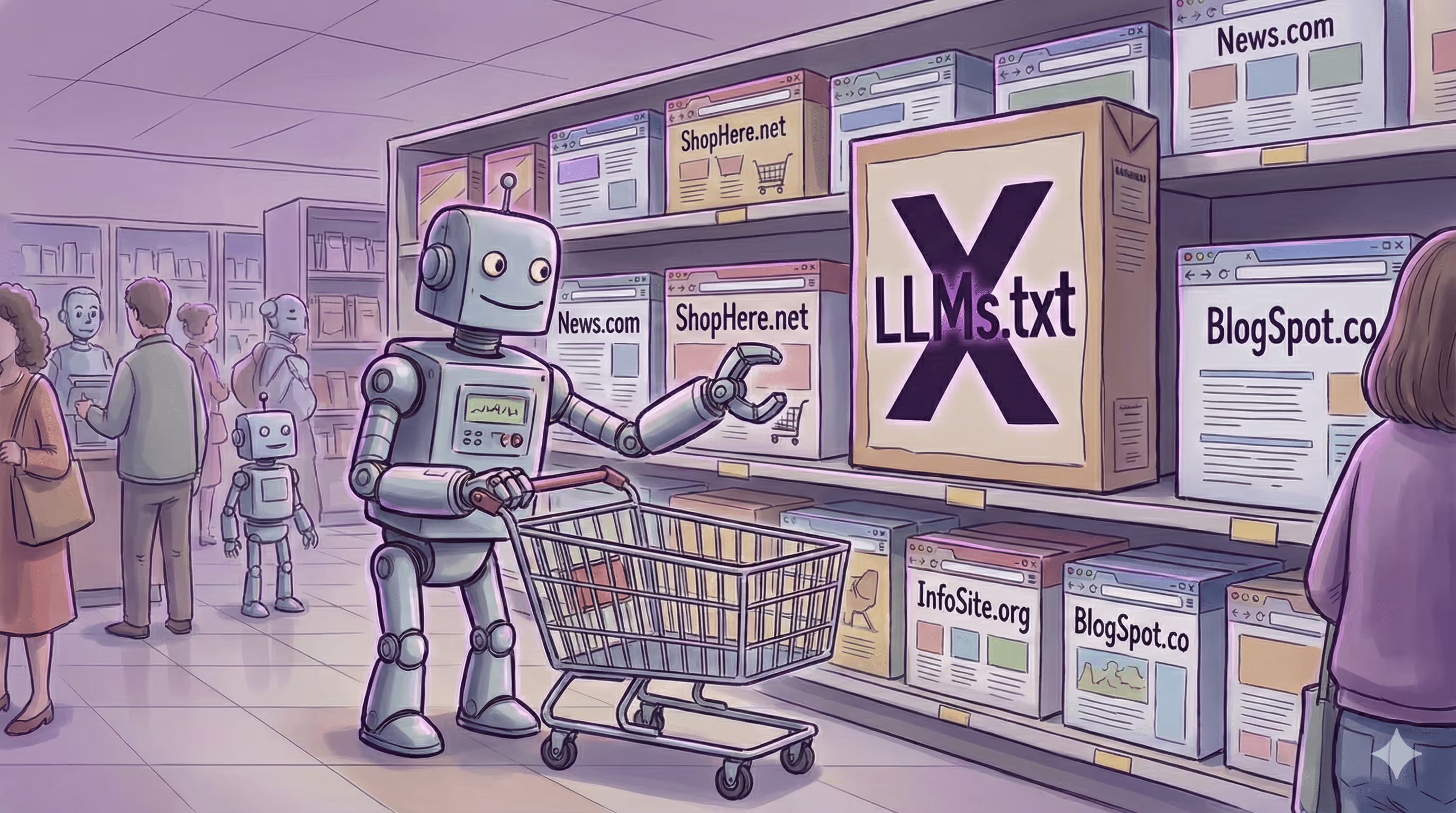
In “Ye Good Old Days” of SEO. Googlebot was just a digital librarian, cataloging pages for keyword matches? Unfortunately, as with all things, our beloved Googlebot has also evolved with the times, and marketers need to keep up.
We're dealing with AEO and GEO now, and these bots aren’t just indexing your content anymore. They're actually trying to understand it, what it means, who wrote it, whether they should trust it. These LLM crawlers hunt for "contextual answers" and "source truth," which sounds fancy but really means they're picky about where they pull information from.
Google AI Overviews, ChatGPT, Perplexity, and similar platforms pulled in over 600 million unique visitors in May 2025. What’s more, the average AI search visitor is worth 4.4x more than your typical organic search visitor, based on Semrush's AI search study.
So these high-value prospects are just waiting for your brand to appear in search results, but how do you crack it? Read on to know more.
Why 'Retrieval Probability' Should be Your New North Star
Forget everything you know about ranking.
We're playing a different game now, and I call it "Retrieval Probability". Basically, how likely an AI agent is to pick your website when it's generating answers. This isn't about picking the right keywords or chasing backlinks anymore (though those still matter, don't get me wrong).
What matters now? Building a technical foundation that speaks fluent AI: structured data, clean markup, explicit entity relationships, and optimized performance. While your competitors are still obsessing over content quality alone, you're building the infrastructure that makes AI engines actually want to cite you.
Your technical setup isn't just support infrastructure anymore. It's your competitive advantage
The New Kid on the Block: llms.txt Implementation
So here's a new standard that's trying to solve a real problem: the llms.txt file. Think of it as leaving breadcrumbs for AI crawlers—except instead of breadcrumbs, you're giving them a curated highlight reel of your best content.
The official specification is pretty straightforward. Rather than letting AI crawlers stumble around your site like tourists without a map, you hand them a structured list of what actually matters. This tackles two big headaches AI crawlers face:
First, most websites are a mess to parse. AI crawlers can typically only read basic HTML, not that fancy JavaScript-loaded content you're so proud of. The llms.txt file cuts through the noise with a clean, structured format.
Second, information overload is real. When AI crawlers hit your site, they struggle to figure out what's important and what's yesterday's news. Without guidance, they might waste processing power on that blog post from 2019 that you forgot to delete.
How to Actually Structure This Thing
Format your llms.txt file in Markdown—same lightweight markup you see in GitHub README files. AI systems love it because it's easy to parse.
Here's what you're working with:
- # for your H1 heading (site name)
- ## for H2s (content categories)
- ### for H3s (subsections)
- > for blockquotes (perfect for your brand mission or description)
- - or * for bullet points
- [text](url) for hyperlinks with descriptive text.
If you want to go deeper, create an llms-full.txt file. This is a consolidated, clean markdown overview of your entire site. This is the advanced play that presents your complete content structure in one easily digestible format for seamless AI processing.
How to Get This Done
Here's your implementation roadmap:
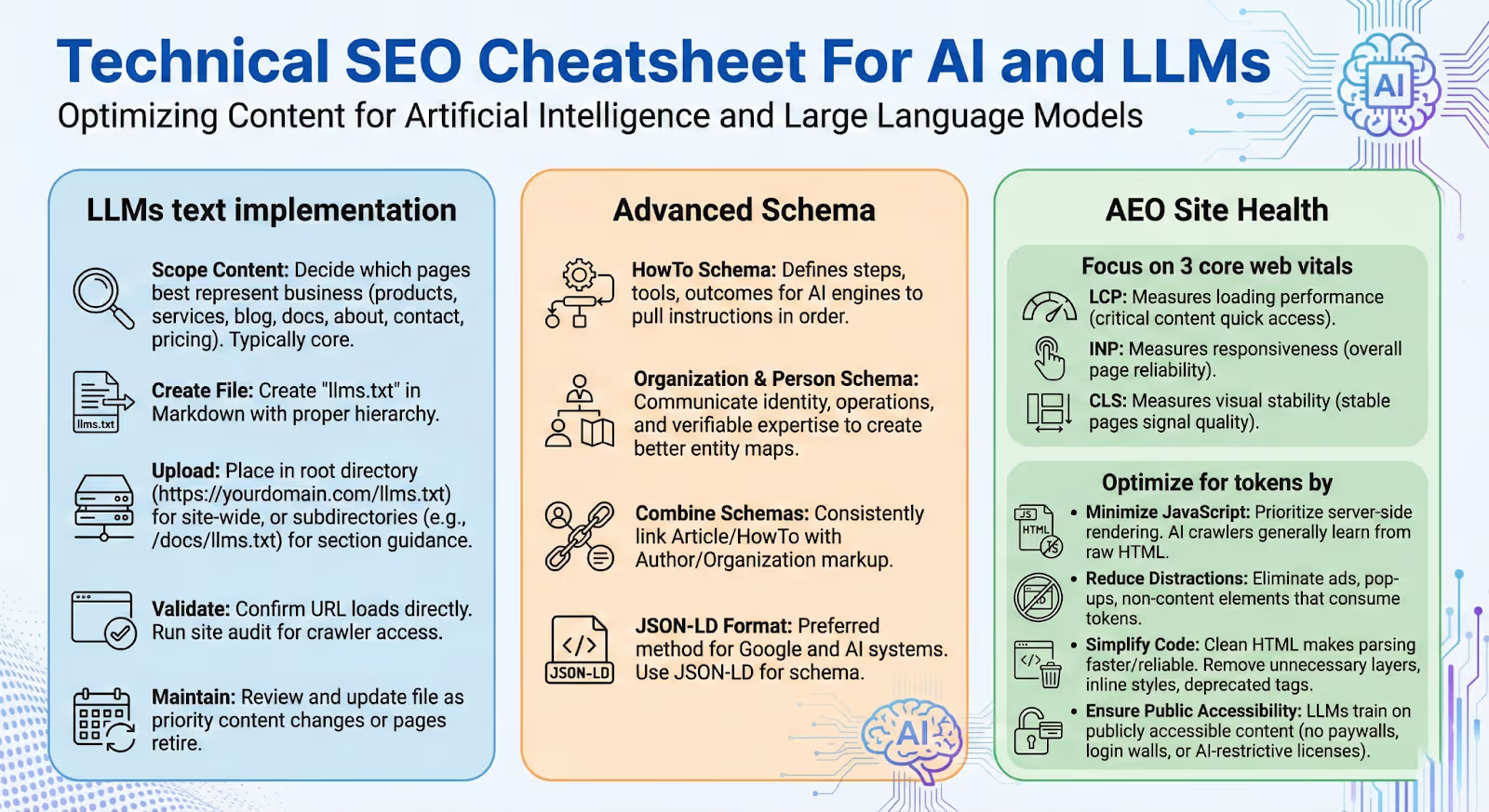
- Pick your content scope: Decide which pages best represent your business—products, services, current blog posts, documentation, about us, contact, and pricing pages typically form the core.
- Create the file: Open a text editor and create a file named llms.txt formatted in Markdown with proper hierarchy.
- Upload to your root directory: Place it at https://yourdomain.com/llms.txt for site-wide coverage, or in relevant subdirectories (like https://docs.yourdomain.com/llms.txt) for section-specific guidance.
- Validate accessibility: Visit the URL directly to confirm the file loads correctly. Run a site audit to ensure crawlers can access it.
- Maintain regularly: Review and update the file as you publish new priority content and retire outdated pages.
Advanced Schema Markup: Teaching AI to Speak Your Language
If llms.txt is your highlight reel, schema markup is your translator, converting your content into the precise language AI systems understand. Schema removes ambiguity, making it crystal clear what your content covers, who created it, and how it connects to known entities.
Let me hit you with some data: pages with clean structure—clear headings plus schema markup—earn 2.8 times higher AI citation rates than poorly structured pages. Even better? Pages using three or more schema types show roughly 13% higher likelihood of being cited in AI answers compared to pages without rich schema.
FAQ and Q&A schema markup is an underutilized goldmine right now. These formats map question-answer pairs in a way that mirrors how AI engines retrieve answers for conversational queries. FAQ and Q&A schema appears in only 10.5% of AI-cited pages, despite aligning closely with how answer engines actually retrieve information.
That gap? That's your opportunity.
HowTo Schema
HowTo schema works beautifully for step-by-step instructional content. AI systems constantly handle procedural queries like "how do I" or "how does X work." This markup defines each step, required tools, and expected outcomes in a structure that helps AI engines pull instructions in the correct order.
Got tutorials, guides, or process documentation on your site? HowTo schema ensures AI systems understand the sequential nature and can accurately reproduce your instructions when answering relevant queries.
Organization & Person Schema: Building Your Entity Map
Organization and Person schema establish your brand and authors as defined entities. These markups communicate who you are, what you do, where you operate, and connect content to real people with verifiable expertise.
AI engines use entity graphs to evaluate source credibility. Organization markup anchors your content to a recognized brand entity, while Author and Person schema reinforce the E-E-A-T (Experience, Expertise, Authoritativeness, Trustworthiness) signals that AI systems evaluate when choosing sources to cite.
This creates what I call an "entity map"—linking human authors' names and credentials to your organization, establishing clear authority chains that boost AI confidence assessment.
In practice, combine Article or HowTo schema with Author and Organization markup consistently across your content.
JSON-LD: The Format That Actually Works
Schema markup supports three formats—JSON-LD, Microdata, and RDFa—but JSON-LD (JavaScript Object Notation for Linked Data) is what Google and most AI systems prefer. It separates structured data from your HTML, making updates easier and reducing the risk of breaking page layouts.
AEO Site Health: Speed and Token Optimization
Technical performance directly impacts your Retrieval Probability. AI systems favor sources they can access quickly and parse efficiently. This makes Core Web Vitals and code optimization not just ranking factors anymore—they're citation factors.
Core Web Vitals and AI Citation Probability
Websites ranked within the Top 10 for Core Web Vitals performance are 76% more likely to be included in AI summaries. This reflects AI systems' preference for reliable, fast-loading sources that provide better user experiences.
Three Core Web Vitals metrics matter for AEO:
- Largest Contentful Paint (LCP): Measures loading performance. AI crawlers accessing your content need pages that load critical content quickly.
- Interaction to Next Paint (INP): Measures responsiveness. Indicates overall page reliability.
- Cumulative Layout Shift (CLS): Measures visual stability. Stable pages signal quality and reliability.
Optimizing these metrics positions your content as technically superior, increasing the likelihood AI systems will select your pages as primary sources.
Token Optimization: Clean Code for AI Readability
LLMs process content using "tokens"—units of text that consume computational resources. AI crawlers prefer clean, concise text that minimizes token usage while maximizing information density.
Here's how to optimize for AI readability:
- Minimize JavaScript: AI crawlers generally learn from raw HTML, not content that appears after JavaScript runs. Prioritize server-side rendering over JavaScript-heavy implementations.
- Reduce distractions: Eliminate or minimize ads, pop-ups, and non-content elements. These consume tokens without providing value to AI systems.
- Simplify code structure: Clean HTML makes parsing faster and more reliable. Remove unnecessary div layers, inline styles, and deprecated tags.
- Ensure public accessibility: LLMs can only train on publicly accessible content. Content behind paywalls, login walls, or AI-restrictive licenses won't be considered.
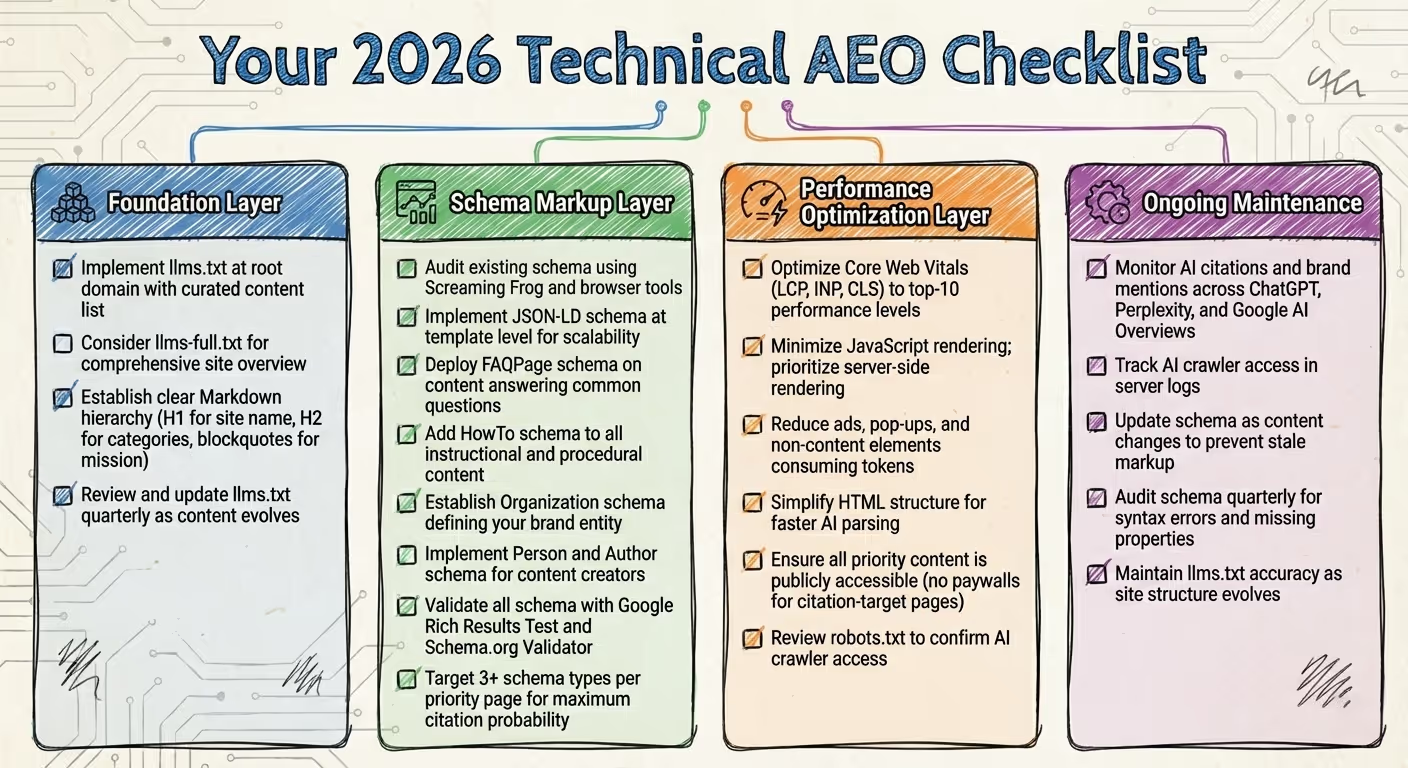
Your 2026 Technical AEO Checklist
Technical SEO for AEO isn't about piling new tactics on top of traditional SEO—it's about recognizing that AI-driven search demands precision, structure, and explicit communication that keyword optimization never required.
Here’s a handy checklist to ace your technical SEO for AEO and GEO.
The work you do now creates compounding advantages. Information about your brand can become embedded in training data used for future LLM versions, meaning today's technical preparation influences tomorrow's AI visibility.
Here's what matters most: while everyone else obsesses over content quality, your technical infrastructure determines whether AI systems can actually find, understand, and confidently cite that quality content. Technical excellence isn't just important in the era of AI-driven search—it's how you win.


