



AI tools have become a staple in content marketing workflows. What started as simple writing assistants are now expected to do much more than generate quick drafts.
Today’s marketing teams want platforms that can support the entire content process, from research and ideation to SEO optimization, brand voice consistency, and multi-channel content creation. As expectations from AI tools continue to evolve, many marketers are reassessing the platforms they rely on and exploring newer solutions that better support these needs.
In this article, we’ll take a closer look at some of the top Copy.ai alternatives for content marketing in 2026 and what makes them worth considering for modern content teams.
Why Do You Need an Alternative to Copy.ai?
Copy.ai became one of the earliest AI writing tools widely adopted by marketers. It’s known for its ease of use, template library, and ability to quickly generate marketing copy.
However, as AI tools evolve and marketing teams demand more sophisticated capabilities, many users have started exploring Copy.ai alternatives. Feedback from review platforms like Capterra, Trustpilot, and marketing communities highlights several limitations that affect content quality and workflow efficiency.
1. AI Outputs Often Require Heavy Editing
One of the most frequently mentioned drawbacks is that the generated content often needs significant manual editing before it can be published. Several reviewers note that Copy.ai works well for quick drafts but rarely produces polished, ready-to-publish content.
Users often need to:
- Rewrite sections for clarity
- Fact-check information
- Improve the flow of long-form pieces
For content teams trying to scale blog production or campaign content, this additional editing step can slow down workflows.
2. Accuracy and Fact-Checking Issues
One of the most common drawbacks of AI content tools is hallucination. Copy.ai can occasionally generate inaccurate information or unsupported claims. Reviews mention that the platform sometimes produces content that includes incorrect facts or misleading statements, which requires manual verification.
For industries where accuracy matters, such as SaaS, finance, or healthcare, this means marketers must double-check AI-generated content before publishing.
3. Pricing and Support Concerns
Some users have also raised concerns around pricing and support responsiveness. Other reviews also mention slow customer support responses when dealing with billing or technical issues.
Top Copy.ai Alternatives for Content Marketing
1. Yarnit
Yarnit is an AI-powered content marketing platform designed to help teams create on-brand, research-backed content across multiple formats.
Unlike traditional AI writing assistants, Yarnit focuses on supporting the entire content lifecycle, from ideation and research to creation and distribution. The platform is particularly useful for marketing teams that need to produce consistent, high-quality content at scale.
Key Features
- AI-powered content ideation and campaign planning
- Turns AI content from generic to on-brand by learning and applying your unique tone, style, and personality across every piece of communication.
- Multimodal generation (text, visuals, creative assets)
- Built-in content repurposing for different channels
- SEO, AEO & GEO-focused content generation
- Collaboration tools for marketing teams
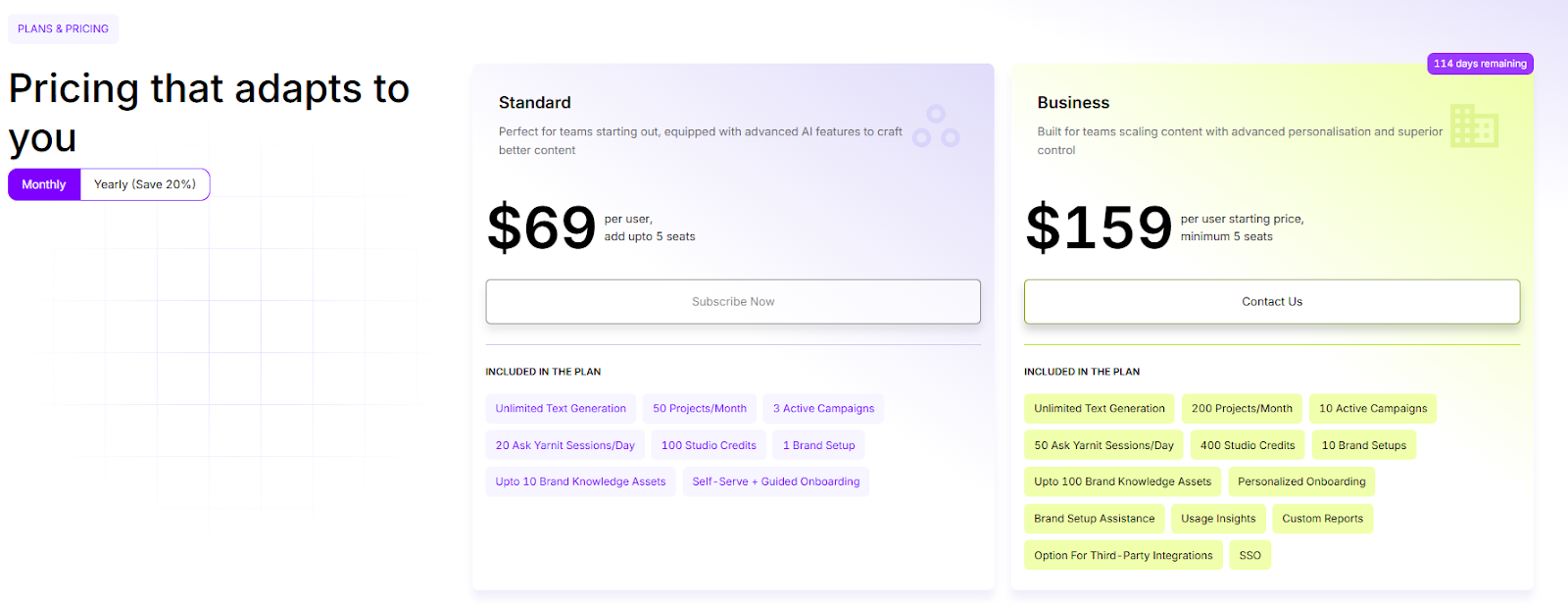
Pricing:
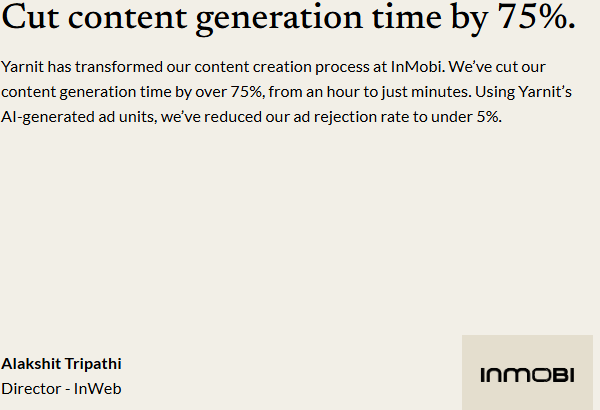
Customer Testimonial
2. Frase.io
Frase is an AI-powered content creation and SEO optimization platform built for content marketers and SEO teams. Unlike traditional AI copy generators, it focuses heavily on content research, SERP analysis, and AI-assisted writing, making it especially useful for teams producing SEO-driven blogs and long-form content.
The platform helps streamline the entire content workflow,from researching topics and creating content briefs to drafting and optimizing articles for search engines.
Key Features
- AI-powered content brief generator that analyzes top-ranking pages for a keyword and recommends topics to include
- AI writing assistant for drafting, rewriting, and expanding blog sections
Pricing

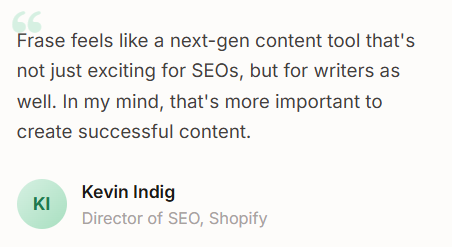
Customer Testimonials
3. Writesonic
Writesonic is a versatile AI writing platform designed for marketers, founders, and agencies. It combines AI writing capabilities with research and conversational AI through its chatbot, Chatsonic.
This makes it useful for teams that need content backed by real-time information.
Key Features
- AI article writer for long-form content
- Chatsonic AI assistant with web research
- SEO optimization features
Pricing

Customer Testimonials

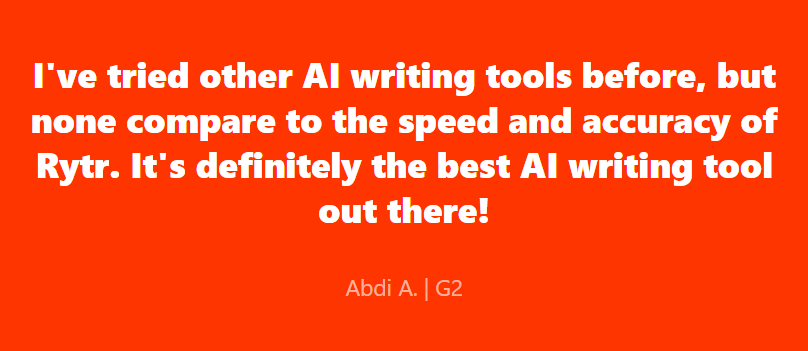
4. Rytr
Rytr is a lightweight AI writing assistant designed primarily for freelancers, creators, and small businesses. It focuses on simplicity and affordability, making it a good option for users who need quick content generation without complex workflows.
Key Features
- 40+ content use cases and templates and tone customization options
- Built-in plagiarism checker
- Browser extensions for writing across platforms
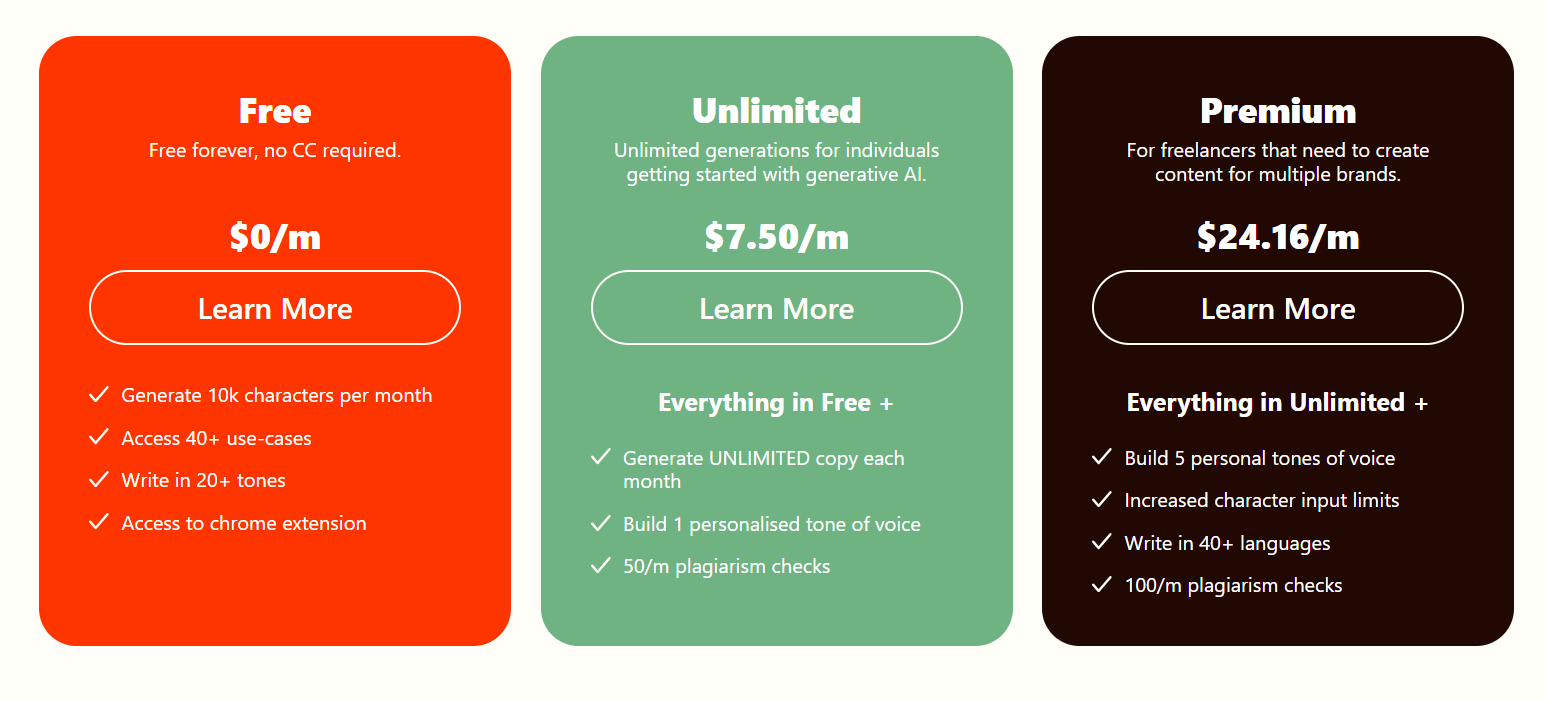
Pricing
Customer Testimonials
5. Anyword
Anyword focuses heavily on data-driven copywriting and performance optimization. Unlike many AI tools that simply generate text, Anyword predicts how well a piece of content may perform based on marketing data.
Key Features
- Predictive performance scoring and conversion-focused copy generation
- Audience targeting and segmentation
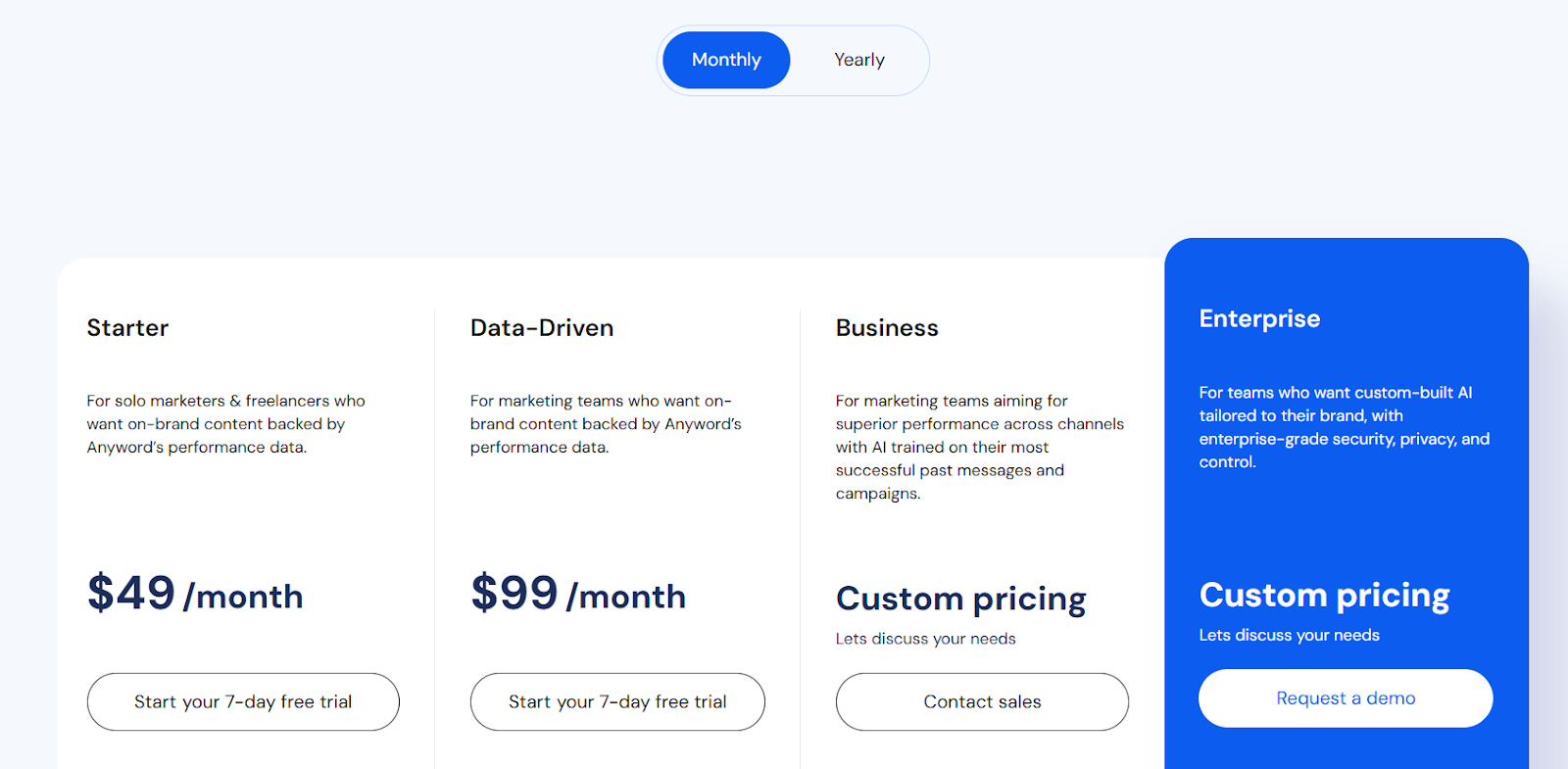
Pricing
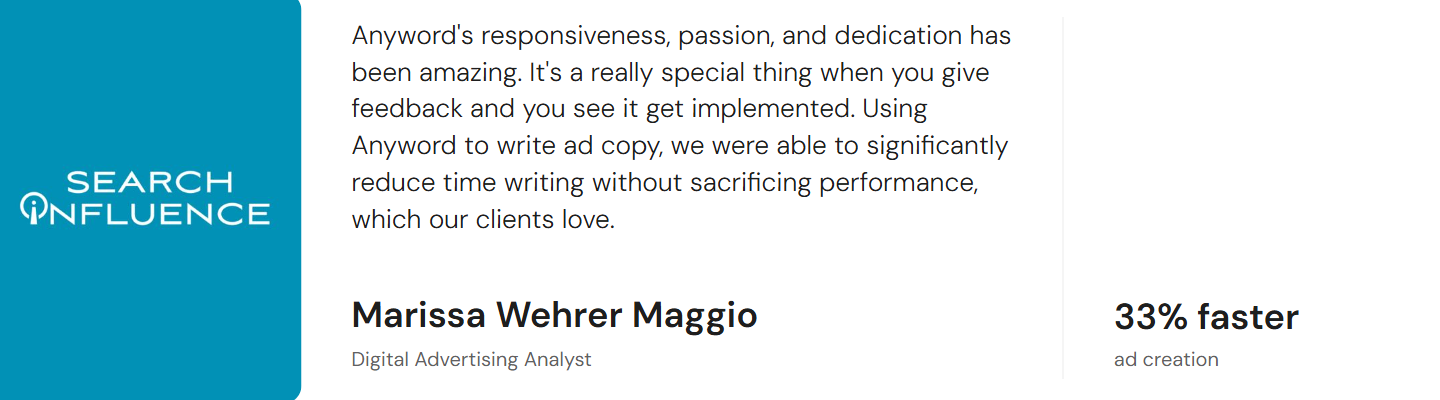
Customer Testimonials
What Features Should You Look for in AI Content Tools?
Multimodal Content Capabilities
Modern marketing campaigns require more than just written content. Marketers often need visuals, social media creatives, video scripts, and presentation assets alongside blog posts and landing pages. AI tools with multimodal capabilities help teams create multiple content formats within one platform, reducing the need to switch between tools.
Real-Time Web Research and Citations
Accuracy and credibility are essential for content marketing, especially for SEO-driven blogs and thought leadership pieces. AI platforms that support real-time web research like Ask Yarnit can pull current information, statistics, and trends directly from reliable sources. This helps marketers generate more trustworthy content while reducing the time spent on manual research and fact-checking.
Brand Voice Setup
Consistency in brand messaging is one of the biggest challenges for marketing teams producing large volumes of content. AI tools with brand voice training allow marketers to upload brand guidelines, messaging frameworks, or past content. Over time, the platform learns the brand’s tone and style, ensuring that generated content aligns with the company’s voice.
SEO Optimization
Content marketing success depends heavily on search visibility. AI platforms with built-in SEO capabilities can help structure content properly, recommend keyword usage, and optimize headings for better search performance. This allows marketers to create content that is both engaging for readers and optimized for search engines.
Contextual Intelligence
Contextual Intelligence is the backbone of any serious AI writing tool, it ensures every output is grounded in your brand, data, and real-world context, so you get content that’s not just well-written, but accurate, relevant, and actually usable. It’s what transforms AI from a generic text generator into a true marketing co-pilot, pulling from your latest data, brand guidelines, and domain knowledge to create content that reflects how your business actually thinks and communicates.
Content Repurposing
Creating high-quality content takes time and effort, which is why repurposing has become a core strategy for marketing teams. AI platforms that support content repurposing can transform a single piece of content into multiple formats, such as turning a blog post into LinkedIn posts, email newsletters, or social media captions. This helps maximize the value of each content asset.
Collaboration and Workflow Management
Content creation usually involves multiple stakeholders including writers, editors, designers, and marketing managers. AI platforms that offer collaboration features allow teams to work together within the same workspace, streamlining approvals and revisions. This reduces delays and ensures smoother content production workflows.
Conclusion
AI tools have become an essential part of modern content marketing. But as marketing strategies become more sophisticated, teams are looking for platforms that go beyond basic copy generation. While Copy.ai remains a useful tool for quick marketing copy, many teams are now exploring Copy.ai alternatives that provide deeper capabilities, such as brand voice control, research-backed content, SEO optimization, and campaign-level workflows.
If you're looking for a platform designed specifically for modern content marketing teams, Yarnit offers a more comprehensive approach. With capabilities like AI-driven ideation, brand training, multimodal content creation, and content repurposing, it helps marketers produce high-quality content faster and at scale. As expectations from AI tools continue to evolve, choosing the right platform can make a significant difference in how effectively your team plans, creates, and distributes content.


