AI Insights
Agent Memory Has Outgrown Retrieval
Most AI memory systems can find relevant past information but can't tell if it's still true, so agents act on stale data that was technically "retrieved correctly."
September 17, 2026

Master key types of online ads and build powerful digital advertising strategies that boost ROI, engagement, and brand visibility.


"The most powerful element in advertising is the truth."
This quote by advertising great William Bernbach captures the foundation of digital advertising strategies today.While clickbait and exaggeration abound, compelling ads tell the truth, just dressed up to capture attention.
This principle guides modern ad platforms across search, social, and native formats. A well-rounded strategy leverages each:
However, each platform has its own evolving guidelines, making it challenging to keep up. While this multi-platform approach is powerful, keeping up with each platform's evolving guidelines isn't easy.That's why we wrote this guide to help the modern marketer stay on top of the world of online advertising and develop effective digital advertising strategies.
In this guide, we'll cover the different types of online ads, such as search advertising, display ads, native ads, and social media ads. We'll also discover how each ad type can be leveraged to achieve specific marketing goals. We'll also break down the guidelines for each platform and give you the best practices for each of them.
Let's get started.
Over 90% of web journeys begin with search, creating a prime opportunity for advertising at the exact moment someone is looking for something.
This is the fundamental concept behind search ads, a key pillar of digital advertising strategies; your ads connect with users when they're actively searching for relevant products or services.
The big 2 platforms here are Google Ads and Microsoft Advertising (formerly Bing Ads). Search ads give you a stage to showcase their offerings through strategically placed text ads on search engine results pages (SERPs).
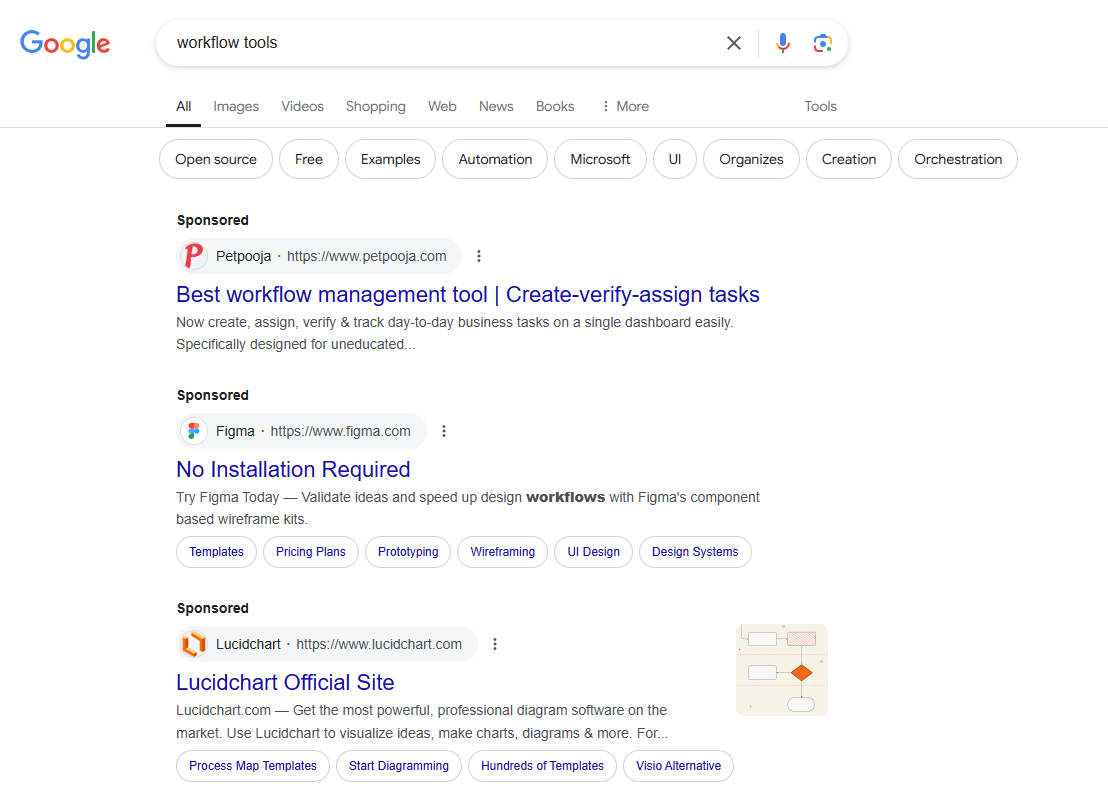
They are clearly marked as "Sponsored" but offer brands a quick way to the top of search engine results for a specific keyword. Here, Figma, Lucidchart, and Petpooja are all bidding for the keyword "workflow tools".
These platforms operate on a pay-per-click (PPC) model, where advertisers bid on keywords relevant to their products or services. When users search for these keywords, the platform's algorithm determines which ads to display based on factors such as bid amount, ad quality, and relevance.
Search advertising's primary strength lies in its ability to capture high-intent audiences. Users actively searching for specific products or information are more likely to convert, making search ads an efficient way to drive immediate results—an essential aspect of digital advertising strategies. Keyword-based targeting allows for precise audience segmentation, ensuring ads reach the most relevant users. Make most use of this.
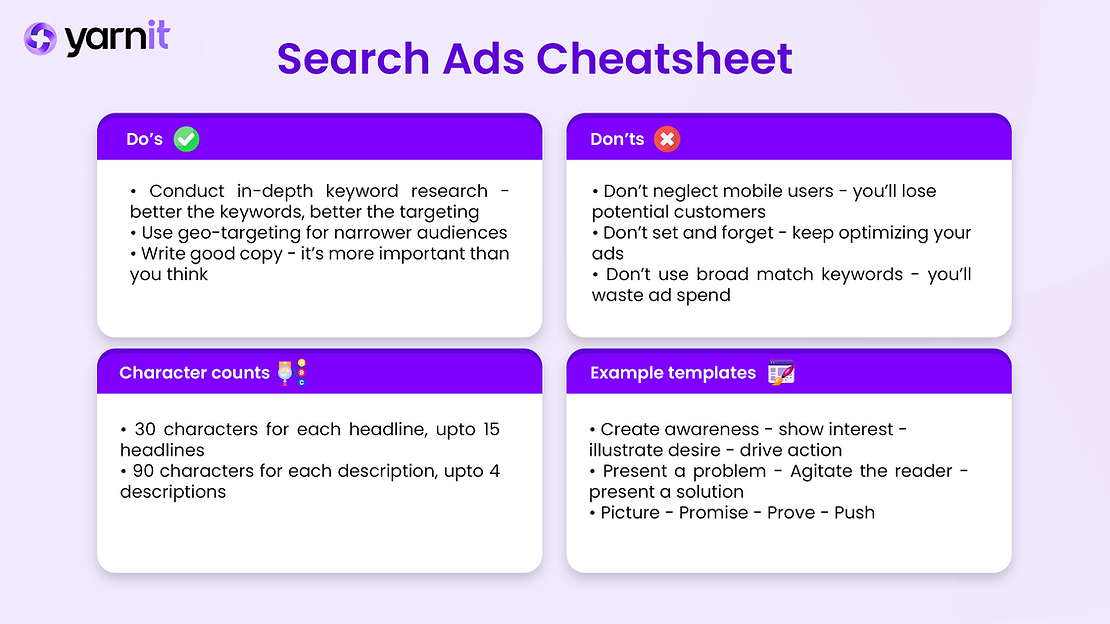
To help you get search ads best practices at a glance, we created this infographic.
Display ads usually have a bad rep, mainly owing to their beginnings as banner and skyscraper ads on less than reputable websites. However, display ads have undergone somewhat of a renaissance thanks to social media, taking up 28.8% of all advertising spend.
As the name suggests, display ads go beyond text, incorporating images, animations, and interactive elements to capture user attention and drive brand awareness—a core part of digital advertising strategies.
Display ads come in various formats, including static images, animated GIFs, and rich media ads with interactive features. These ads are served through extensive networks such as the Google Display Network (GDN), Facebook Audience Network, and LinkedIn Advertising reaching users as they browse content across the internet.
Keep an eye on display ad best practices with this handy cheatsheet:

Research shows that people spend about 143 minutes (that's 2 hours and 23 minutes) on social media apps every day. That's time advertisers can spend targeting their audiences.
From in-feed ads to story ads, social media advertising gives advertisers uncountable opportunities to engage with audiences in the spaces where they spend the most amount of time.
Social media platforms like Facebook, Instagram, LinkedIn, Twitter, and TikTok offer in-depth advertising tools that allow brands to reach highly targeted audiences. These platforms leverage user data to enable precise targeting based on demographics, interests, behaviors, and even life events.
Ad formats vary across platforms but generally include options like image ads, video ads, carousel ads, and story ads.

Source: Later Blog

These social ad formats form a powerful component of diversified digital advertising strategies, helping brands connect meaningfully with audiences.
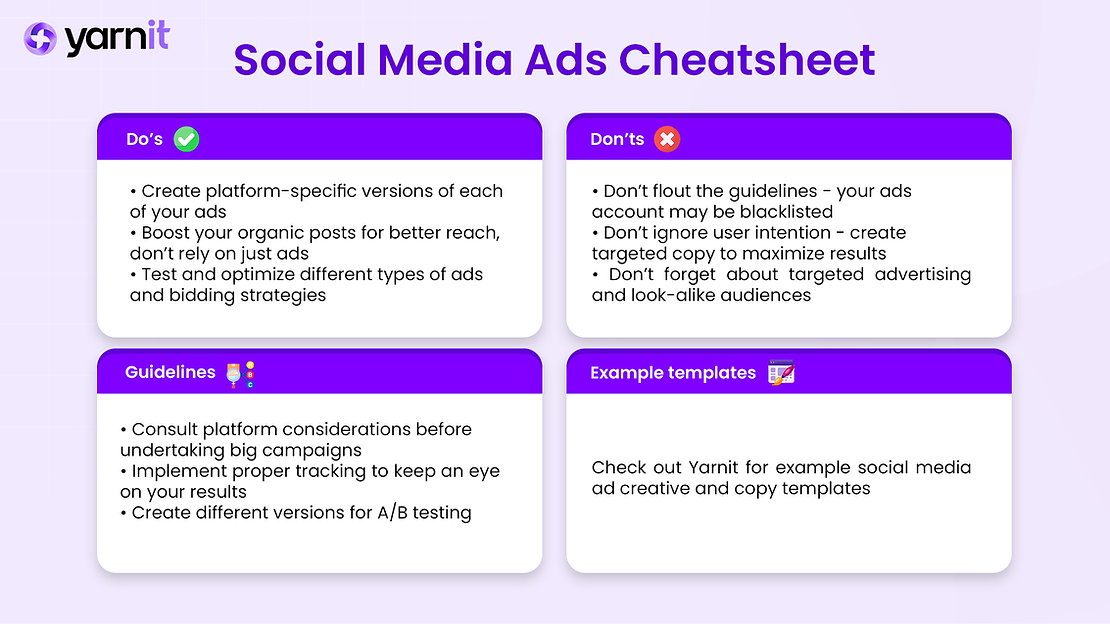
Native advertising has evolved from basic sponsored content into a highly effective approach, with CTR increasing up to 5x. Native ads are seamlessly integrated into content, increasing relevance and engagement in your digital advertising strategies.
Native ads come in various forms. We've already spoken about in-feed ads on social media platforms, but there are other formats like sponsored content on publisher websites, and recommended content widgets which play relevant videos in small boxes.
Platforms like Taboola and Outbrain specialize in distributing native ads across extensive networks of publisher sites. These ads are typically labeled as 'sponsored' or 'promoted' to maintain transparency with users.
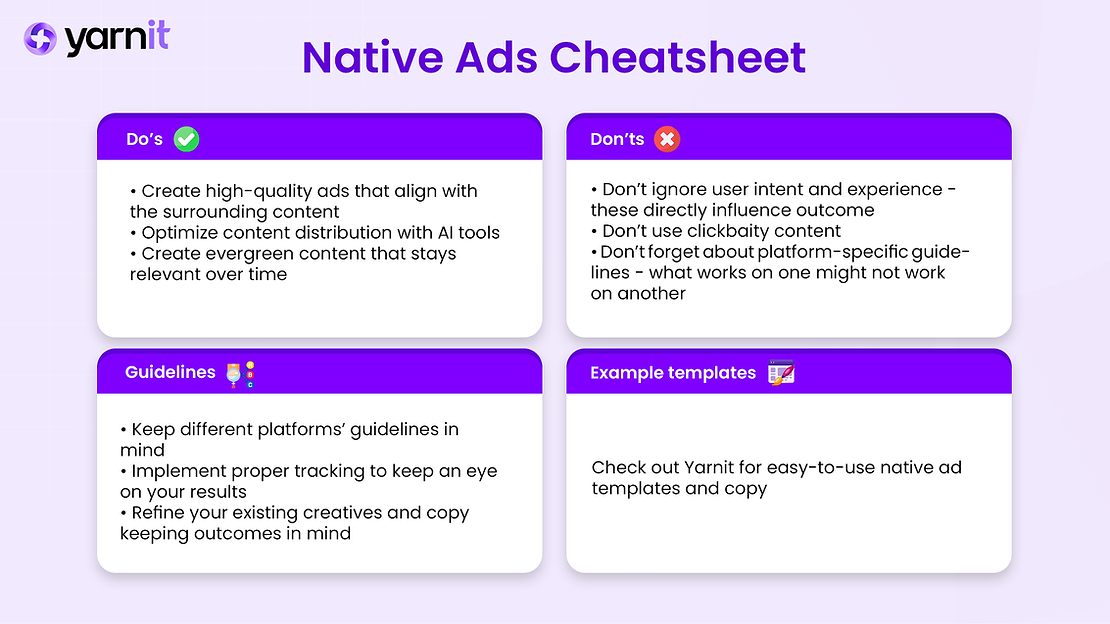
Creating an effective digital advertising strategy that makes use of all these platforms can seem daunting. Here's how you can get started:
Step 1: Start by clearly defining your marketing goals. Are you looking to increase brand awareness, drive website traffic, generate leads, or boost sales? Each objective may require a different mix of ad types and platforms. For instance, if brand awareness is your primary goal, a combination of display advertising and social media campaigns might be most effective. For direct response and sales, search advertising and retargeting could be your focus.
Step 2: Understanding your target audience is crucial. Develop detailed buyer personas that go beyond basic demographics to include psychographic factors like interests, values, and online behaviors. This deep understanding will inform your choice of platforms and help you craft messaging that resonates with your audience.
Step 3: Budget allocation is another critical aspect of your strategy. While it's tempting to spread your budget across multiple platforms, it's often more effective to focus on a few key channels where your audience is most active. Start with a modest budget to test and learn, then scale up your investment in the channels that show the best performance.
Step 4: Creative development is where your strategy comes to life. Ensure your ad creatives are not only visually appealing but also aligned with your brand identity and campaign objectives. Develop a variety of ad formats and messages to test what resonates best with your audience. Remember to optimize your creatives for each platform's specific requirements and best practices.
Strong digital advertising strategies combine data with creativity. By aligning every ad type—search, social, display, and native—toward a unified goal, you build campaigns that are efficient, adaptable, and effective.
Each ad type offers distinct strengths, but success depends on how well they’re integrated into your overarching digital advertising strategies.
Remember that digital advertising is not a set-it-and-forget-it endeavor. Continuous testing, optimization, and adaptation are crucial to maintaining and improving performance in an ever-evolving digital ecosystem. Stay informed about emerging trends, platform updates, and technological advancements to ensure your strategies remain cutting-edge and effective.
Before you start your next digital advertising campaign, bookmark and save this article as a valuable resource. Return to it whenever you need guidance on best practices, targeting strategies, or platform-specific insights.
By applying the knowledge and techniques outlined in this guide, and leveraging innovative tools like Yarnit to streamline your content creation process, you'll be well-equipped to drive meaningful results for your brand with digital advertising.
Don't ignore the opportunities in digital ads and approach it with creativity, strategy, and a willingness to adapt. Start planning your next campaign with confidence, armed with the insights and strategies you've gained from this guide.
.avif)

Traditional marketing focuses on broad audiences through offline means, while digital advertising strategies use data-driven targeting and online media for precise, measurable campaigns.
Search ads reach users with intent, allowing brands to appear at the exact moment of need—maximizing conversion potential and ROI.
Analyze where your target audience spends time online. Combine search, social, and display platforms that match your audience behaviors and campaign goals.
Yes. Native ads blend seamlessly with content, improving credibility and audience engagement without disrupting user experience.
Review performance monthly or quarterly to adjust your targeting, creative, and spending in line with campaign data and platform updates.

From collection to clarity — we’ll help you make sense of it all.

Giving shape to intelligence