.avif)
If you’ve ever searched online for an “AI-based robotic cleaner,” what happens behind the scenes is more advanced than typing and clicking. In the background, AI scans hundreds of listings, compares specifications, evaluates reviews, filters by ratings, and delivers the best match — all autonomously.
This same intelligence is now reshaping e-commerce through AI agents. AI no longer only assists shoppers; it transforms how online stores operate. From product data maintenance to SEO-driven content, image optimization, and customer engagement, AI agents can manage, optimize, and execute tasks without requiring manual direction. The scale of this transformation is evident in the agentic AI market, which is projected to grow from USD 7.06 billion in 2025 to USD 93.20 billion by 2032, at a CAGR of 44.6%, reflecting increasing investment in AI to manage complex workflows.
E-commerce today is not just about products and platforms anymore — it’s about process intelligence. Agentic AI ensures these workflows run in sync, minimizing friction so marketers can focus on strategy and brand building instead of daily maintenance.
How AI Streamlines Every E-commerce Workflow
Running an online store, whether on Shopify or across multiple marketplaces, involves dozens of parallel workflows updating Product Detail Pages (PDPs) with accurate data and creative copy, researching keywords and tracking rankings, managing catalogue visibility across search engines and marketplaces, refreshing product images and creatives for engagement, and handling recurring customer inquiries. Each task is essential yet repetitive, demanding precision, coordination, and constant updates. Traditionally, this meant hours spent switching between spreadsheets, CMS dashboards, and design tools—a cycle of manual inputs, fragmented data, and delayed execution.
AI agents break this cycle entirely. Instead of operating in silos, AI agents connect and coordinate these workflows in real time. A predictive agent forecasts trending keywords for specific SKUs, a task-oriented agent instantly updates those terms across product descriptions, and a creative agent designs corresponding visuals and short videos for campaigns—all executing simultaneously while learning from each update to refine the next. What used to be a chain of disconnected manual tasks is now a continuous, intelligent optimization loop that’s faster, more consistent, and error-free.
The shift is not just about automation; it’s about orchestration. Shopify AI agents don’t simply replace human labor—they synchronize it, ensuring marketing, content, and product data evolve together. The outcome: reduced manual workload, quicker campaign rollouts, and consistent brand experiences across every channel.
Types of AI Agents in E-commerce
Not all AI agents perform the same function. In an e-commerce workflow, four types of agents typically work in harmony:
1. Customer Engagement Agents
These agents use natural language processing to interpret conversational queries like “Show me something waterproof for hiking.” They analyze user intent in real time, cross-reference product catalogs, and deliver personalized recommendations with relevant product details and visuals, improving shopper confidence and reducing cart abandonment.
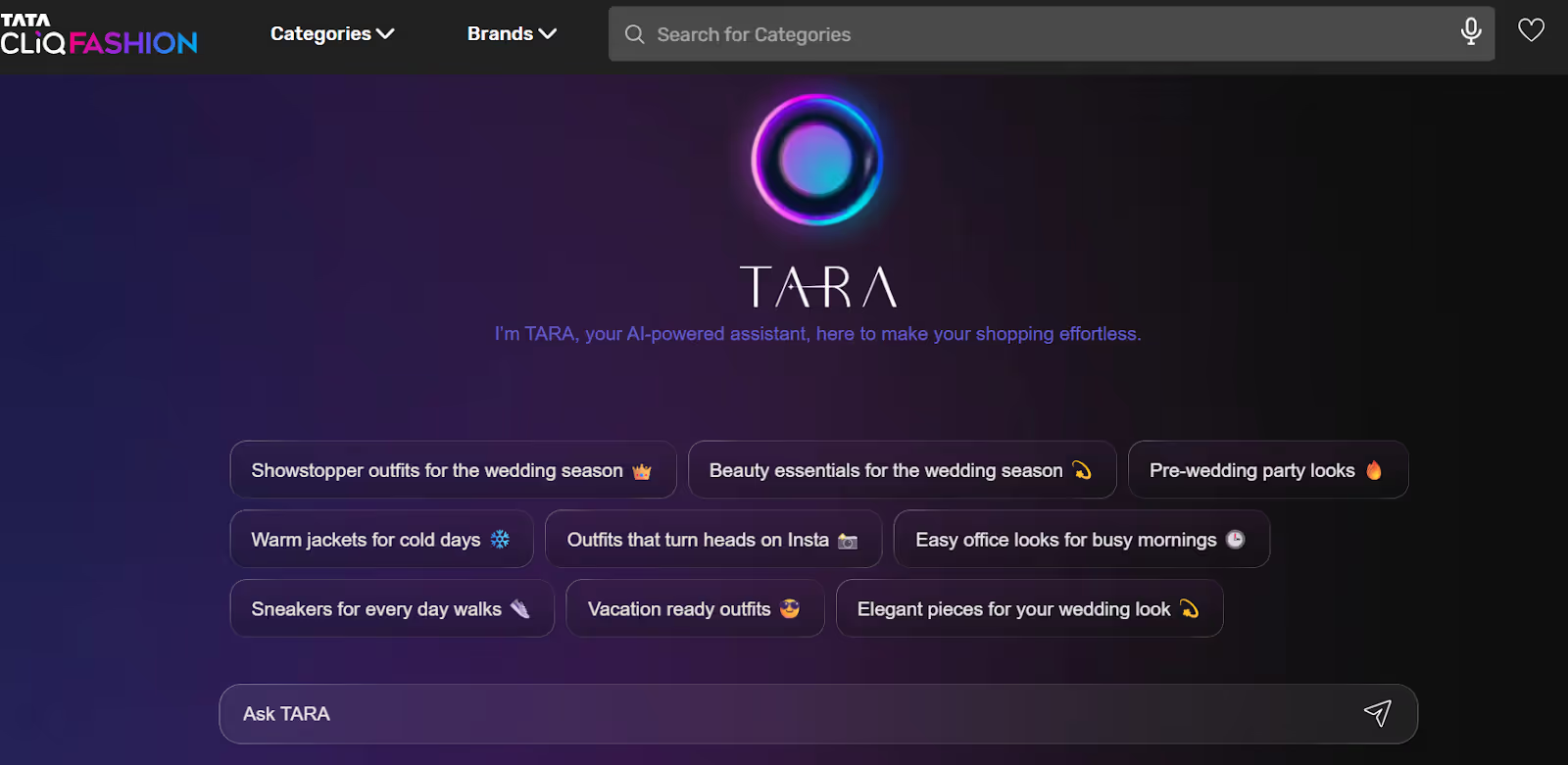
A concrete example is Tara, Tata CLiQ’s AI shopping assistant, which lets shoppers start with needs like “showstopper outfits for the wedding season,” “warm jackets for cold days,” or “easy office looks for busy mornings” and then narrows results into curated outfit ideas and products, making the experience feel like a guided styling session rather than a manual search through hundreds of listings.
2. Trend Forecasting Agents
They process historical sales data, search analytics, and behavioral patterns through machine learning models to predict demand spikes and category trends. For example, when interest in a certain style or material rises, they recommend pricing adjustments, restock alerts, and promotional timing so inventory and marketing stay aligned with real demand.
3. SEO & Content Optimization Agents
SEO and content optimization agents focus on making every PDP work harder for search and conversion. They automate keyword research around high-value, low-competition and related terms, then generate or refine PDP copy to align with buyer intent—emphasizing breathability for fitness wear, safety and durability for kids’ products, or seasonality and fit for fashion.
Tools like Yarnit’s PDP generator integrate into your Shopify store or PIM, pull in SKU information, and turn it into marketplace-ready descriptions for channels like Amazon, Walmart, and Google Shopping, while keeping product copy, specifications, and on-page elements continuously tuned for both search algorithms and shoppers.
4. Visual & Creative Agents
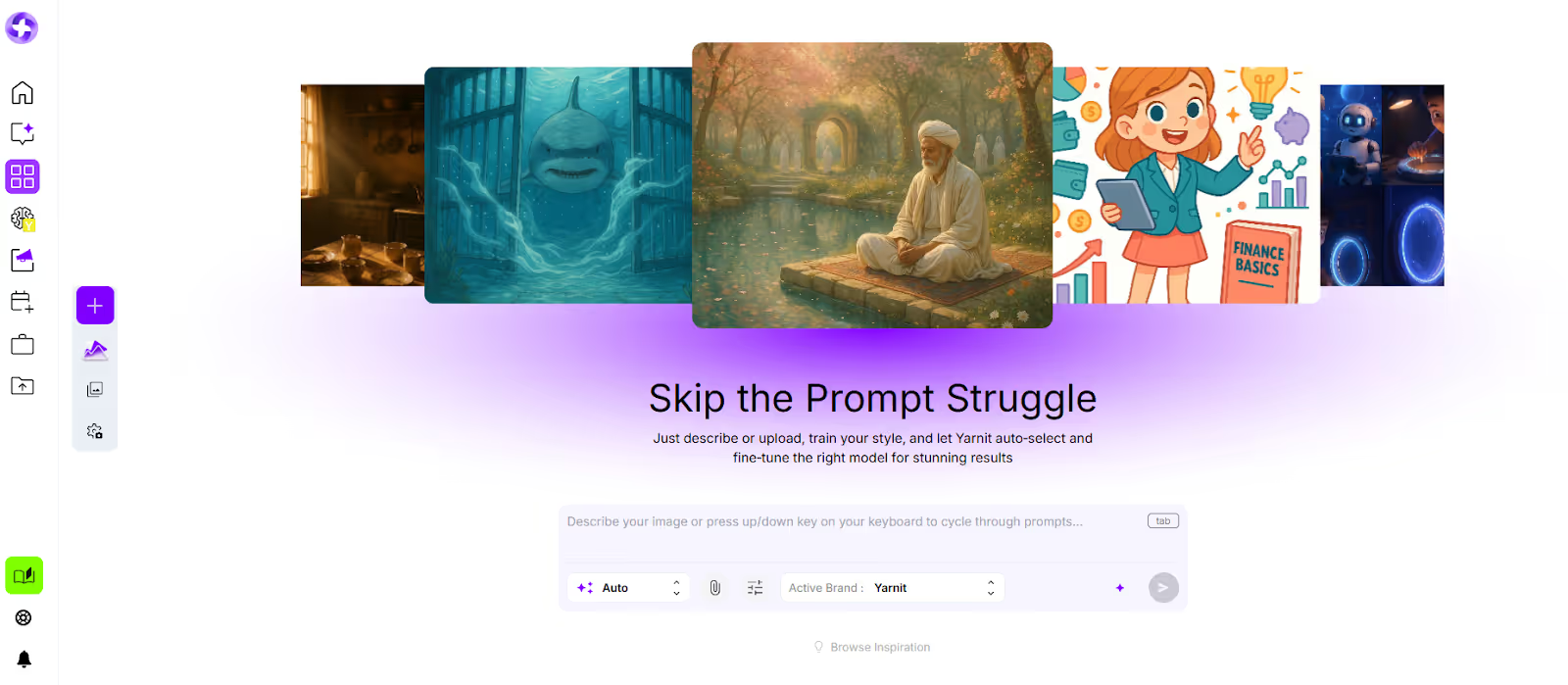
Visual and creative agents transform basic product shots into assets that actually stop the scroll. Starting from a single image, they can generate lifestyle scenes (a sweater in a café, cookware in a family kitchen), channel-specific ad creatives, and short product videos that work well on social and marketplace feeds. To learn more about using AI for lifestyle images and product shots check out our AI Product Photography for DTC Brands.
For example, Yarnit’s Dreambrush takes one product photo and produces multiple on-brand visual variants—close-ups, flat lays, environmental portraits—and pushes them directly into PDPs, so pages look rich and polished without adding design overhead for the team.
5. Workflow Orchestration Agents
Workflow orchestration agents sit on top of these roles and ensure they move in sync rather than in silos. When a trend forecasting agent spots growing demand for a category, orchestration agents can prompt SEO and content agents to refresh keywords, descriptions & visual agents to produce new creatives around that theme. The resulting performance data then feeds back into the system, so every cycle of campaigns and updates helps the agents refine what they do next.
How Agentic AI Saves Time and Operational Cost
When AI agents automate catalog updates, keyword research, and customer engagement, businesses achieve measurable efficiency across multiple workflows:
- Fewer repetitive manual actions
- Automatic synchronization of product data across multiple marketplaces
- Faster campaign and SKU updates
- Standardized, keyword-aligned content ecosystem
- Dynamic creation of SEO-friendly assets
The financial benefit isn’t only in saved hours it’s in minimizing human dependency while maintaining output quality and consistency. Teams regain time to focus on storytelling, creative strategy, and scaling operations. Want to know how Agentic AI delivers ROI? Read our blog on How DTC Brands Can Use Agentic AI to Scale Product Ops Efficiently.
Every e-commerce store depends on multiple workflows that demand coordination, accuracy, and speed. AI agents unify these moving parts into an intelligent automation layer. For Shopify stores, they simplify complex workflows, enhance brand consistency, and ensure continuous visibility.
Tools like Yarnit demonstrate what this transformation looks like in practice —where marketing, content, and customer experience operate within a single, self-optimizing ecosystem.
AI agents don’t replace the marketer; they remove friction so marketers can do what machines cannot build brands that customers remember.