

Between 2024 and 2025, shopping-related searches on generative AI platforms exploded by 4700%.
Now, that might look like a typo, but it’s not. This isn't some distant future trend marketers can afford to ignore while they optimize their Meta campaigns for the hundredth time.
By 2026, AI commerce will represent 1.5% of total US retail ecommerce sales. If you're thinking "only 1.5%?", think again, because that number translates to $20.57 billion in real revenue. More importantly, it’s a marker of the early stages of a structural shift in how consumers discover and purchase products.
Here's the reality: early adopters are building a structural advantage in the agentic commerce ecosystem right now. They're establishing visibility in the AI-powered discovery layer while their competitors debate whether ChatGPT is a fad. The cost of inaction is invisibility.
When AI agents become the primary discovery mechanism for millions of shoppers, brands that haven't optimized for this reality simply won't exist in those conversations.
Understanding What Agentic Commerce Changes for Your Brand
Remember the funnel? Awareness, consideration, conversion? That beautifully linear journey where you retarget, nurture, and storytell your way to a sale? AI agents are torching it.
When an AI agent browses, compares, and checks out on behalf of a consumer, it bypasses your carefully crafted product pages, your retargeting pixels, and your brand storytelling. The traditional model of "browse → click → decide" is being replaced by zero-click discovery.
An agent receives a command ("Find me the best waterproof hiking boots under $200"), evaluates options based on structured data and reviews, and completes the purchase, all without the consumer ever seeing your Instagram ad or reading your About Us page.
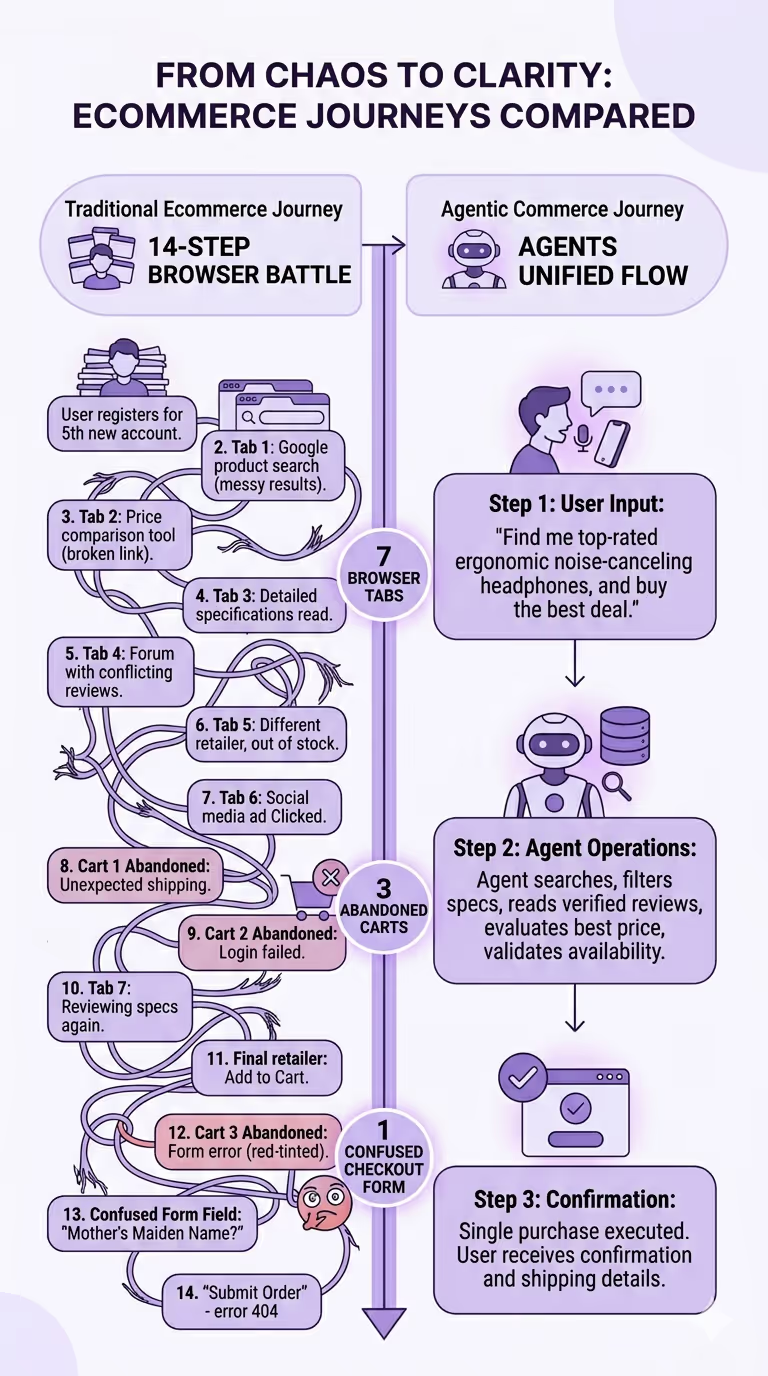
This is what "agent-first" means for brand marketers: you're no longer selling to humans browsing your website. You're selling to algorithms evaluating your product data against competitors in milliseconds.
But here's the interesting part: LLM-referred traffic converts at 2.47%, ranking fourth among acquisition channels and outperforming both Google Ads and Meta Ads for retail. During the 2025 holiday season, AI drove 20% of retail sales, generating $262 billion in revenue.
Why do conversion rates matter more in this context? Because AI agents pre-filter choices. They're not sending window shoppers to your site, they're sending qualified buyers who've already been vetted against your competitors. The traffic volume might be lower, but the intent is surgical.
The Three Pillars of Agentic Readiness
Product Data Optimization (The Foundation)
Stores with 99.9% attribute completion see 3-4x higher AI recommendation visibility, making good product information and metadata the difference between being recommended or being invisible.
AI agents don't browse like humans. They buy based on verifiable, accurate product information: attributes, pricing, availability, shipping policies, and return policies. Incomplete data disqualifies you from being recommended in the AI conversation entirely.
Your action plan:
- Complete product feeds with every critical field: SKU title, description, price, availability, images, category, brand, shipping details, and return policies
- Add conversational attributes that answer agent FAQs ("Is this waterproof?" "Will this fit a 15-inch laptop?")
- Implement schema.org markup using JSON-LD for machine readability—this is non-negotiable
- Achieve "Golden Record" status with 99.9% attribute completion across your catalog
- Ensure cross-channel consistency: SKUs, GTIN/UPC codes, pricing, and specs must match everywhere
Technical Infrastructure (The Rails)
Slow sites lose trust with human visitors. With AI agents, slow sites get skipped entirely. Agents don't tolerate friction because they're optimizing for efficiency, not entertainment.
Site performance and accessibility essentials:
- Page speed optimization specifically for AI crawling patterns
- API readiness for protocol integration: Universal Commerce Protocol (UCP), Agentic Commerce Protocol (ACP)
- Real-time inventory and pricing feeds
Protocol implementation:
- Integrate with Google UCP, OpenAI ACP, and Shopify's Agentic Storefronts for multi-platform presence
- Ensure payment provider tokenization readiness for seamless agent-initiated transactions
This isn't future-proofing, because these protocols are live and operational. Brands that can't integrate are already being left out of AI-mediated transactions.
Trust Signals & Review Management
AI agents are skeptical by design. Before recommending your product, they consult Amazon reviews, Google ratings, Trustpilot scores, Reddit threads, and social media sentiment. They're looking for consistent positive signals across platforms.
Even top brands have critics. The winners in the agentic commerce race are the brands managing their narratives proactively across every platform where their brand is mentioned.
Action steps:
- Develop a cross-platform review presence strategy (not just your website)
- Implement active reputation management across all platforms where your brand appears
- Respond to negative reviews—agents read responses and factor them into trust calculations
- Build review velocity and recentness (old reviews carry less weight)
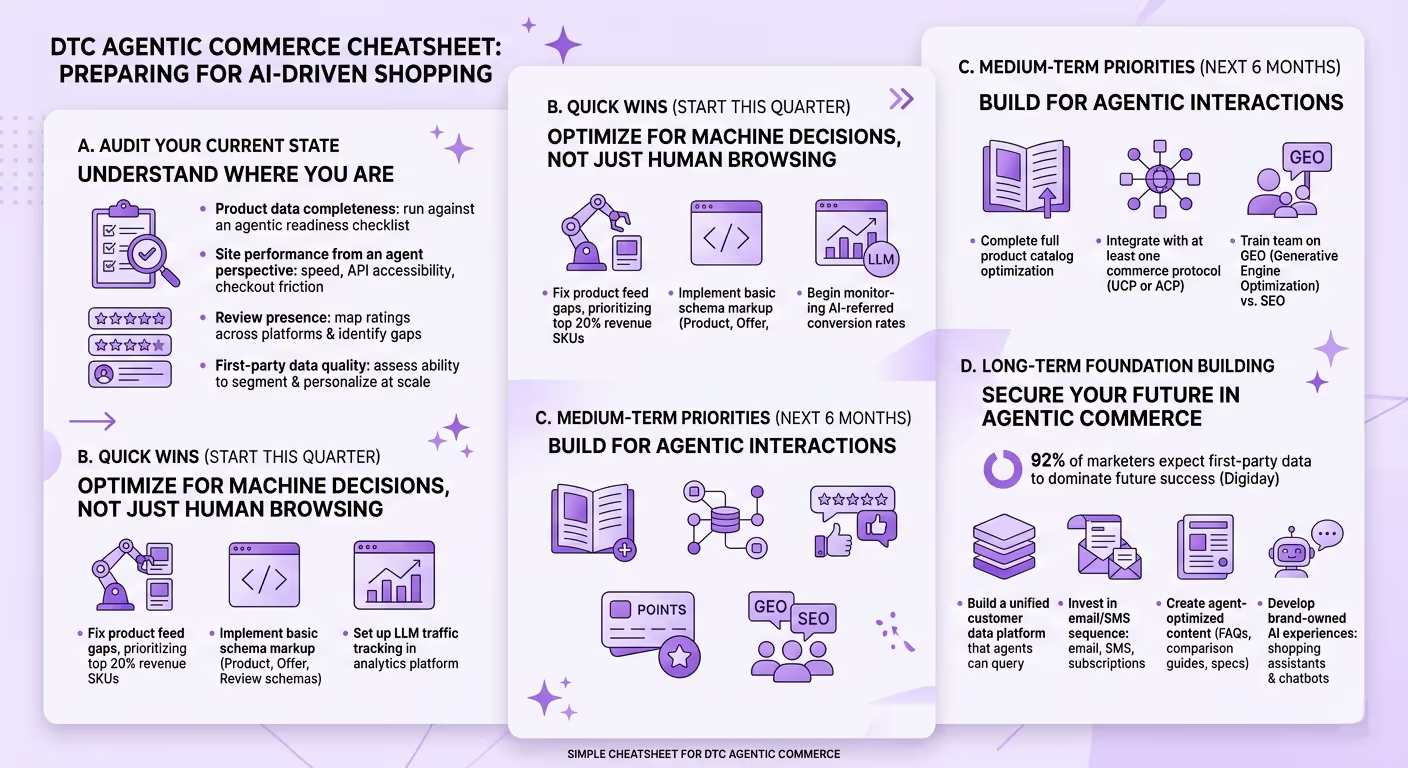
A Cheatsheet for Preparing for Agentic Commerce
Conclusion
Agentic commerce isn't a trend you can wait out. It's a fundamental restructuring of how discovery, evaluation, and purchasing happen online. Brands that treat this as another marketing channel to "test" will find themselves systematically excluded from an increasingly significant portion of ecommerce transactions.
The good news? The playbook is clear: optimize your product data to Golden Record standards, build the technical infrastructure for protocol integration, and manage your reputation as a cross-platform trust signal.
For ecommerce marketers managing hundreds or thousands of SKUs, manual optimization isn't realistic. That’s where Yarnit comes in.Yarnit for ecommerce is an autonomous AI engine that focuses on AEO (Agentic Engine Optimization) and GEO workflows, streamlining product catalog management to ensure attribute completeness. With enrichment for ACP and UCP feeds, Yarnit for ecommerce can create complete feeds and maintain the data consistency that agents require.
The question isn't whether to prepare for agentic commerce. It's whether you'll be ready before your competitors are.