


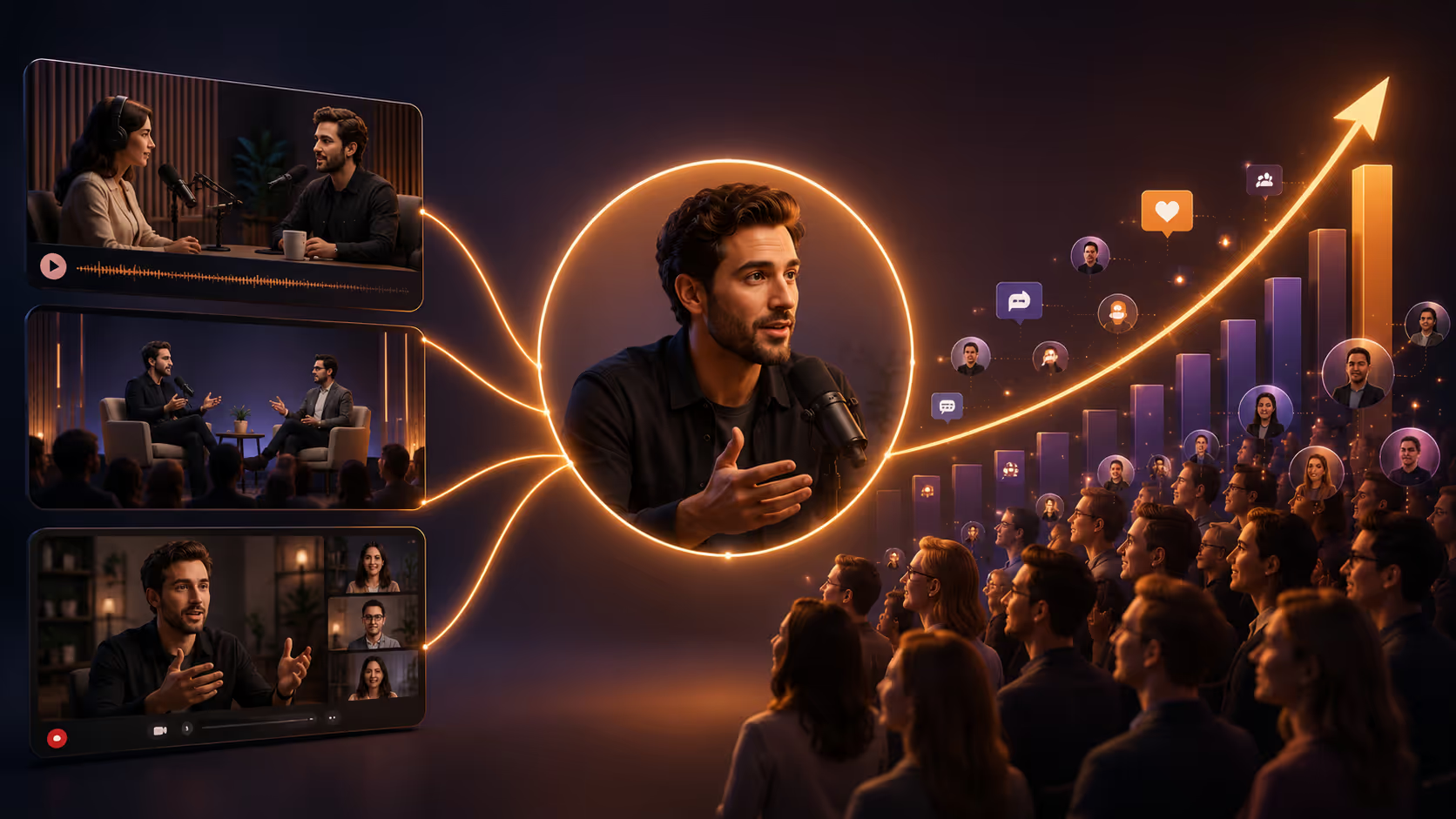
Open LinkedIn, scroll through your feed, and try to identify the company behind the content before you see the logo. In most cases, you can't. The phrasing sounds the same. The structure is the same. The insights are the same. Swap one brand name for another, and nothing breaks.
It's the documented consequence of an entire industry reaching for the same AI tools at the same time.
And yet, some brands stand out because you know the people behind them. You recognize the founder's take on a thorny industry problem. You've watched a sales leader be wrong about something publicly and then update their view. You've followed a product manager long enough to understand how they think before you ever book a demo.
Brands that invest in making their people visible build something more durable than campaigns or content libraries, they build trust, differentiation, and audience affinity that compounds over time. And in a market where everyone has access to the same tools, that's the only kind of advantage worth having.
From Broadcast to Relationship: How We Got Here
Earlier brands communicated through channels that were expensive, mediated, and fundamentally one-directional.
A television ad required a production budget and a media buy. A newspaper spread went through an editor. A billboard required a location contract and a designer. The audience received messages. They had no mechanism to respond, question, or engage. The people behind the brand were largely invisible.
What consumers interacted with was the artifact of the brand, the logo, the slogan, the jingle, not the founder's perspective or the VP of Product's reasoning What has changed now is access.
Social media, podcasts, LinkedIn, YouTube, newsletters, and creator platforms hand brands a direct line to their audiences, without editors, without production houses, without media budgets as a barrier to entry. For the first time, the person running a company can say something on a Tuesday morning and have it reach ten thousand industry peers by noon.
This shift has also changed what audiences expect. Buyers today often know the founder's opinions before they've read the company's website. They've heard a CEO's view on a macro trend before they've seen a product demo. They've developed a sense of whether they trust the people inside the company before they trust the company itself.
In this environment, the people behind the brand have become as important as the brand itself.
Why Human Faces Build Stronger Brands
Humans are wired to evaluate other humans. We read faces, track behavioral consistency, notice when someone admits uncertainty, and update our assessments when people change their minds. These are the signals we've evolved to use when deciding whether to trust someone. Logos don't carry these signals. Press releases don't. Thought leadership roundups assembled by a content team don't. People do.
Research consistently shows that 99% of buyers say thought leadership is critical to their decision-making, and 73% say they trust it more than traditional marketing formats. Content that earns trust tends to have a specific quality: it's attributed to a person whose track record and perspective you can evaluate over time.
When a founder shares how they made a difficult pricing decision, what they got wrong, what changed their mind, what they'd do differently, audiences are not just learning about the company. They're learning how that founder thinks. And that is what creates genuine affinity.
There's also a compounding effect. A consumer who follows a brand reads their content. A consumer who follows a person at that brand begins to invest in their journey. They notice when the company hits a milestone the person mentioned months earlier. They feel the failure when a product launch underperforms. They share content not because it's useful but because they feel connected to the source. That's a qualitatively different relationship, and it translates into measurably stronger retention, referral behavior, and brand recall.
Consider Dave Gerhardt, one of the most recognizable personal brands in B2B marketing today. Before building Exit Five, Dave led marketing at companies like Drift and Privy. But what truly differentiated him was his voice.
Unlike traditional executives who communicate through polished corporate statements, Dave built an audience by sharing candid opinions about marketing, career growth, leadership, community building, and the realities of operating a business. Over time, marketers didn't just know where he worked; they understood how he thought.
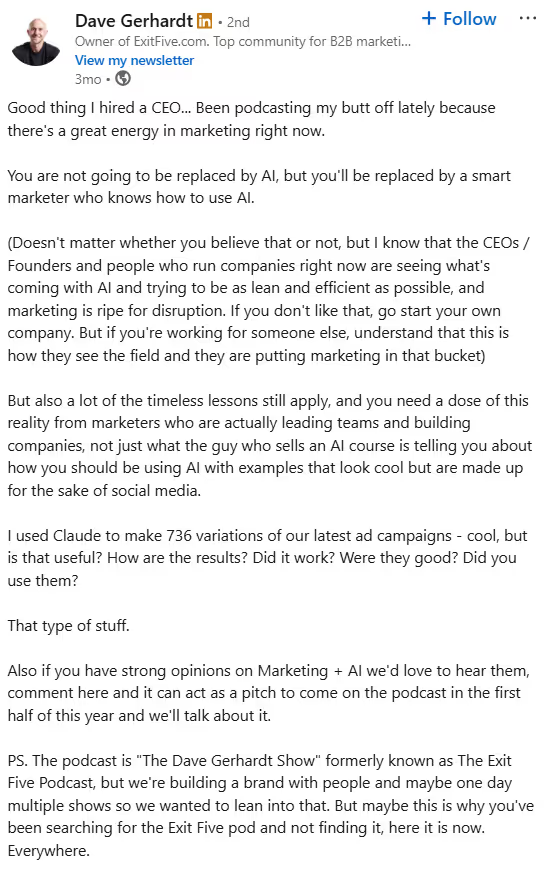
That familiarity became a powerful business asset. Rather than relying solely on company marketing, Dave consistently showed up through LinkedIn posts, newsletters, podcasts, live sessions, interviews, and industry events. He launched the Exit Five newsletter, which grew into one of the most widely read newsletters in B2B marketing, hosted a podcast featuring CMOs and marketing leaders, built a paid community for marketers, and expanded into in-person events, leadership retreats, workshops, and networking experiences.
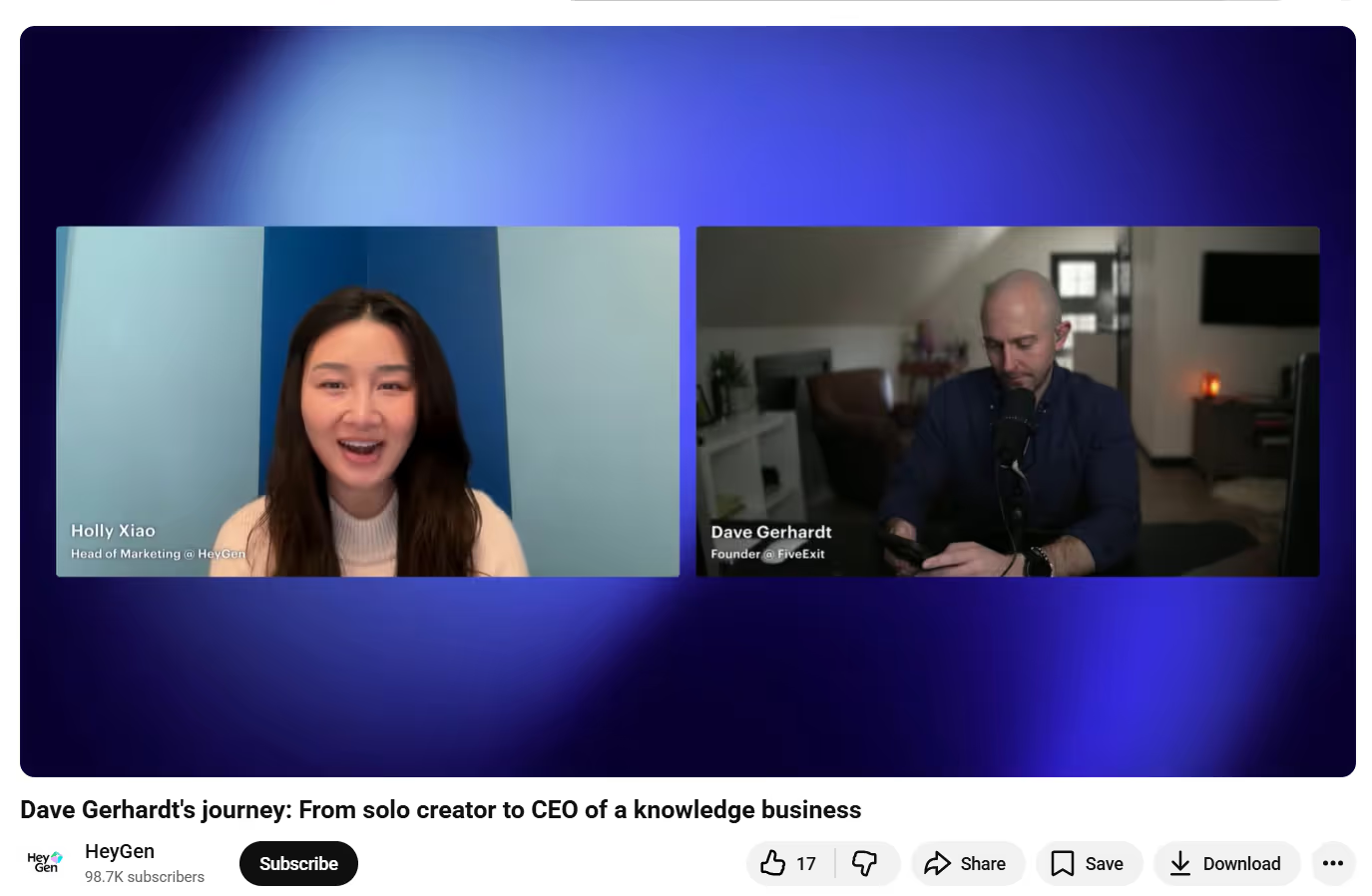
Take Dave Gerhardt's appearance on HeyGen's YouTube channel, where he joined Holly Xiao, Head of Marketing at HeyGen, to discuss his journey from solo creator to CEO of a knowledge business. On the surface, it's simply an interview. But from a branding perspective, it's much more than that.
Every time Dave participates in conversations like these, he's exposing himself to an audience that may have never heard of Exit Five. The viewers may have come for HeyGen's content, but they leave with an impression of Dave, his personality, expertise, communication style, and point of view. People develop relationships with personalities, viewpoints, stories, and consistent voices. Over time, trust in the individual transfers to trust in the company. The human becomes the bridge between the audience and the brand.
Why This Matters Even More in the AI Era
Go back to that LinkedIn scroll for a moment. Now ask yourself: when you're reading a post and something about it feels a little flat, competent, technically fine, but somehow hollow, what are you actually sensing? Chances are, you're picking up on the absence of a real person behind it.
When 74% of new web pages contain detectable AI-generated content and 85% of marketers are using AI writing tools, the market for differentiated content isn't just getting competitive, it's getting structurally distorted. The average is rising. But so is the sameness. What this creates is an inversion of what was true before.
When content was hard to produce, the differentiator was volume. The brand that published more, reached more. Today, production cost has collapsed. Volume is no longer a competitive advantage. What's scarce is something AI genuinely cannot manufacture: a specific person's lived experience, earned conviction, and willingness to hold a non-consensus view.
AI can write a paragraph about leadership. It cannot tell you what it felt like to fire your first employee. AI can generate a trend analysis. It cannot tell you the thing your largest customer said that changed how you think about your product roadmap. AI can produce "10 things to know about enterprise sales." It cannot tell you the three things it got wrong and why.
That gap between the polished and the personal, between the generated and the genuinely experienced is where human presence becomes a competitive moat. Human-authored content still receives 5.44x more traffic than AI-generated content precisely because audiences can feel the difference, even when they can't always articulate it.
In a market flooded with competent content, personality becomes the differentiator. Trust becomes the advantage. And both require people.
The Modern Media Stack Has Made This Possible at Scale
The modern media stack available to any brand includes:
Podcasts and video podcasts, where a founder can build a weekly audience through honest conversation rather than polished presentations. Fireside chats and industry roundtables, where executives can demonstrate expertise through disagreement and nuance, not just alignment. LinkedIn thought-leadership posts, where a subject matter expert can share a specific, contrarian opinion on a Tuesday and have it reach ten thousand peers by Thursday. YouTube channels, newsletters, AMA sessions, LinkedIn Live, and short-form video content, formats that reward consistency and candor over production value.
On LinkedIn alone, personal profiles now generate eight times more engagement than company pages, and LinkedIn users are three times more likely to trust content from an individual than from a brand account. This isn't an algorithmic quirk. It reflects something true about how professional trust forms. Brands that have understood this have built audience assets that no paid media budget can replicate.
Building a Human-Face Content Strategy That Actually Works
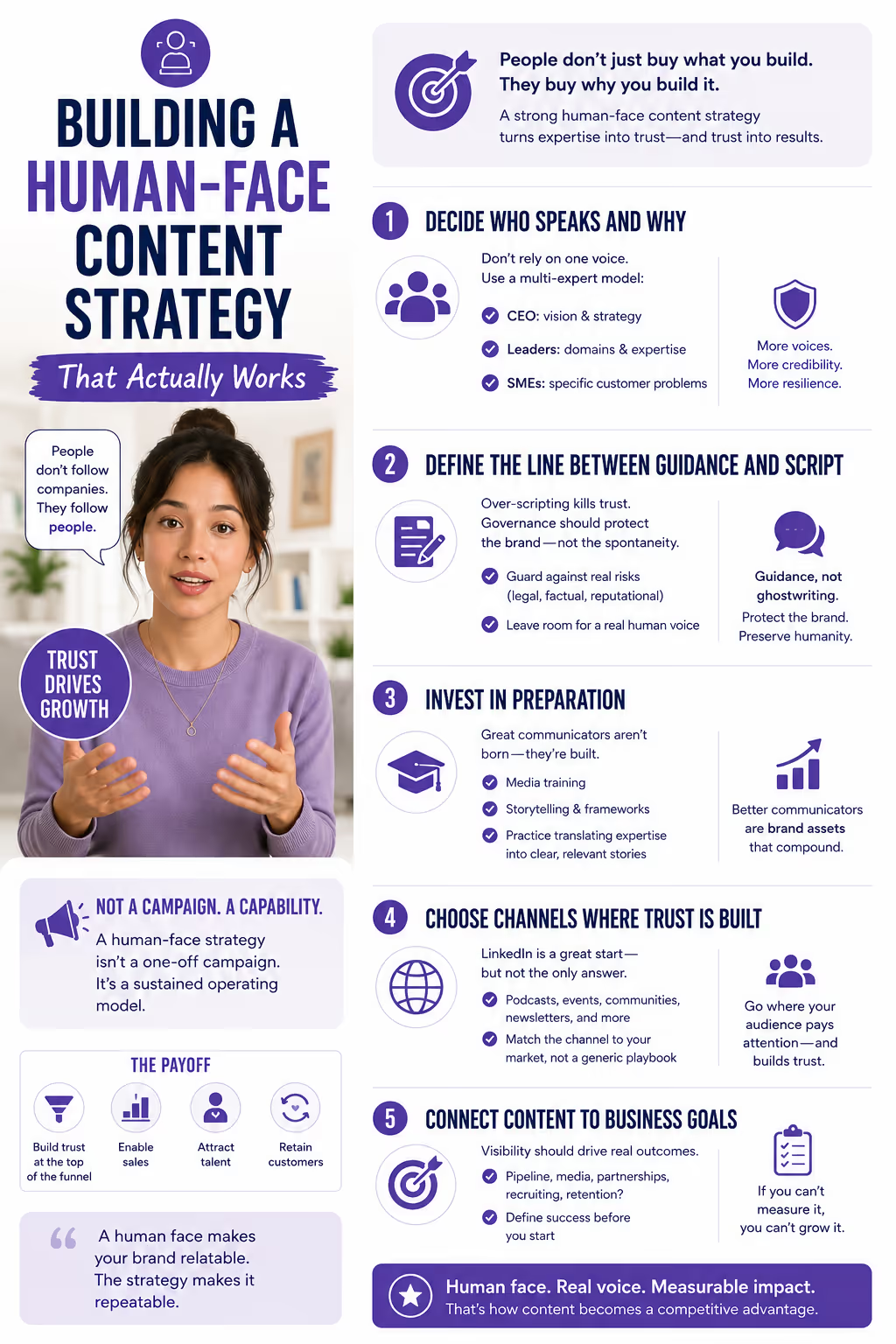
The instinct most organizations have when they decide to "put people forward" is to treat it as a campaign. A campaign has a start date, a content calendar, an approval process, and a post-mortem. A human-face strategy is none of those things. It's a sustained operating model, and the organizations that treat it like a campaign are the ones that fail at it.
Here's what a functional strategy actually requires:
Decide who speaks and why. The default assumption is that the CEO or founder should carry all external presence. This is sometimes right and sometimes a dangerous single point of failure. A multi-expert model, where a CEO speaks to vision and strategy, functional leaders speak to their domains, and subject matter experts speak to the specific problems your customers are navigating, is more resilient and often more credible.
Define the line between guidance and script. An executive who sounds like they're reading approved talking points is destroying trust. The goal of governance should be to protect the brand from genuine risks (legal, factual, reputational) while preserving the spontaneity that makes a human presence worth following.
Invest in preparation. Media training, storytelling coaching, frameworks for structuring a point of view, practice in translating internal expertise into externally relevant narrative, these are the investments that compound. A technically expert engineer who can explain a complex system in plain language to a non-technical buyer is a brand asset.
Choose channels based on where your audience actually pays attention. For some industries, a niche podcast reaches a more qualified audience than any amount of LinkedIn content. For others, speaking at a specific conference carries more credibility weight than six months of social posting. Match the channel to where trust is built in your specific market, not to where the generic playbook says you should be.
Connect personal content to business goals explicitly. A founder sharing lessons from a product failure is a top-of-funnel trust-building asset, a sales enablement tool, a recruiting signal, and a customer retention mechanism, all at once. But this only works if the organization can articulate the connection. What does visibility lead to? Partnership conversations? Recruiting outcomes? The metrics matter, and they need to be defined before the strategy begins.
Conclusion
Campaigns can be reverse-engineered. Positioning can be copied by a well-funded competitor in a quarter. But you cannot copy a founder's fifteen-year track record of being honest in public. You cannot manufacture the trust that comes from watching someone hold a position under pressure, or change their mind and say so. These things take time, consistency, and a real person willing to show up.
That's the bet worth making right now. Not more content. More people. Make your founders visible. Make your subject matter experts findable. Give your executives something real to say and the room to say it.
And if AI is part of how you produce content, the question is whether it's helping your people sound more like themselves, or less. Yarnit's AI Humanizer is built for exactly that: taking AI-assisted content and making sure it still carries the voice, tone, and texture of the person behind it. Because in a world where anyone can generate content, the brands that win will be the ones where you can still hear a human on the other side.


