


AI video generation is finally here, and it's fast, cheap, and accessible.
But that's exactly the problem.
Most marketing teams using AI video tools are about to waste a ton of time creating ads nobody remembers.
The same excitement that's driving adoption is also driving a race to the bottom: more content, less substance. Teams are cranking out dozens of videos, celebrating the cost savings, and completely missing what actually makes people stop scrolling.
Sound familiar? It should. We've seen this movie before with AI-generated written content.
This post isn't about bashing AI video ads. It's about showing you what separates forgettable from unforgettable, whether you're using AI or not. We're talking hooks that actually hook, scripts that don't sound like scripts, and those magic moments when a viewer thinks, "Yeah, that's exactly how I feel."
Master these three things, and you'll create AI video ads that actually work while everyone else drowns in their own content flood.
The AI Video Gold Rush (And Why It's Déjà Vu All Over Again)
Remember 2023? That's when AI writing tools exploded. Suddenly, anyone could generate blog posts in seconds. The internet got flooded with technically correct but spiritually empty content. Articles that checked every SEO box but said nothing memorable.
AI video is having its 2023 moment right now.
Tools like Synthesia, HeyGen, and dozens of others have made video creation absurdly accessible. You don't need cameras, studios, or even actors anymore. Type a script, pick an avatar, and boom—you've got a video. The barrier to entry? Gone.
If you’re looking to get started with video creation through AI, here’s an in-depth guide we wrote that covers everything you need.
Here's where it gets messy. When something becomes this easy, quality control goes out the window. Marketing teams see the cost savings and start thinking in volume. "If we can make 50 videos for the price of one traditional shoot, why not make 100?" The math makes sense until you realize you're creating 100 pieces of content nobody wants to watch.
The marketers who'll win won’t just be making the most AI video ads. You really have to recognize that accessibility doesn't equal effectiveness.
You need to understand that a great hook, a tight script, and a genuine moment of connection matter infinitely more than production speed.
This is your edge. While competitors pump out forgettable content, you can focus on the fundamentals that actually drive conversions.
Crafting Scripts That Don't Suck: The Hook Is Everything
Let's be real. In the attention economy driven by our recommendation overlords, you've got about three seconds.
Three seconds before someone scrolls past your video. That's it. Your hook isn't just important; it's the entire game. Mess up those first few seconds, and nothing else matters. Your brilliant product pitch? Never heard. Your clever callback? Wasted.
So what makes a hook work?
- Specificity. "Struggling with dry skin?" is boring. "My face literally flaked off during my presentation" is a hook. See the difference? One's generic, the other paints a picture you can't unsee.
- Emotion. People don't scroll through social media looking for information—they're looking for feelings. Your hook should tap into frustration, curiosity, relief, or surprise. "I wasted $300 before finding this" hits different than "Here's a great product."
- Pattern interruption. Say something unexpected. "Stop doing skincare routines" works better than "Try this skincare routine." The brain perks up when you challenge assumptions.
Hook Examples That Actually Work:
- "My boss asked why I looked tired. I'd slept eight hours."
- "This $12 thing solved a problem I'd had for five years."
- "Nobody tells you the worst part about working from home."
- "I kept this secret from my roommate for three months."
Notice how each one creates a tiny story gap? That's what keeps people watching.
Next time, try this AI prompt for generating hooks:
"Generate 10 attention-grabbing video hooks for [product/service]. Each hook should be one sentence, highly specific, emotionally resonant, and create curiosity. Focus on real problems or surprising moments. Avoid generic phrases like 'struggling with' or 'looking for.' Make them feel like the start of a story someone would tell a friend."
Once you've got your hook, the rest of your script needs to flow naturally. This means integrating your product without making it feel like an infomercial. The best UGC-style content introduces the product as a solution that emerged organically, not as the point of the story.
Think: "I was so desperate I tried this random thing my coworker mentioned" rather than "Let me tell you about this amazing product."
Want inspiration? Check out platforms like TikTok's Creative Center or Meta's Ad Library. Watch top-performing creator content in your niche.
Pay attention to how they open videos, when they introduce products, and how they maintain energy. These libraries are goldmines for understanding what's resonating right now.
What Makes UGC-Style Content Actually Convert
Here's the secret sauce: relatability.
Not aspirational content. Not perfectly polished demos. Relatability. That split-second when someone watching your video thinks, "Oh my god, that's me."
This is the moment that sets up everything else. Before you can sell anything, you need to earn trust. And you earn trust by showing you understand their world.
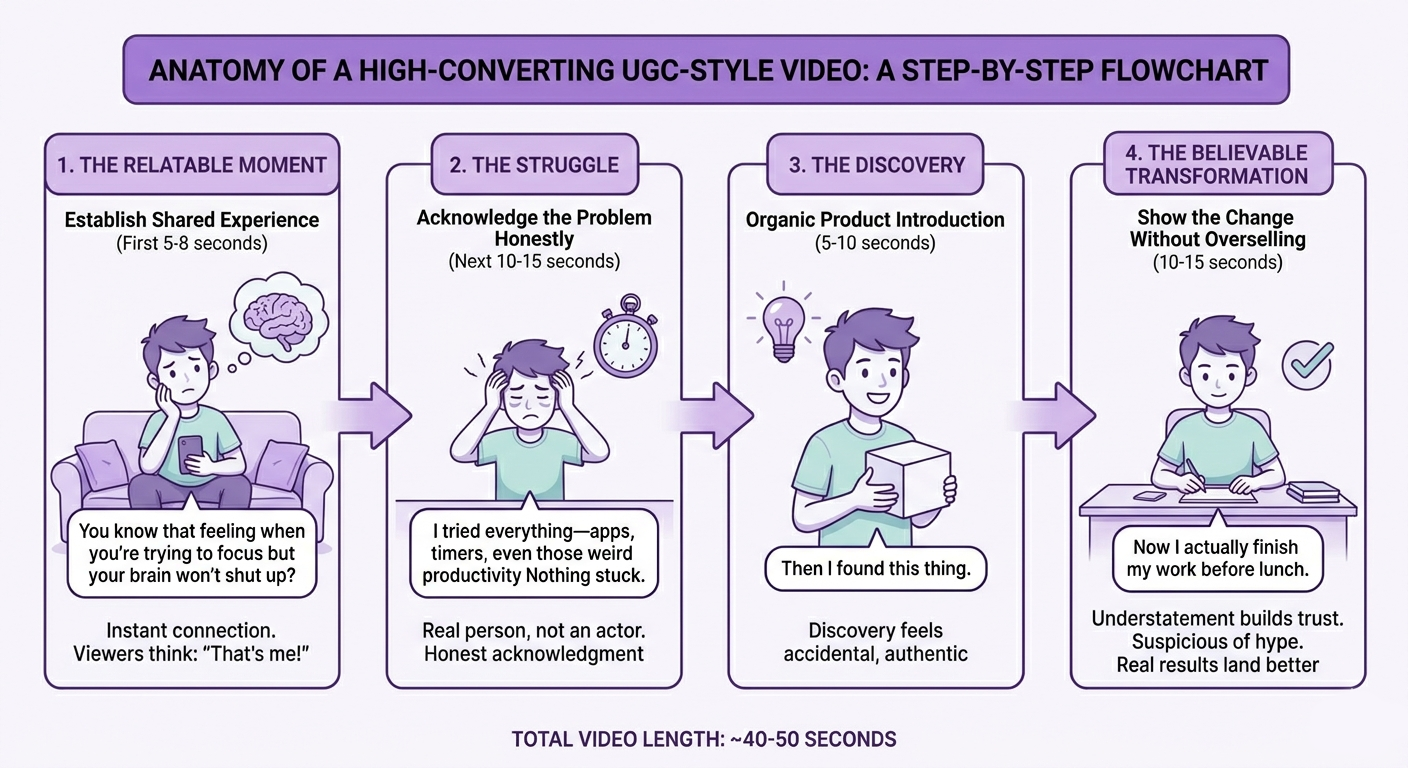
Let's break down the anatomy of a converting UGC-style video:
The Relatable Moment (First 5-8 seconds):
You establish shared experience. "You know that feeling when you're trying to focus but your brain won't shut up?" Boom—instant connection. The viewer nods internally. They're in.
The Struggle (Next 10-15 seconds):
You acknowledge the problem honestly. Not dramatically. Not like an actor. Like a real person. "I tried everything—apps, timers, even those weird productivity YouTubers. Nothing stuck."
The Discovery (5-10 seconds):
This is where your product enters, but notice the framing. It's not "Check out this product." It's "Then I found this thing." The discovery feels accidental, authentic.
The Transformation (10-15 seconds):
Show the change without overselling. "Now I actually finish my work before lunch" lands better than "This completely revolutionized my productivity." People trust understatement. They're suspicious of hype.
Here's the thing about selling within this framework: you don't really "sell." You share. The best UGC content feels like a friend telling you about something that helped them. The product is the supporting character, not the hero. The viewer's journey is the hero.
Research backs this up. UGC-style content generates 4x higher click-through rates than traditional ads and boosts conversions by up to 29%. Why? Because it doesn't feel like an ad. It feels like a recommendation from someone who gets it.
The Future of AI Video Ads (And How to Win)
So where does this leave us?
AI video ads aren't going anywhere. The technology will only get better, faster, cheaper. But that just raises the stakes for doing it right.
The winners won't be the teams churning out the most content. They'll be the ones who understand that tools are just tools. A great hammer doesn't make you a great carpenter. Similarly, access to AI video generation doesn't make you a great marketer.
What makes you great is knowing how to craft a hook that stops thumbs mid-scroll. Understanding the difference between a script that sounds written and one that sounds human. Recognizing those moments of genuine connection that make someone think about your product hours later.
We're building something at Yarnit to help marketers create AI video ads that actually stand out. Not more content. Better content. Tools that understand the fundamentals we've covered, hooks that hook, scripts that flow, and authentic moments that convert. Because the future of AI video marketing isn't about who makes the most ads. It's about who makes the ads people actually remember.
Stay tuned. The content flood is coming. But you don't have to drown in it.


