



When a flash sale goes live, when a seasonal campaign kicks off overnight, or when a last-minute promotional window opens, teams that rely on manual copywriting hit a wall fast. Rewriting descriptions across hundreds of SKUs for a Diwali sale or a Black Friday push, adjusting tone, keywords, and marketplace-specific formatting, is not a task a content team can execute at speed without help.
An AI product description generator solves exactly this. It lets ecommerce brands update product listings in bulk, across thousands of SKUs and multiple marketplaces simultaneously, without bottlenecks. For last-minute campaigns, it reduces the turnaround from days to hours. For seasonal pushes, it means every product page is optimised and live before the window opens, not after.
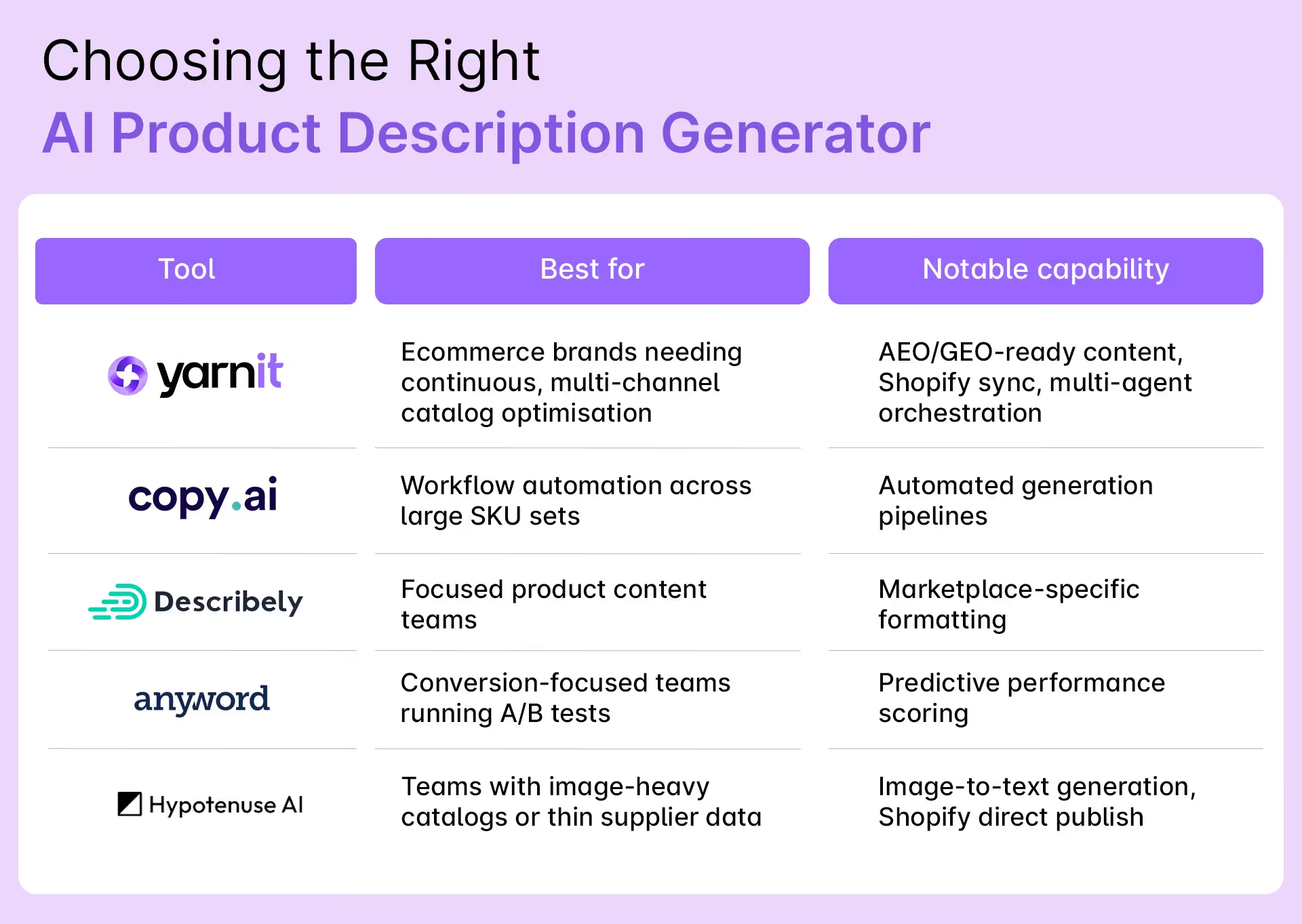
In 2026, the best tools in this category go further than text generation. They pull in category signals, competitive data, and SEO context to produce descriptions that are structured for both search engines and AI-powered discovery platforms. Here are six worth considering.
5 Best AI Product Description Generators in 2026
1. Yarnit for Ecommerce

Yarnit is an agentic AI platform built for ecommerce brands and retailers. Its flagship ecommerce capability, CatalogIQ, is designed to turn static product catalogs into continuously optimised content, not just descriptions, but titles, attributes, metadata, and FAQs, all updated together using live market signals.
CatalogIQ connects directly to a brand's Shopify store, syncs the full product catalog, and runs continuous AI-powered audits. It draws on bestseller insights, category context, shopper intent data, and competitive signals to optimise each product detail page. The output is an ongoing optimisation that adapts as search behaviour and category dynamics shift.
What makes Yarnit particularly relevant in 2026 is that it is built for multi-channel discovery: SEO, AEO (Answer Engine Optimization), and GEO (Generative Engine Optimization). Product pages optimised through CatalogIQ are structured to surface in Google search and in AI-powered answer engines like Perplexity and ChatGPT Shopping as well.
Key features:
- Bulk catalog optimisation across titles, descriptions, attributes, metadata, and FAQs
- Shopify integration with two-way live sync
- Continuous catalog audits using category and competitive signals
- Brand DNA configuration — voice, guidelines, and content rules trained into the platform
- Multi-agent orchestration (research, strategy, writing, QA agents working in sequence)
- Contextual intelligence layer (Memora) that preserves product-brand relationships across every generation
2. Copy.ai
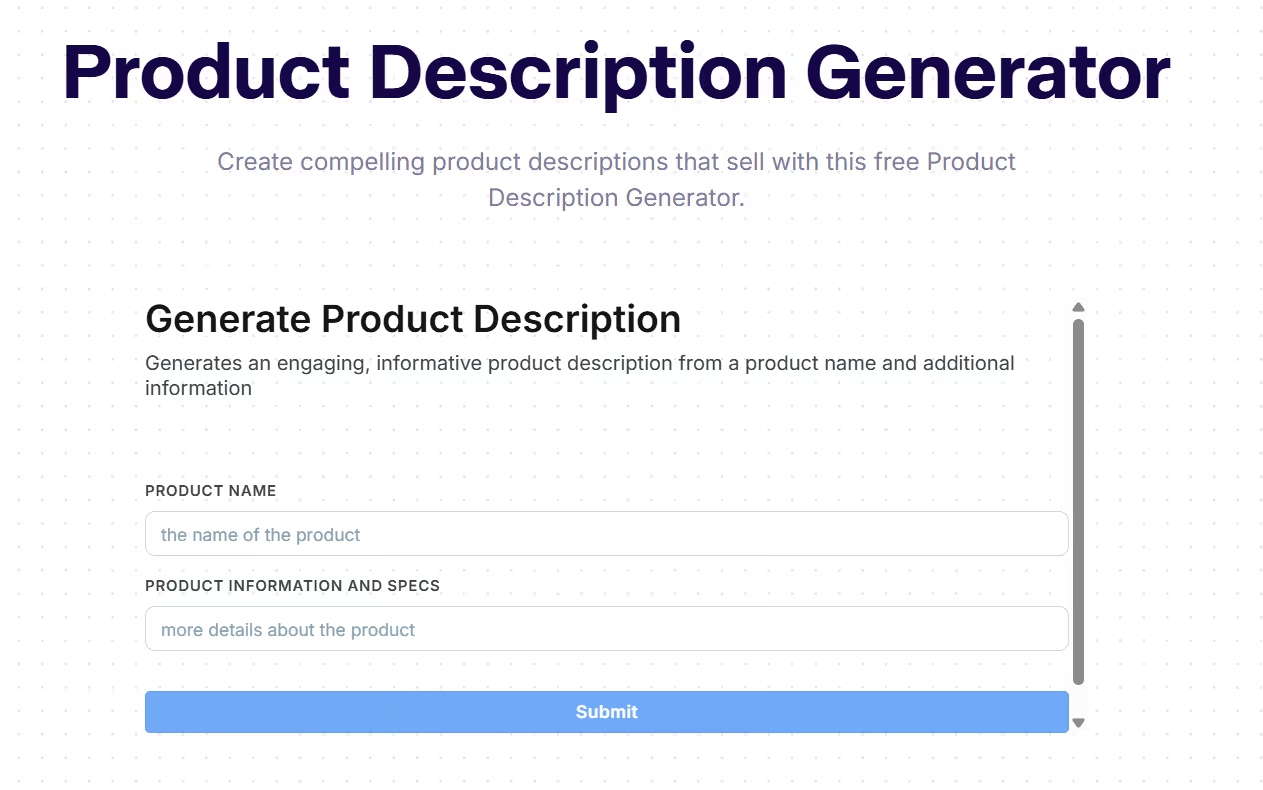
Copy.ai offers a workflow-based approach to product content, where teams can build automated pipelines for description generation across categories. Its ecommerce workflows allow inputs like product name, attributes, and audience, and produce multiple output variations for testing.
Key features: Workflow automation, multi-variant generation, tone and format controls, CSV bulk input for large catalogs.
3. Describely
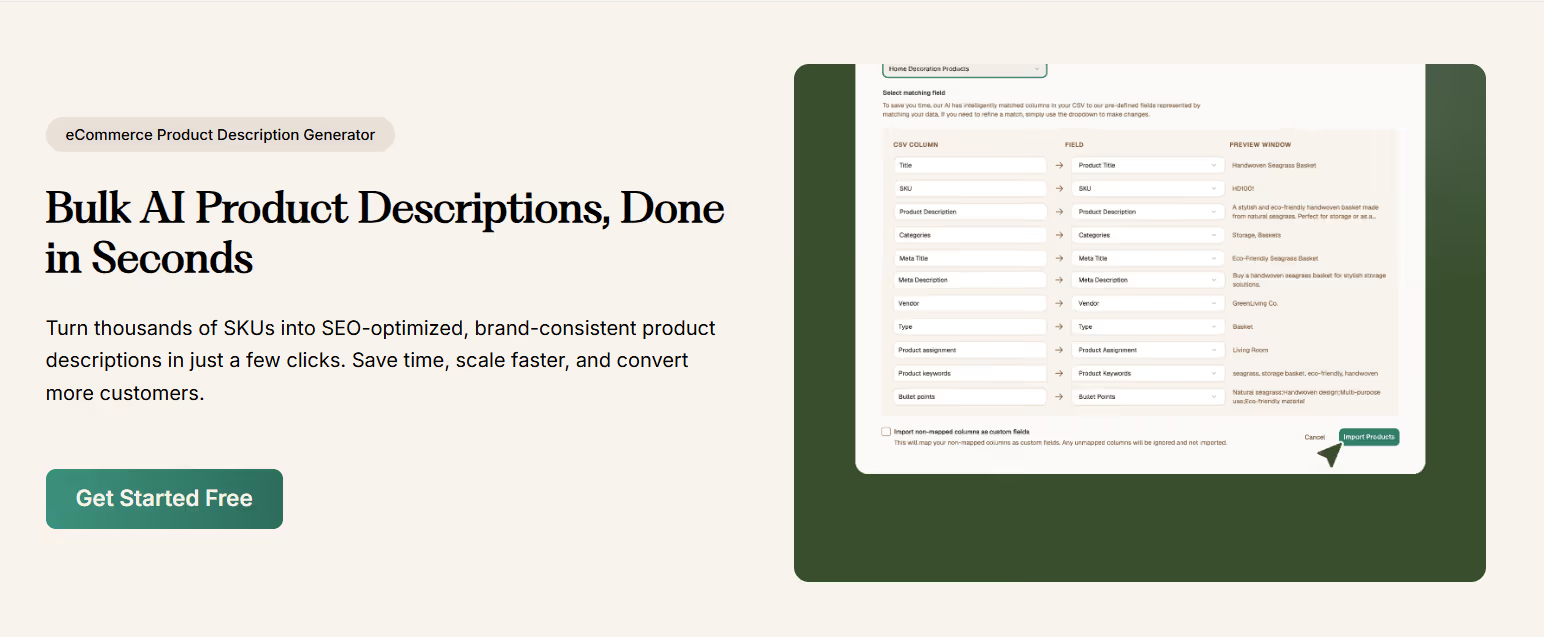
Describely is purpose-built for ecommerce product content. It focuses specifically on generating and optimising product descriptions, titles, and bullet points at scale, with a clean import/export flow for large catalogs. It's a practical choice for teams that need a focused tool without a broader platform.
Key features: Bulk generation via CSV import, SEO keyword integration, marketplace-specific formatting (Amazon, Shopify, WooCommerce), product data enrichment.
4. Anyword
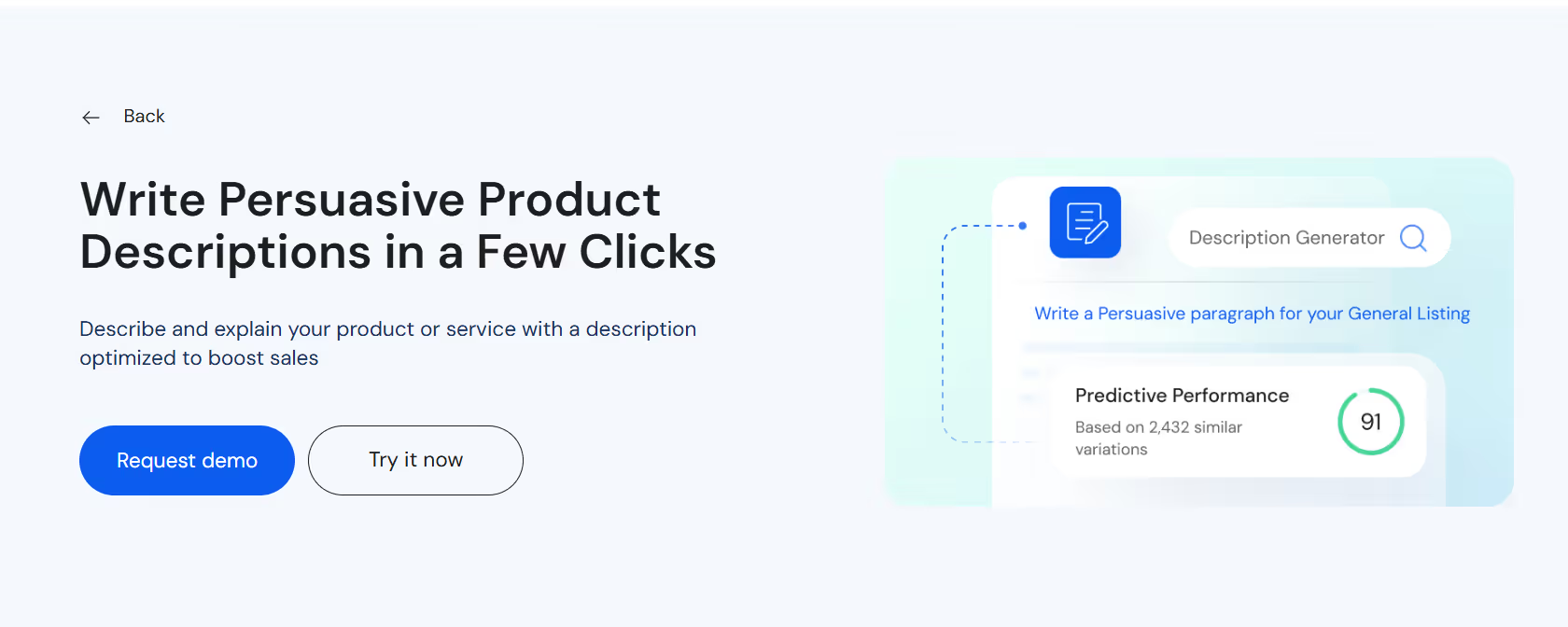
Anyword uses predictive performance scoring to help teams select the best-performing version of a product description before publishing. For ecommerce teams running A/B tests or managing high-volume catalogs where copy quality directly affects conversion, the scoring model adds a useful layer of decision support.
Key features: Predictive performance scores per variant, audience targeting by segment, bulk generation, channel-specific outputs for product pages and ad copy.
5. Hypotenuse AI
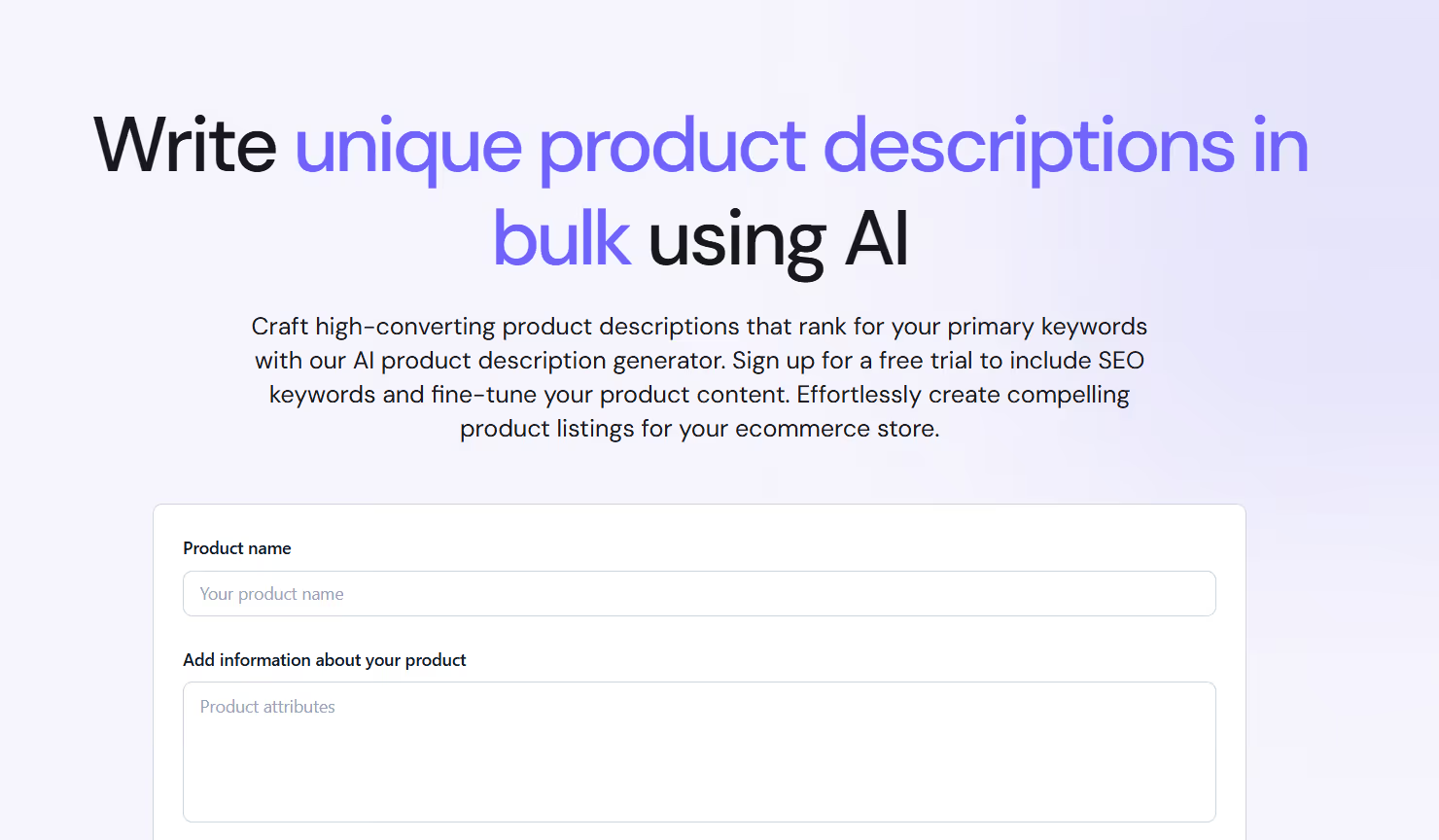
Hypotenuse AI is purpose-built for ecommerce product content, with a notable differentiator: image-to-text generation. Teams can upload product images directly, and the platform extracts attributes and generates descriptions from the visual It also connects to Shopify for direct publish without copy-pasting, and supports bulk generation across large catalogs via spreadsheet import.
Key features: Image-to-description generation from product photos, bulk import via spreadsheet or PIM integration, Shopify integration with one-click publish, SEO keyword suggestions per product, multi-variant generation with in-platform editing, translation and localisation for multi-market catalogs.
How Yarnit's CatalogIQ Helps with Bulk Product Description Optimisation
Yarnit is available on the Shopify App Store and follows a three-step setup:
Connect your store. Install the Yarnit Catalog IQ app from the Shopify Marketplace. This creates a live two-way sync between your product catalog and the Yarnit platform. Changes update automatically in both directions.
Configure your brand DNA. Train Yarnit on your brand guidelines, product knowledge, content rules, and voice. Upload reference documents and define content standards. This ensures every piece of generated content stays on-brand, not just grammatically correct.
Launch continuous catalog audits. Once configured, Yarnit runs ongoing AI-powered audits of your catalog. It analyses market signals, category bestsellers, shopper intent, and SEO/AEO/AIO readiness, then updates descriptions, metadata, and attributes accordingly, reducing catalog update cycles from weeks to hours.
For teams managing seasonal campaigns, this means a single setup produces an always-optimised catalog that responds to changing demand without requiring manual intervention for every new event.
The right tool depends on the scale of the catalog, the complexity of marketplace requirements, and whether the team needs point-generation or continuous optimisation. For brands managing thousands of SKUs across multiple channels, and needing content that performs in AI-powered search, Yarnit's CatalogIQ is the most architecturally complete option available in 2026.


