


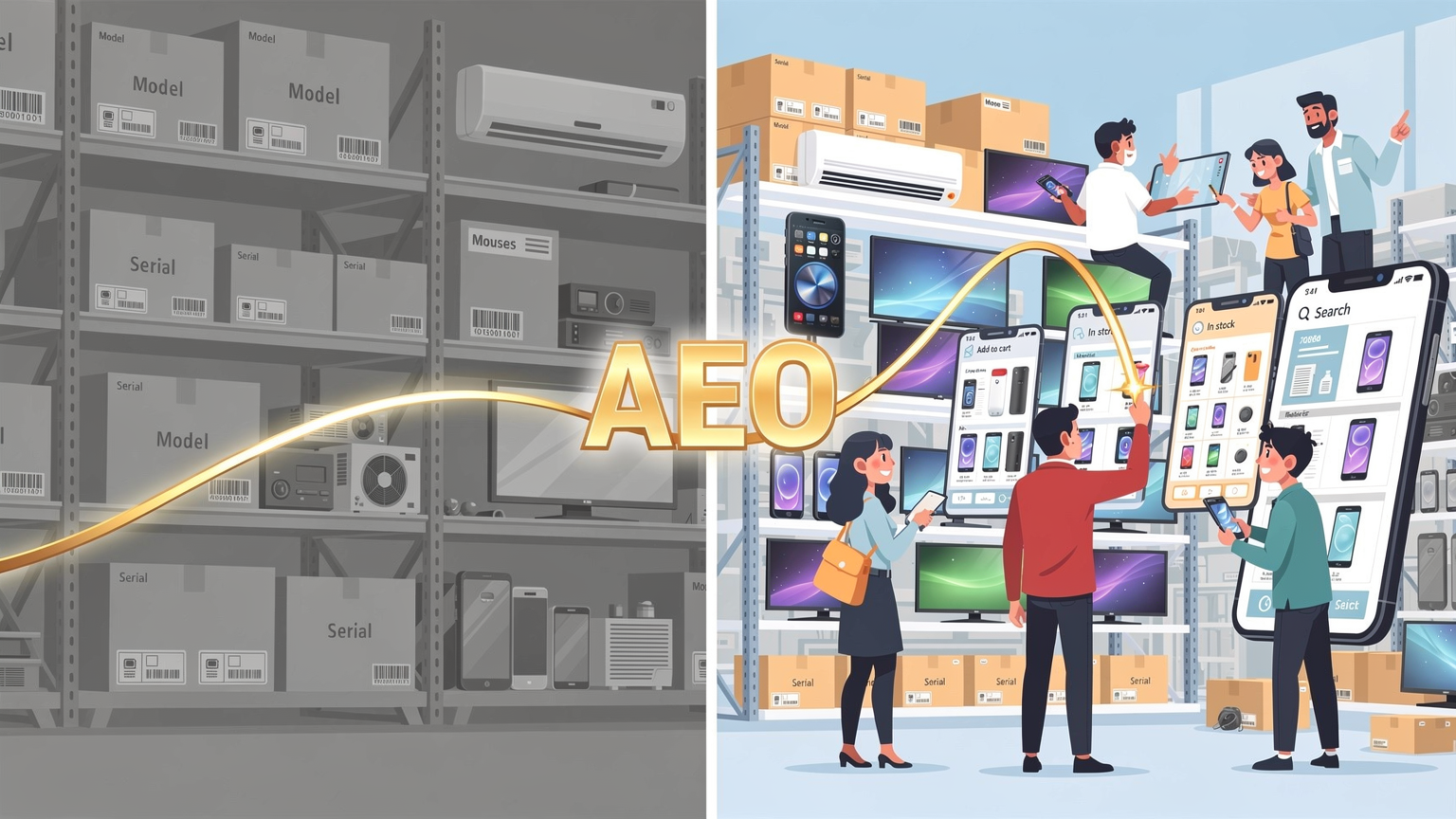
The electronics retail game is brutal. Most online traffic funnels straight to Amazon and Best Buy, leaving independent sellers fighting for scraps. Amazon controls roughly 40% of US ecommerce sales, while Best Buy pulls $47 billion in annual revenue. They've spent years and millions building SEO dominance that smaller retailers can't match.
Independent electronics sellers face a rigged battlefield. The big players have established domain authority scores in the 90s (on a 100-point scale), content teams producing hundreds of optimized pages monthly, and enough backlinks to crush any newcomer in traditional search rankings.
For a standalone ecommerce site or third-party Amazon seller, competing on Google's first page for mainstream electronics keywords is essentially impossible. The top-ranking sites have been building their SEO moats since before the iPhone existed.
But while everyone's fighting over the same crowded SEO battlefield, there's a massive opportunity sitting right in front of them. AI-driven search channels, what experts call Answer Engine Optimization (AEO) and Google Entity Optimization (GEO), are still wide open.
The big retailers haven't fully optimized for how AI answers customer questions. They're still thinking in keywords, not conversations.
This blog is your roadmap to capitalizing on that gap. We'll show you how to optimize your product listings to capture visibility in AI-powered search results. Because when someone asks their AI assistant about the best air conditioner for a small apartment, your [age should be the one they buy from.
Understanding How AI Visibility Works
Let's walk through how someone actually shops for electronics today. Say they need an air conditioner. They don't just search "buy AC" and click the first result anymore. Instead, they ask questions like:
- "What tonnage AC do I need for a 150 square foot room?"
- "Which air conditioners are most energy efficient?"
- "Do smart ACs actually save money on electricity bills?"
- "What's the difference between inverter and non-inverter AC?"
- "Can I control this AC from my phone?"
Each of these questions represents a content opportunity that AI answer engines prioritize. When someone ChatGPT, Perplexity or Google Gemini these questions, the AI pulls information from sources that directly answer them.
This is important: not sources with the best backlinks or the highest domain authority, but the sources with the best answers.
Here's what this means for your product listings: traditional product descriptions that just list specs and features aren't enough anymore. You need content that anticipates and answers the questions your customers are actually asking. That's how you unlock AI visibility.
How to Optimize Your Product Listings for the AEO/GEO
Getting your electronics products in front of AI-powered searches requires two complementary strategies. Think of it as building both the content foundation and the technical infrastructure that AI engines need to find, understand, and recommend your products.
Strategy 1: AEO/GEO Optimized Content
Your product detail pages need to do more than describe, they need to educate, answer, and guide. Here's how to make that happen:
Write for Humans First, AI Second
Forget the robotic, keyword-stuffed product descriptions. AI engines are sophisticated enough now to recognize and penalize content that's clearly written for bots. Instead, write like you're helping a friend make a decision.
For example, instead of:
"This 1.5 ton inverter AC features energy-efficient cooling with smart connectivity."
Try:
"This air conditioner is perfect for bedrooms up to 150 square feet. The inverter technology means it adjusts power automatically, which can cut your electricity bill by up to 40% compared to traditional ACs. Plus, you can control it from anywhere using your smartphone, great for cooling down your room before you get home."
See the difference? The second version answers real questions (What size room? How much will I save? Can I control it remotely?) while naturally incorporating the technical specs.
Build Long-Form Content into Product Pages
Don't be afraid of longer product descriptions. AI engines actually prefer comprehensive content because it provides more context. Include sections like:
- What makes this product ideal for... (specific use cases)
- Key features explained (not just listed, but actually explained in plain language)
- Common concerns addressed (noise levels, installation difficulty, warranty coverage)
- Comparison with similar products (help customers understand the tradeoffs)
Take this example of Croma’s blog on ACs
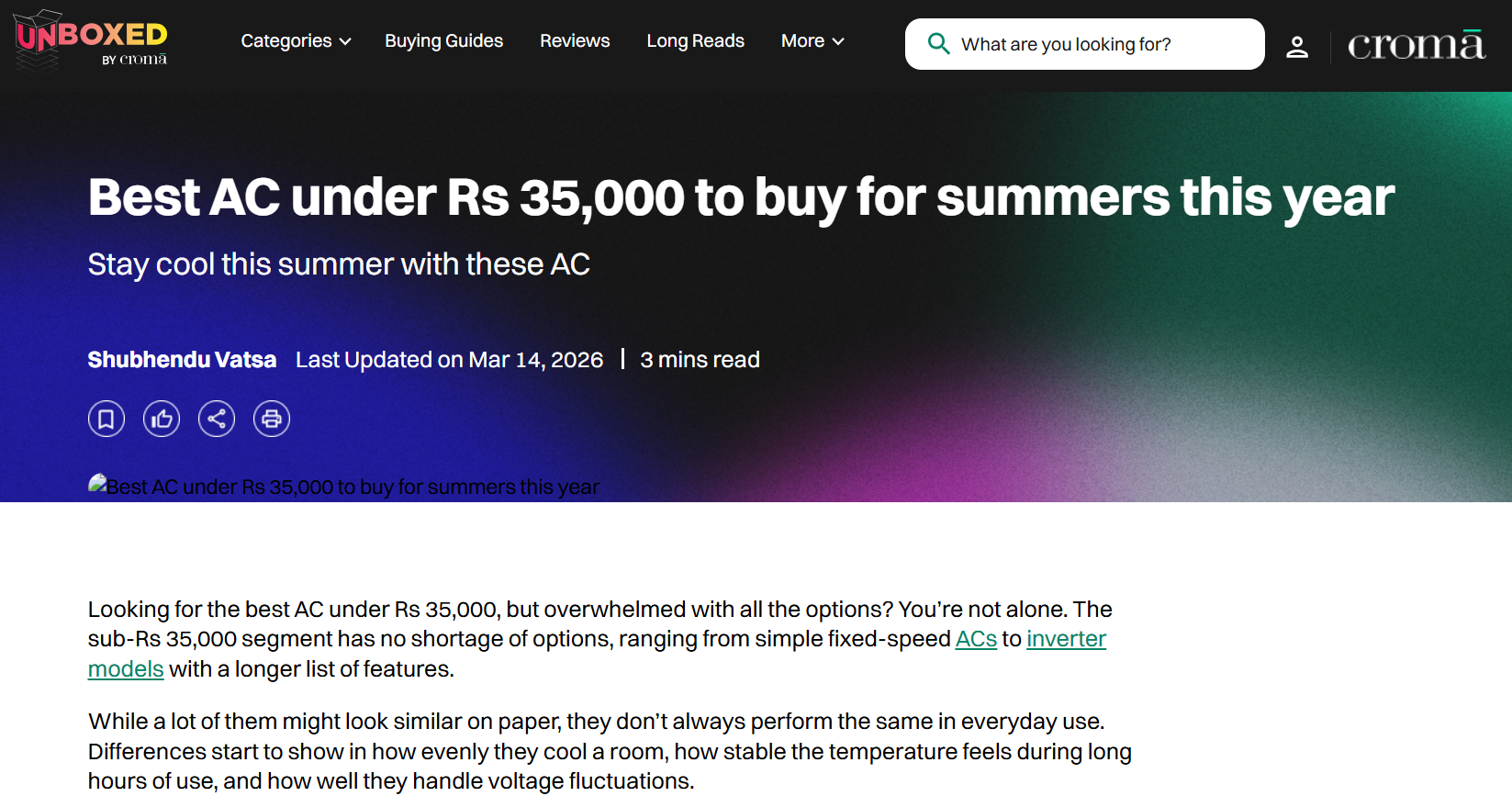
This captures the long-tail conversational keyword “best AC under 35,000”, while also giving the user options to buy the product of their choice. The takeaway is simple: give your customers the information they need on your product pages, and AI engines will surface your content when people ask related questions.
Create Comprehensive FAQ Sections
This is where you really win at AI visibility. Every product page should have an FAQ section that addresses the specific questions customers ask about that product category. For an air conditioner, that might include:
- How do I calculate what tonnage I need?
- What's the installation process like?
- How loud is this unit during operation?
- What's covered under warranty?
- Can this work with my existing smart home system?
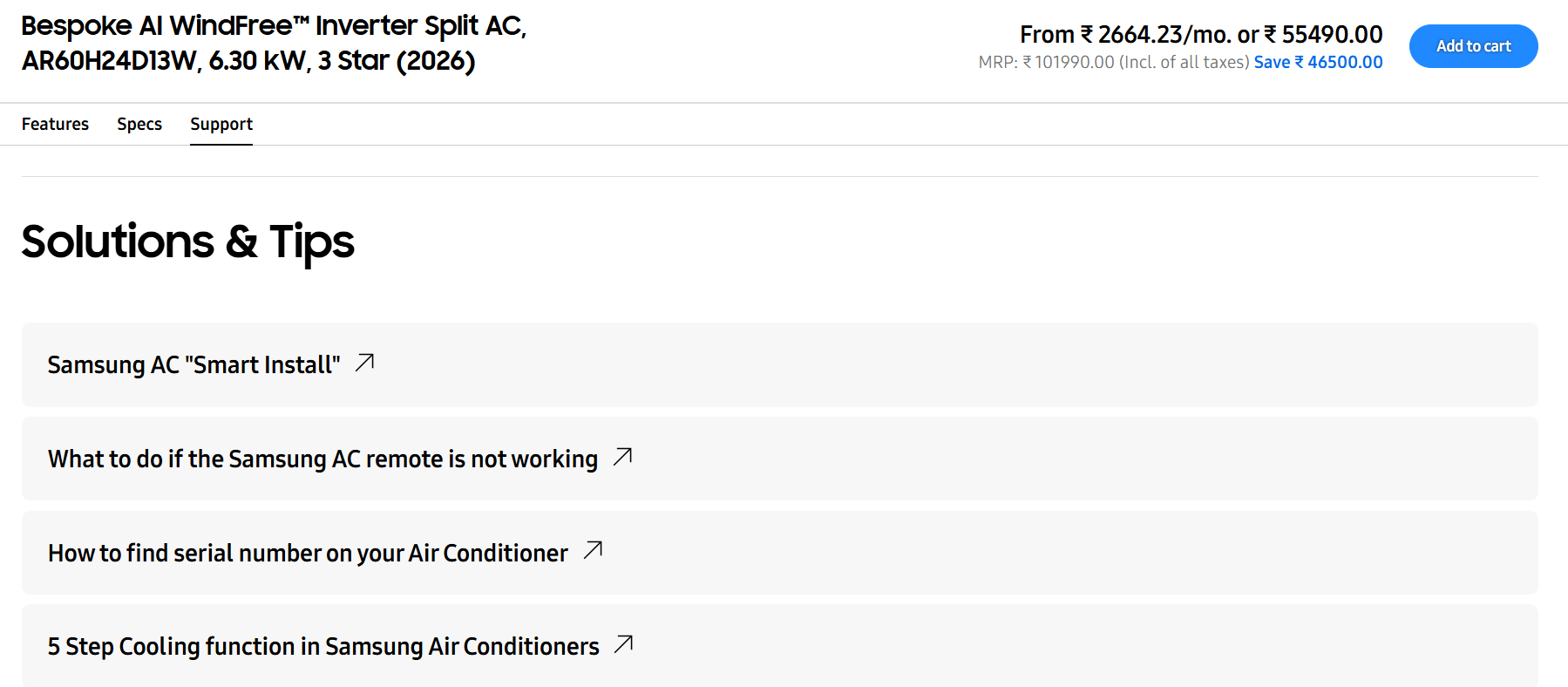
The beauty of FAQs is they align perfectly with how people query AI assistants. When someone asks "How loud are inverter air conditioners?" and your FAQ directly addresses that question, you're much more likely to be the source AI cites. This is the strategy followed by Samsung in the above page.
Tools like Yarnit can help you identify the most relevant questions for each product category by analyzing search patterns and customer behavior across the web. This ensures your FAQs actually match what people are asking, not just what you think they might want to know.
Strategy 2: Technical SEO for AI Visibility
Great content is only half the equation. You also need to make it easy for AI engines to find, understand, and trust your product information. That's where technical SEO comes in.
Organize Your Site Structure Logically
AI crawlers love clear hierarchies. Instead of dumping all your products on one massive catalog page, create dedicated category pages. For example:
- Main page: Electronics Store
- Category page: Air Conditioners
- Subcategory pages: Window ACs, Split ACs, Portable ACs
- Individual product pages
Each category page should list relevant products and include overview content about that category. This helps AI understand the relationships between your products and makes it easier to recommend the right product for specific queries.
If you're a physical retailer, create location-specific pages too. This local structure helps you capture those high-intent, proximity-based searches.
Implement Schema Markup
Schema markup is code that tells search engines and AI exactly what information on your page means. For product listings, you should implement:
- Product Schema: Identifies the product name, price, availability, ratings, reviews, and specifications
- FAQ Schema: Marks up your FAQ sections so AI can pull direct answers
- Review Schema: Highlights customer reviews and ratings
- Local Business Schema: If you have physical stores, this helps with "near me" searches
Properly implemented schema enables rich results. When someone searches for a product, they might see your price, availability, and rating right in the search results or AI answer. That's powerful.
How Yarnit Helps Electronics Stores Win at AI Visibility
Here's the challenge: everything we've talked about, detailed product descriptions, comprehensive FAQs, proper schema markup, optimized site structure, takes time. Lots of it. If you're managing hundreds or thousands of product listings across your own site and Amazon, doing this manually is basically impossible.
That's where AI-powered content solutions like Yarnit come in. Specifically built for ecommerce and retail, Yarnit helps electronics stores capture product information accurately and transform it into the kind of customer-friendly, AI-optimized content we've been discussing.
Yarnit isn't a general content tool trying to do everything. It's designed specifically fo consumer goods and retail marketing, with specialized AI agents that understand product catalogs, competitive positioning, and platform-specific requirements for Amazon, Walmart, Target, Shopify, and 50+ other channels.
Yarnit's knowledge base combines product data, competitive insights, consumer behavior patterns, and search trends. When it generates content for your air conditioner listing, it's drawing on understanding of what customers actually ask about ACs, how competitors position similar products, and what keywords drive visibility, not just generic templates.
Whether you're listing on your own site or Amazon, each platform has different requirements and best practices. Yarnit has built-in optimization templates and compliance checks for each channel, ensuring your product listings perform well wherever they appear.
If you're serious about competing for AI visibility in the electronics space, tools like Yarnit aren't optional anymore. The manual approach simply can't keep pace with how fast search behavior and AI capabilities are evolving.
Ready to transform your electronics product listings for AI visibility? Explore Yarnit's solutions for ecommerce and retail or book a demo to see how it works for your specific catalog.


